- Premium Content It takes our newsroom weeks - if not months - to investigate and produce stories for our premium content. You can’t find them anywhere else.
 Tay Tian Wen · · 7 min read
Should gig platforms fear Singapore PM’s remarks?
During Singapore’s annual National Day Rally speech this year, Prime Minister Lee Hsien Loong cast a spotlight on the delivery workers of online platforms like Grab, Foodpanda, and Deliveroo.
The prime minister’s tribute for these unsung heroes was heartfelt. After years of advocacy, meaningful change in Singapore may be around the corner.
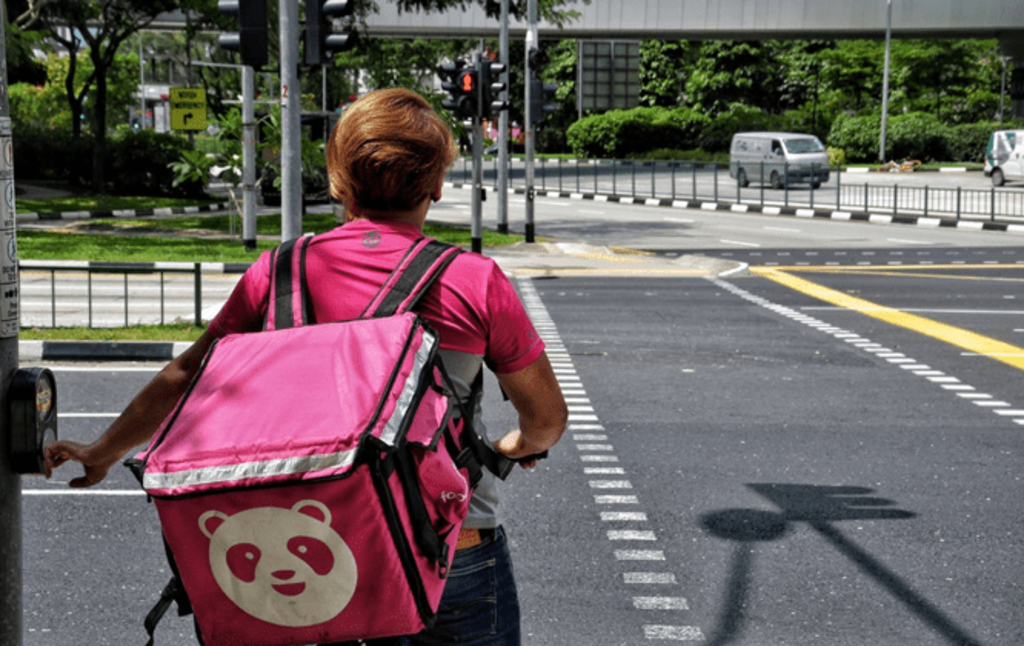
Image credit: Academia SG
Lee’s clarion call comes as countries worldwide seek to rectify long-standing issues in the gig economy involving labor rights and insurance coverage.
Last month, Chinese regulators also called on food delivery companies in the country like Meituan and Ele.me to provide their workers with minimum wage and medical insurance.
While it’s too early to say how Grab, Foodpanda, and Deliveroo will be affected, Tech in Asia’s analysis shows that, despite Singapore’s pro-employer policies, giving the country’s gig workers full employee rights could have a sizable impact on the platforms’ bottom lines.
Another ripple in a sea of change
“Delivery workers are, for all intents and purposes, just like employees,” Lee declared. It’s the strongest statement on the subject by a Singapore public official in recent memory, and it’s coming from the top leader no less.
Gig workers in Singapore face the same problems as their peers around the world. Even though the pandemic has made clear that their service is a necessity, many of them grapple with the limited career prospects that come with the job.
A key concern among legislators worldwide is how gig workers are often labeled as independent contractors rather than employees.
In Singapore, gig workers are not covered under the Employment Act and the Industrial Relations Act. As a result, they lack employment contracts that guarantee basic job protections that most employees enjoy, like union representation and contributions to their Central Provident Funds (CPF) – the country’s national savings and pension plan.
Local delivery riders also cannot file claims for work injuries under the Work Injury Compensation Act. While gig platforms can buy individual insurance plans from local insurers, these policies were created with “employed workers in mind” and may be too expensive or inflexible for gig workers, says Sebastian San, country manager at Gigacover.
The firm provides “right-sized” insurance products to independent gig workers and freelancers under companies like Gojek, GoGoX, and Foodpanda in Singapore, Indonesia, and the Philippines.
Solutions to remedy these problems are already underway elsewhere. In March this year, ride-hailing firm Uber officially recognized 70,000 of its drivers in the UK as employees who are entitled to minimum wage, holiday pay, and pension plans.
Meanwhile, gig worker welfare hasn’t moved past the negotiating table in Singapore.
Change at what cost?
This time, can everyone play ball?
Stay ahead in Asia’s tech landscape
This is premium content. Subscribe to read the full story.
The pro-business city-state has stopped short of imposing employee welfare rules on gig platforms, but that might soon change.
We know this is not ideal. ⌛ Sign up in 20 seconds. Cancel anytime.
Our subscriber community includes professionals from these companies:





Stay updated on the go with our mobile app.
Get latest insights with smoother, more personalized experience through TIA mobile app.