- Premium Content It takes our newsroom weeks - if not months - to investigate and produce stories for our premium content. You can’t find them anywhere else.
 Jack Ellis · · 11 min read
E-scooter services are fighting a multifront battle for survival in Singapore
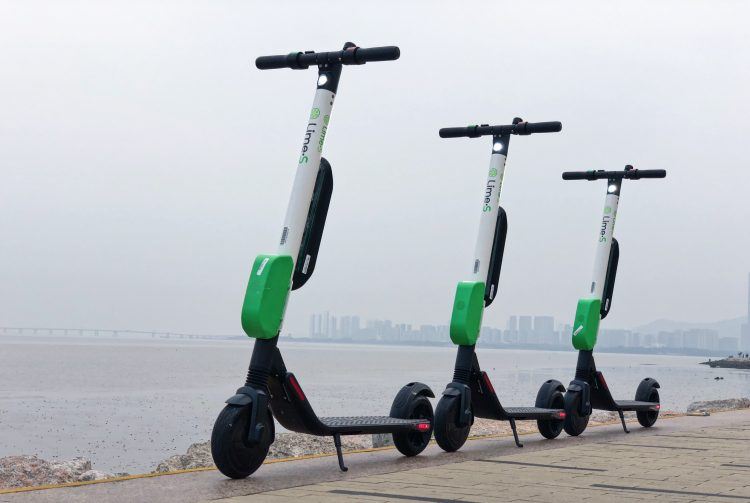
Photo credit: Lime
Operators of shared personal mobility device (PMD) services are battling for survival in Singapore, where regulators have delayed the licensing process intended to formalize the market amid an outpouring of concern from the public about the safety of these vehicles.
Last month, US-based operator Lime announced the withdrawal of its application for an operator’s license in Singapore, saying it would “reprioritize” efforts to meet demand elsewhere in the world. Several other players have effectively ceased public-facing operations in the city-state in recent weeks, Tech in Asia has learned.
Some shared PMD operators have expressed concern at the Land Transport Authority’s (LTA) approach towards regulating scooter-sharing, which they say is costing them business. Some are also frustrated with competitor Grab, claiming that the better-resourced unicorn has an advantage in expanding its GrabWheels PMD business as the regulatory environment grows stricter.
Meanwhile, the LTA has emphasized that its first priority when it comes to PMDs is safety. Grab says it has made significant efforts to ensure that its e-scooters meet safety standards through measures such as a top-speed cap and insurance.
Public and political pressure
When Mobike announced its withdrawal from Singapore in March, many saw it as a sign that the city-state’s bike-sharing boom was coming to an end.
With the other two major players – oBike and Ofo – exiting abruptly due to cash flow problems, Singapore was left with a vacuum for last-mile transportation solutions.
Shared PMD services were widely seen as waiting in the wings, ready to fill the gap. But opposition to PMDs from some corners of Singapore society has grown more vocal.
Numerous privately owned e-scooters have caught fire due to faulty charging equipment or caused injury to riders and pedestrians. While not directly linked to shared PMD services, these kinds of incidents have created a negative perception of PMDs in general, including those being offered by startups as part of a share scheme.
As one anonymous source working in the industry put it to Tech in Asia, it’s a minority of people that would never set foot on scooters that have been most outspoken about banning them.
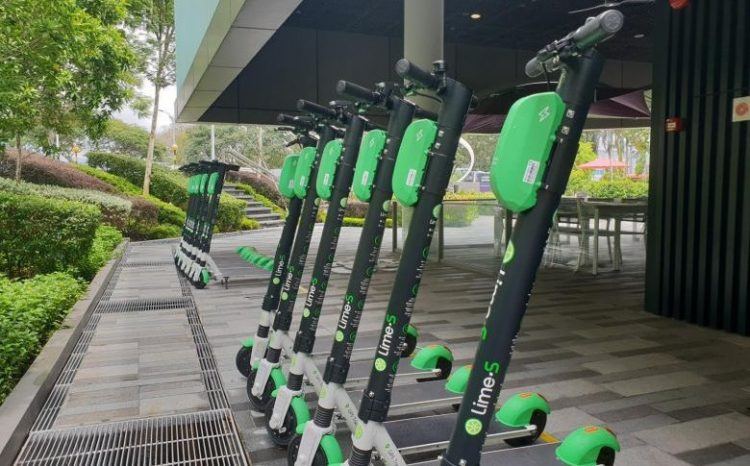
Lime deployed e-scooters in Singapore via a partnership with property developer Ascendas-Singbridge. It has now quit the country to focus on other markets. / Photo credit: HDB Season Parking
In the Singaporean parliament, there have been calls for PMDs to be banned altogether “until there are proven solutions for [their] safer use.” Such a measure would almost certainly spell doom for many operators of scooter-sharing services, most of which are early-stage startups with little in the way of revenue and are surviving on venture capital. Several town councils have moved to ban the vehicles from HDB common areas.
The LTA has also implemented new safety measures, requiring all individual owners of PMDs to register their vehicles. From July 1, retailers in the country were prohibited from selling PMDs that don’t meet the UL2272 electrical and fire safety standard. Non-compliant vehicles purchased before that date will still be registrable with the LTA until December 31, 2020, after which they’ll be illegal to use.
Licensing pushed back
Grab bucks the trend
Extending its lead
Questionable economics
Stay ahead in Asia’s tech landscape
This is premium content. Subscribe to read the full story.
The Lion City has held back on granting licenses, leaving some operators in limbo while others seize what opportunities they can.
We know this is not ideal. ⌛ Sign up in 20 seconds. Cancel anytime.
Our subscriber community includes professionals from these companies:





Stay updated on the go with our mobile app.
Get latest insights with smoother, more personalized experience through TIA mobile app.










📅 Upcoming Events
22 October 2026
Payoneer x CSPN Summit 2026