- Premium Content It takes our newsroom weeks - if not months - to investigate and produce stories for our premium content. You can’t find them anywhere else.
 Jofie Yordan · · 6 min read
As gas prices soar, SEA logistics players brace for impact
With additional reporting by Qishin Tariq.
As the war in Ukraine shows no signs of abating, the cost of gas continues to rise, and most Southeast Asian countries are not immune from the hikes.
In Singapore, fuel prices reached around US$2.40 per liter in early June – the highest in the region. Prices in Vietnam and the Philippines hit a little over US$1.40 during the same period, but prices in Indonesia and Malaysia held steady.
The price fluctuations will inevitably affect logistics providers and ecommerce firms in Southeast Asia since fuel is a “direct cost to their operations,” according to a senior logistics executive at a global consumer tech company.
Indeed, ecommerce giant Amazon has added a 5% fuel and inflation surcharge for US-based sellers that use the company’s fulfillment services.
But there are larger ramifications. Zaldy Masita, CEO of Indonesian logistics firm Paxel, notes that the increase in fuel prices can reduce people’s purchasing power, which would have an impact on trading volumes both online and offline.
For now, the region’s logistics and ecommerce sectors are primarily taking a wait-and-see approach. Players in Indonesia and Malaysia, for instance, are less affected as energy prices are partially subsidized by governments. But others like regional operator Deliveree have begun raising prices.
Who bears the cost?
Deliveree, a logistics startup that operates on an asset-light model, says soaring fuel prices in Thailand and the Philippines have affected its operations in both countries.
“There certainly has been some moderate amount of price appreciation,” Tom Kim, CEO and co-founder of Deliveree, tells Tech in Asia. The cost increases will then be passed on to consumers and companies, he adds.
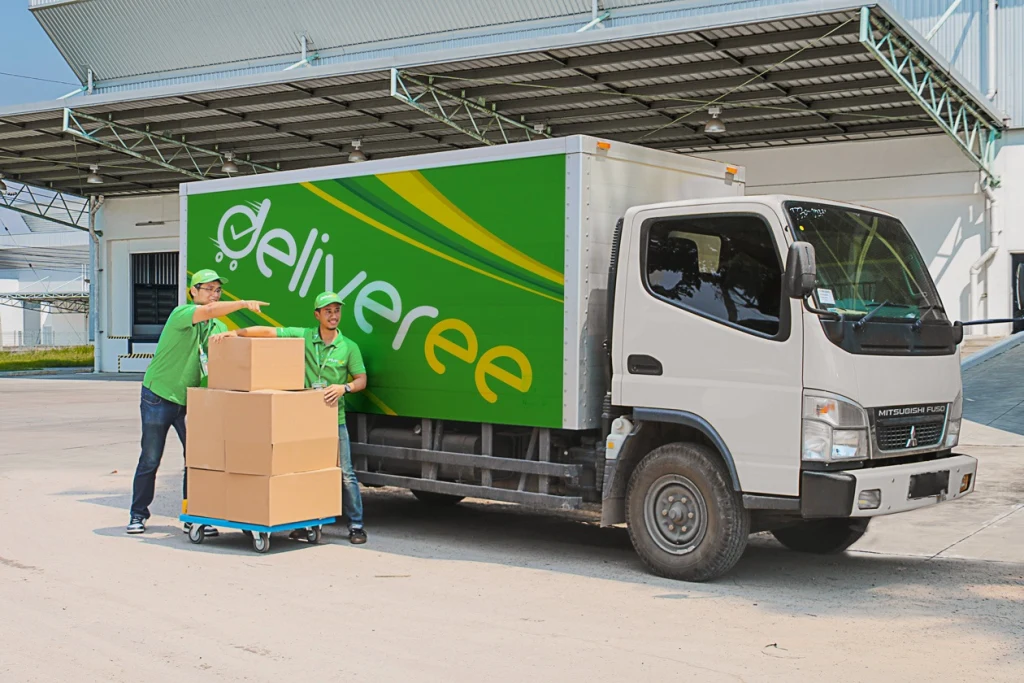
Photo credit: Deliveree
But even though Deliveree is charging more, it is still not enough to cover the higher fuel prices, Kim says. To soften the impact on its logistics suppliers, Deliveree compressed its take rate from 17% to 18% to about 12% in 2022. This lets suppliers retain more of each booking’s total value.
The decision was also driven by the growing number of companies moving to flexible, scalable platform solutions for trucking and cargo shipping. For Deliveree, this is an opportunity. “We expect this level take rate to continue for the foreseeable future, at least for the next three years,” Kim explains.
Fellow regional player Gogox says that it will take a similar strategy as Deliveree, adjusting take rates based on macroeconomic changes over time.
Beware of customer attrition
Pushing for efficiency
Stay ahead in Asia’s tech landscape
This is premium content. Subscribe to read the full story.
Costs are directly hit, but the ramifications may be larger for ecommerce. Some players from both sectors are opting for a wait-and-see approach.
We know this is not ideal. ⌛ Sign up in 20 seconds. Cancel anytime.
Our subscriber community includes professionals from these companies:





Stay updated on the go with our mobile app.
Get latest insights with smoother, more personalized experience through TIA mobile app.











📅 Upcoming Events
22 October 2026
Payoneer x CSPN Summit 2026