Malavika Velayanikal · · 5 min read
This man uses tech to bring doctors to India’s remotest villages
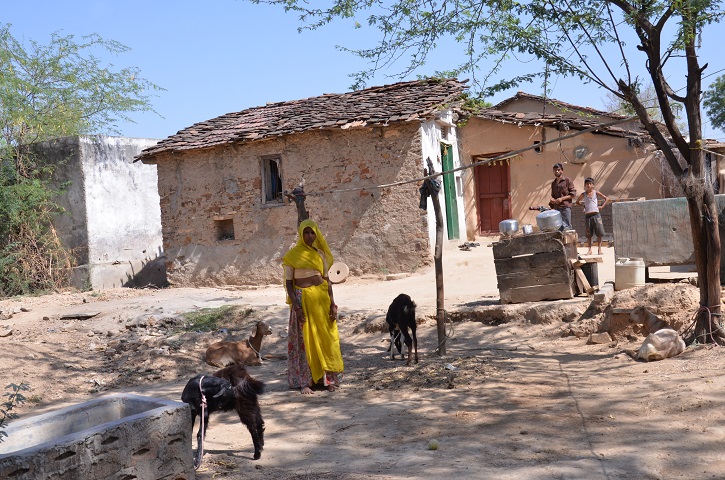
There’s an old world charm about India’s desert state Rajasthan. Folklore, songs and dances, palaces made of pink stone, herds of belled camels at desert festivals. Jaipur, Jaisalmer, Udaipur; Rajasthan’s cities draw tourists from all over the world. But the state is also one of India’s poorest.
Three quarters of its people live in rural settlements. Only the more affluent farmers and artisans in larger villages have huts with more than one room. Infant and maternal mortality rates are among the highest in the country. According a recent survey, 49 babies die in every 1,000 births. Many of the villagers never go to a doctor or hospital because they do not have any money to spare. Even when they can afford it, there are hardly any doctors in the remote villages. They end up going to quacks, who are quick to dispense painkillers, placebos, and even harmful medicines without any training in medicine.
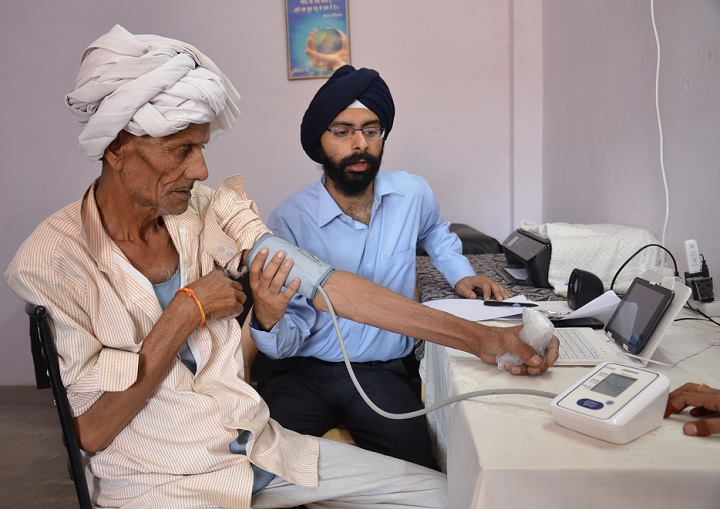
“Villages need good doctors very badly. And good doctors with busy practices in the cities can’t make frequent trips to the villages who need their services badly. How can we solve it?” says Jagdeep Gambhir. This problem consumed Gambhir, a former technology analyst with Goldman Sachs – so much so that he founded Karma Healthcare. This startup in rural Rajasthan uses mobile technology to connect doctors in cities to patients in some of the remotest desert villages of India.
Goldman Sachs to rural Rajasthan
Gambhir had studied information technology at the National Institute of Technology (NIT), Karnataka. Though he followed it up with an MBA in finance and operations from the Indian School of Business (ISB), his heart was hooked on creating a business with a social purpose.
He was with Goldman Sachs when he got a chance to work with Innovators in Health (IIH), a non-profit founded by MIT alumni that gives access to high quality tuberculosis (TB) treatment for patients in rural Bihar. Gambhir grabbed the opportunity. For a year, he managed the TB program for IIH in India.
Udaipur, known to tourists as the lake city of Rajasthan, is Gambhir’s hometown. There were many doctors in his family, but their practice was limited to the city. Gambhir noticed how patients from faraway villages would make the tortuous trip to the city to consult doctors only in case of a dire emergency. Primary healthcare issues are largely neglected, especially in south Rajasthan, which has some of the worst healthcare indicators in the world.
“Due to its rugged terrain and low population density, healthcare access is a major challenge for people living in these rural areas. I realized that this is where technology can make a huge difference,” Gambhir says.
He drew on his savings and founded Karma Healthcare in January this year, roping in his father, Dr. Manjeet Gambhir, a well-known physician who was awarded the a lifetime achievement award for medical care to the poor by the Rotary Club of India. To begin with, he picked Jaisamand village, near Dhebar lake – Asia’s second-largest artificial lake.
Gambhir bought tablet computers, printers, power-backup systems, and medical devices which can transmit real-time data from patients to doctors located elsewhere. He had invested all his savings, and five of his closest friends pitched in with INR100,000 (US$1,640) each.
“We treated our first patient on March 25. He came to us for an asthma-related problem. Within 20 days of starting in Jaisamand, we opened the second Karma clinic in another village. And a third one, four months later,” Gambhir explains.
The leap to a doctor on a tablet
One clinic for 25,000 villagers





Stay updated on the go with our mobile app.
Get latest insights with smoother, more personalized experience through TIA mobile app.