- Premium Content It takes our newsroom weeks - if not months - to investigate and produce stories for our premium content. You can’t find them anywhere else.
 Jofie Yordan · · 4 min read
Furniture startups remodel Indonesia’s billion-dollar market with customization, rental options
In late 2022, Indonesian furniture retailer Fabelio was declared bankrupt due to the financial difficulties brought about by the pandemic and its failure to raise new funding.
Competitors like Dekoruma, however, have managed to survive and are even aggressively expanding. The company recently opened its 28th physical store in Palembang, one of the big cities in Sumatra.
New business models – beyond operating online marketplaces – have emerged among startups in Indonesia’s furniture sector in recent years.
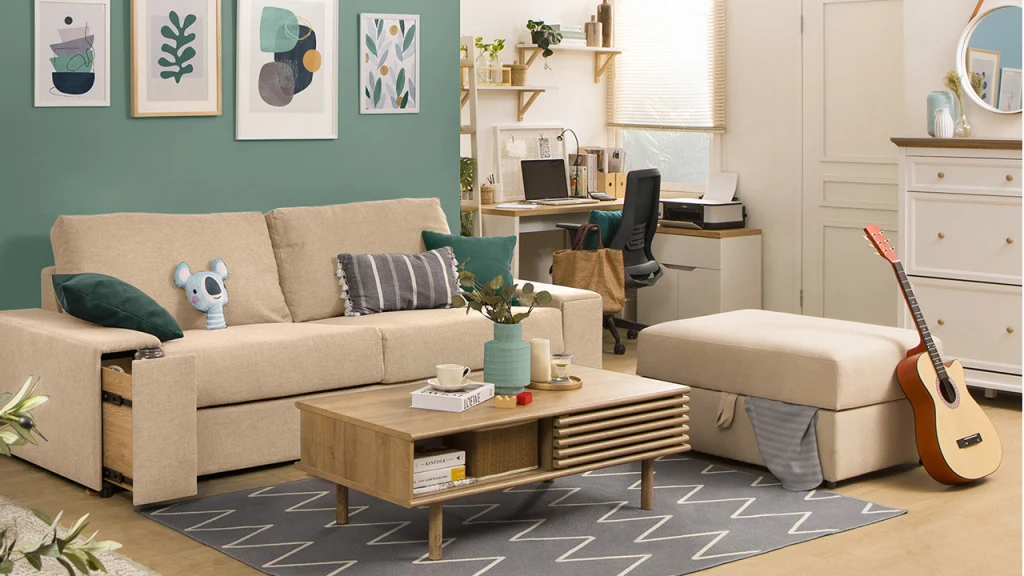
Dekoruma’s furniture / Photo credit: Dekoruma
One example is Bioma, which offers B2B furniture rental services. Founded in 2022, the company secured pre-seed funding last October from East Ventures and Init 6.
Then there’s Monoliving, a startup established in 2019, that provides modular furniture products for households. Modular furniture refers to premade units that can be combined or customized in different ways. A sofa, for instance, can be converted into a two- or three-seater or one with an L-corner by purchasing add-ons.
It also sells spare parts for furniture such as table legs or bathroom faucets that customers can use to customize or replace their existing furniture.
Both companies are striving to provide new alternatives in the Indonesian furniture market, which is projected to be worth US$3.3 billion by 2026.
Leveraging hybrid working trends
“All businesses need furniture, both for personal use by employees and to support business needs,” Bioma CEO Arlo Erdaka tells Tech in Asia.
Erdaka explains that companies face challenges in meeting their furniture needs. Issues include affordability, maintenance and repairs, and variety and scalability.
Bioma helps firms overcome these problems through its furniture rental service, which allows customers to pay to rent products for a certain period of time. The startup covers all furniture maintenance costs.
Bioma’s clients range from startups to conventional companies, as well as property firms and F&B businesses. The rented products are sourced from third-party brands or institutions through a partnership system, allowing the firm to remain asset-light.
The company also benefits from hybrid working setups, which gained traction during the pandemic. Its rental service gives companies the flexibility to add or reduce office furniture to adapt to their working policies, says Erdaka.
Emphasizing cost-effectiveness
A new alternative
Stay ahead in Asia’s tech landscape
This is premium content. Subscribe to read the full story.
Firms like Bioma and Monoliving are setting themselves apart from players like Dekoruma through their innovative business models.
We know this is not ideal. ⌛ Sign up in 20 seconds. Cancel anytime.
Our subscriber community includes professionals from these companies:





Stay updated on the go with our mobile app.
Get latest insights with smoother, more personalized experience through TIA mobile app.









📅 Upcoming Events
22 October 2026
Payoneer x CSPN Summit 2026