This article is a part of Startup Spotlight, a series that features young, up-and-coming startups.
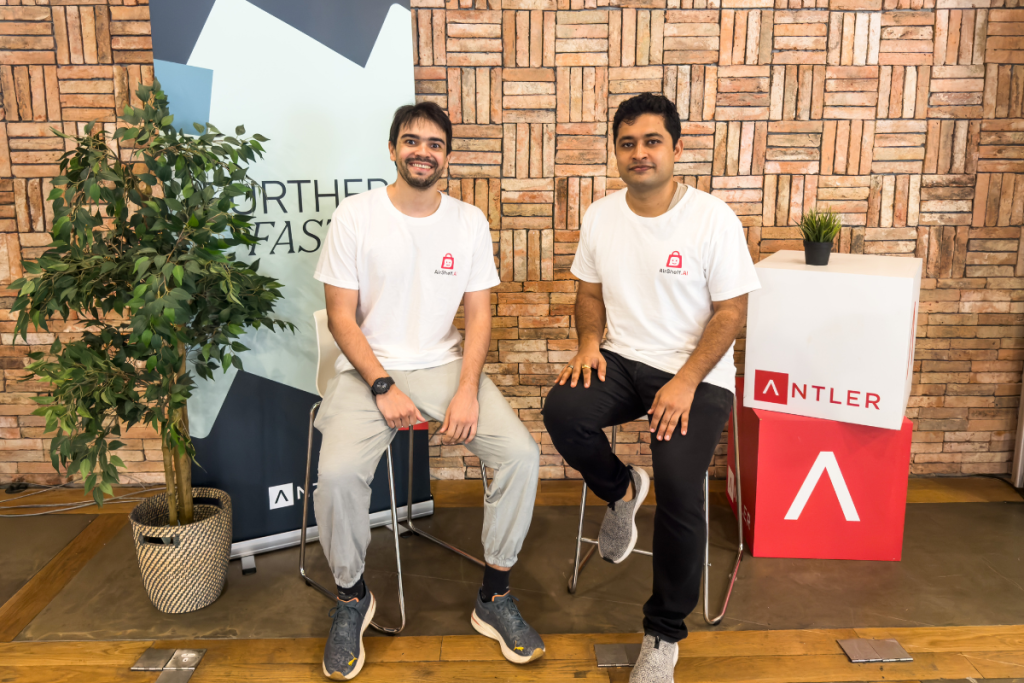
Photo credit: AirShelf AI
During an Antler residency program, Ashish Piplani and Evgeniy Oleinik noticed a familiar pattern. Having built their careers on physical and digital shelves at companies like Lazada and Grab, they saw history repeating itself with AI.
They noticed that early AI agents recommend products based on inference rather than true catalogue understanding. To ensure brands wouldn’t lose control of this new “AI shelf,” they founded AirShelf AI.
😟 Problem
The next wave of online shoppers will not be human, but AI agents. AI-driven retail traffic surged 4,700% year-over-year last shopping season, yet most enterprise brands remain unprepared for this shift.
When consumers ask an AI to shop, it guesses from unstructured web data, leading to incorrect pricing, outdated availability, and brand misrepresentation.
Brands are losing control of the customer relationship as their existing commerce infrastructure was built for human eyes, not machine intelligence. This structural gap causes revenue leakage and a loss of market share for brands that fail to adapt.
💡 Solution
AirShelf AI provides a data and trust layer to make enterprise product catalogues machine-readable and ready for AI-driven commerce. The platform enables brands to be accurately discovered, recommended, and purchased by AI agents, built on four pillars:
- AX score audit: A proprietary benchmark that measures a brand’s visibility and friendliness across major AI platforms.
- Golden record feed: Transforms product data into structured formats that AI agents can read, index, and act upon.
- AI sales assistant: A conversational storefront to answer product queries and qualify purchase intent 24/7.
- Brand guardrails: Detects and corrects AI hallucinations about a brand, tracks mentions, and delivers competitive intelligence.
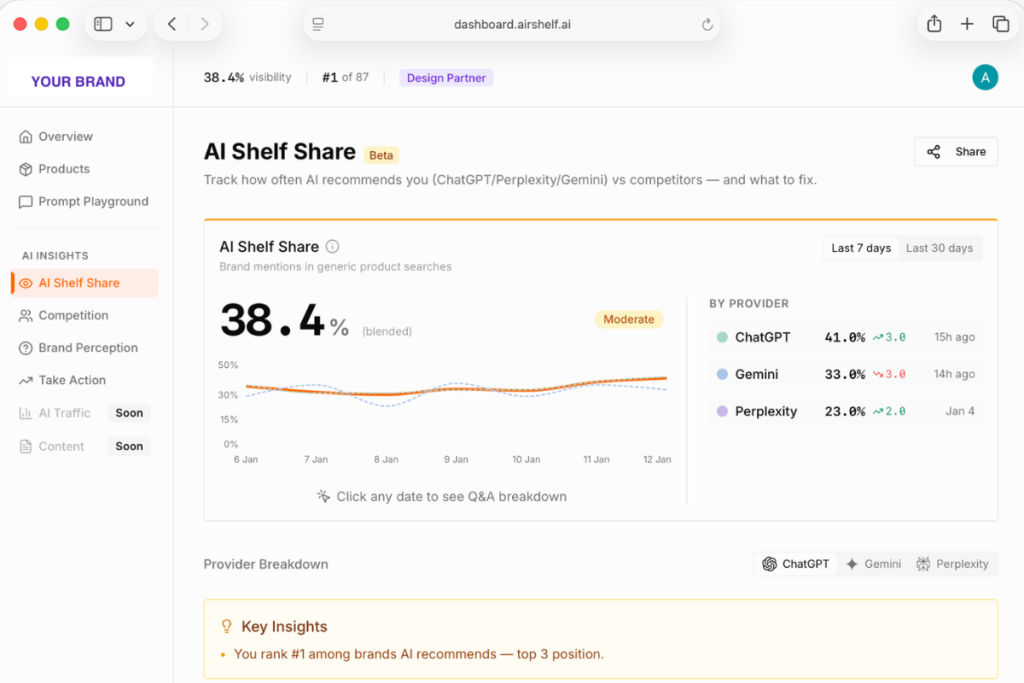
Photo credit: AirShelf AI
📊 Market size
The market for agentic commerce is projected to be substantial. McKinsey estimates it could reach US$3 trillion to US$5 trillion in B2C sales by 2030. In the US alone, Bain projects a market of US$300 billion to US$500 billion by the same year.
The opportunity extends to B2B, where Gartner predicts that AI agents will intermediate 90% of purchasing by 2028, representing over US$15 trillion in spending. With over 24 million ecommerce sites globally, only 100,000 enterprise-level brands require AI-readiness infrastructure.
🤝 Team
- Ashish Piplani: Co-founder and CEO. He previously built GrabUnlimited into Southeast Asia’s leading paid membership program. Held senior roles at Grab, Lazada, and Flipkart.
- Evgeniy Oleinik: Co-founder and CTO. He co-founded and served as CTO of 12GO.com.
🚀 Traction
🏆 Competition
💰 Financials





Stay updated on the go with our mobile app.
Get latest insights with smoother, more personalized experience through TIA mobile app.