
Welcome to The Offset! Delivered once a month via email and through the Tech in Asia website, this free newsletter breaks down the biggest stories and trends in greentech. Get it in your email inbox by registering here.
Hello there,
It’s a misconception that governments in one-party communist states are all-powerful domestically and never face resistance.
Conflicting agendas are always pushed by individuals and organizations that hold some power, though they may not be the type of opposition we’re used to seeing in democracies, particularly in the form of political parties.
Case in point, this month’s Deep Read takes a closer look at how China’s powerful coal industry is putting roadblocks in the way of energy system reform that would favor renewables.
It’s a good reminder that while many of us are on board with making the planet a cleaner and greener place, there are still formidable actors blocking the path.
— Peter
THE BIG STORY
Malaysia’s EV race electrifies as local brands undercut on price

Proton hopes to bring forward the launch date of its first EV, the Proton e.Mas, to end-2024 from its initial plan of 2025. PHOTO: TAN AI LENG, BT
Malaysia’s national automakers are going full throttle to try and win the electric vehicle race in a market dominated by Chinese imports. However, “range anxiety,” affordability, and limited charging infrastructure hinder wider adoption.
DEEP READ
China’s accelerating green transition

Image credit: Timmy Loen
China leads the planet in the transition away from fossil fuels and toward renewables. In fact, two-thirds of all the world’s solar and wind power projects currently under construction are in the country.
However, completing this shift would require moving to a market-based system for distributing electricity across the country, as well as a politically fraught shake-up of the state-run coal sector.
State-owned enterprises dealing with coal have long provided political opposition to reforms of the country’s energy sector aimed at adapting market mechanisms. Analysts say there’s a strong political incentive for grid operators that prioritize coal over renewables, but technological advancements may help bypass these barriers.
TRENDING NEWS
Also check out Tech in Asia’s coverage of Asia’s ecommerce scene here.
1️⃣ Data center emissions probably 662% higher than big tech claims. Can it keep up the ruse?
It’s no secret that data centers need an increasing amount of power due to the rise of AI, thereby causing more emissions. However, according to an analysis by The Guardian, the true amount of emissions from the data centers owned by the world’s largest tech firms has been massively higher than previously thought.
Why it matters:
If big tech is only interested in achieving carbon neutrality via so-called “creative accounting,” it’s going to be pretty hard for the world to cut actual, real-life emissions.
2️⃣ Thailand turns to mangrove carbon credits despite skepticism
The Thai government is aiming to bring thousands of hectares of mangrove forests into its carbon credit market despite questions about the effectiveness of the carbon credits altogether. Some environmentalists have expressed concern, as polluting firms could use the mangrove restoration projects to greenwash their activities.
Why it matters:
An activist quoted in this article called carbon credits “a distraction from the true solutions for climate change.” It’s an increasingly common view, and if carbon credits can’t help spur actual emission improvements from businesses, it’s fair to ask why they’re being pushed.
3️⃣ Foodtech funding ‘bouncing back,’ but investor doubts on alternative proteins still persist
A new report from French strategy consultants DigitalFoodLab has found that funding for foodtech startups staged a rebound in the first half of 2024 after two lean years. However, the news is less rosy for alternative protein firms.

Image credit: Timmy Loen
Why it matters:
A rebound in funding would be welcome news for companies trying to make our food systems less damaging to the environment, as it may indicate that investors feel they have long-term value instead of being flash-in-the-pan bets.
4️⃣ UK to give ADB guarantee to unlock climate finance
Developing countries are set to receive US$1 billion more in climate financing after the UK government agreed to give the Asian Development Bank (ADB) a guarantee to unlock the sum. The bank plans to devote half of its annual lending allocation to climate finance by 2030.
Why it matters:
Developing nations are generally most vulnerable to the impacts of climate change and at the same time least able to mitigate them. More funding for such countries is likely to make a difference and could also help give climate tech startups in these territories a leg up.
5️⃣ Temasek sets aside $78m concessional capital for climate action
The Singapore state-owned investor will allot US$77.7 million for climate action, which will be used to provide more flexible financing for climate projects.
Why it matters:
Similar to the ADB story, more financing for worthwhile climate projects can only be a good thing.
STARTUP WATCH
1️⃣ Indonesia’s CarbonEthics secures $2.1m for climate solutions
CarbonEthics is a developer of natural climate solutions that specializes in blue carbon ecosystems. The firm has raised US$2.1 million in a seed funding round led by Intudo Ventures.
2️⃣ Malaysian agritech startup Qarbotech raises $1.5m

Image credit: Timmy Loen
Qarbotech is planning to expand in Malaysia, Indonesia, Thailand, and Vietnam with the US$1.5 million in funding it recently secured. The startup’s products include QarboGrow, which uses carbon quantum dots to improve photosynthesis in plants, generating more oxygen and decreasing carbon dioxide levels. Carbon quantum dots are nanoparticles made of carbon that are not easily eroded by their environment.
3️⃣ AFD Group’s Proparco makes maiden VC fund investment in India with Omnivore
Omnivore, which funds Indian startups in agritech and food systems, has received a US$5 million investment from Proparco, the financing arm of French public entity Agence Française de Développement Group.
4️⃣ JBM Ecolife Mobility secures $100m funding from ADB, AIIB for electric bus expansion
The unit of Indian conglomerate JBM Group plans to use the capital to supply and operate its electric buses across India.
India-based Two Point O Capital offers a tech-enabled platform to provide financing for projects in clean energy sectors. The firm has raised US$6.3 million in its seed funding round led by Omnivore.
Tech in Asia Conference Jakarta • October 23-24
Cleantech: A growing force in Southeast Asia’s fight against climate change
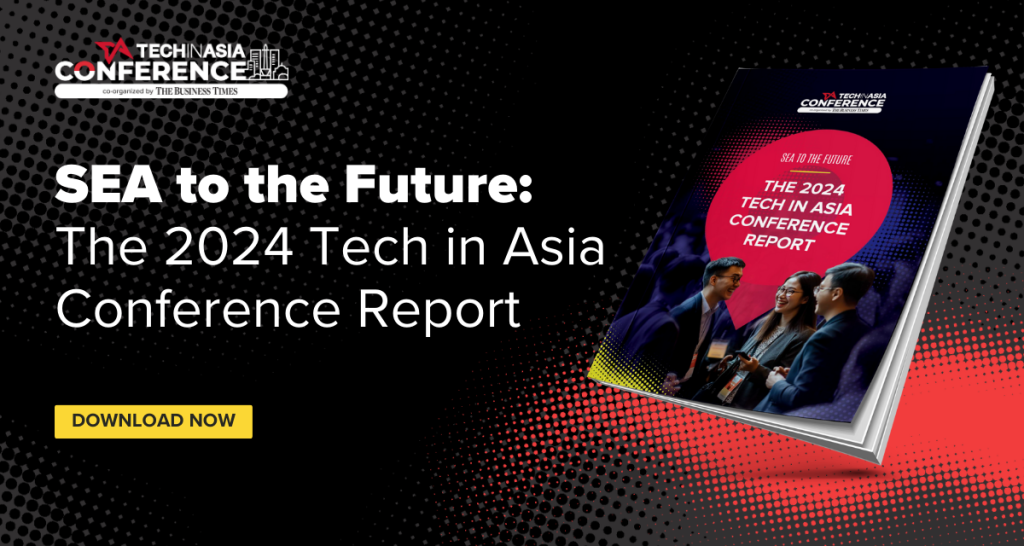
Southeast Asia, facing the growing threat of climate change, is witnessing a surge in cleantech innovation. Cleantech startups are attracting significant interest, offering sustainable solutions to the region’s energy challenges.
This is just one sector we explored in the 2024 Tech in Asia Conference Report. Download now to gain valuable insights into the cleantech landscape and discover how it’s shaping the future of Southeast Asia.
Join us at the Tech in Asia Conference Jakarta, October 23-24, to delve deeper into cleantech trends and network with industry leaders. Don’t miss the session Unpacking SEA’s clean energy ambitions, with Eka Himawan (managing director, Xurya Daya Indonesia), Emir Nurov (CEO, Resync), and Mohd Nazli Ghazali (head of merger & acquisition at Petronas).
Use code SEATOFUTURE for a 15% discount.
That’s it for this edition – we hope you liked it! Do subscribe to continue receiving The Offset.
See you next month!
The Offset is made possible thanks to Taiwan Mobile.
The company recently released the telecommunications industry’s first TNFD (Taskforce on Nature-related Financial Disclosures) report in Chinese.
Taiwan Mobile is on a mission to transition to 100% green energy by 2040.
Stay updated on the go with our mobile app.
Get latest insights with smoother, more personalized experience through TIA mobile app.
Recommended reads
 Life’s a game, and AI agents are Animoca’s new play
 Indonesian AI startup goes global
 Forrest Li on scaling Sea, building smarter bots, and founder grit
 An AI assistant that joins sales calls and scores team skills
 Beyond the check: Why VCs need more than capital
 SGX’s CEO says it doesn’t need a unicorn to win
 SMEs want AI too, but not the kind Big Tech is selling
 Oatside’s alt-milk rise hits a profitable gear
 Alibaba’s financial health in 12 charts
 Asia’s telcos bundle AI into mobile plans. Will it pay off?





Editing by Collin Furtado and Mina Deocareza
(And yes, we’re serious about ethics and transparency. More information here.)





