Malavika Velayanikal · · 5 min read
User data superior to Facebook, Google: one startup’s recipe to dominate mobile ads

A mobile-first, app-only, smartphone generation. All the buzz in India is about how mobile is transforming business and everyday life. A Nielsen-Vserv report says 150 million Indians are on their smartphones nearly three hours daily, and a quarter of them are app junkies – downloading nearly 20 apps a month.
And yet, big brands spend only 5 to 10 percent of their ad budget on mobile media. This year’s Mary Meeker internet trends report says consumers are spending six times more time on mobile compared to print, but print media gets more than twice the amount of ad spend from marketers. Another report from Forrester Research says companies are reluctant to invest in mobile ads because they’re not too sure about the impact of their campaigns. A survey of decision-makers in large corporations found that only 18 percent of them felt “very confident” about measuring the return on investment of their mobile ads.
A number of tech startups have sprouted to close this gap. They are trying to help brands target their mobile audiences and track campaigns better. The problem is the lack of quality data for targeting and tracking mobile consumers. Traditional tracking methods like cookies don’t work in mobile apps, so publishers know little about their audiences.
Mobile data firm Zeotap claims to have an answer to this: customer data from telcos. It is tying up with telcos across Asia and Europe to make their subscriber data available to mobile advertisers.
Gold mine of user data
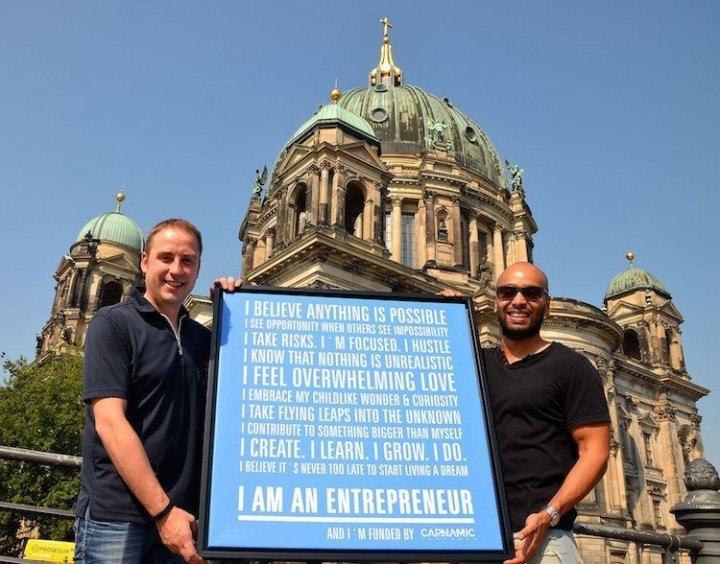
Stephan Schwebe and Projjol Banerjea, co-founders of Zeotap
“They are sitting on a gold mine of user data, comparable – and, in some cases, superior – to what has been accumulated by the likes of Facebook or Google,” Projjol Banerjea, co-founder and chief product officer of Zeotap, tells Tech in Asia.
Most of the data with publishers and advertisers currently is based on generalizations and assumptions. For example, if a user is in a cricket app, he is likely to be male. Or if a user is browsing a catalogue on a fashion site, she’s probably young and female. What the telcos have, on the other hand, is specific user data on age, sex, location, income level, and more. Zeotap hopes to provide that to brands and advertisers to make their targeting more incisive.
“The data with telcos is deterministic (as opposed to probabilistic modelling techniques used by almost all current data providers), longitudinal (they have the full picture of a user), and scalable (their subscriber bases are in the tens or hundreds of millions),” points out Banerjea.
Telcos can’t share their user data with advertisers, however, without violating the privacy of subscribers. That’s where Zeotap comes in to enable telcos to monetize their treasure chest of user data.
Anonymizing the telco data

The Berlin-headquartered company, with a tech development center in Bangalore, converts the telco data into a form that advertisers can use, by hiding or encrypting personally identifiable information. “We utilize temporary or perishable user identifiers to ensure there is no data leakage,” explains Banerjea, adding: “Our solution was developed in Germany – a market with the strictest user privacy regulations.”
Vserv did it first





Stay updated on the go with our mobile app.
Get latest insights with smoother, more personalized experience through TIA mobile app.