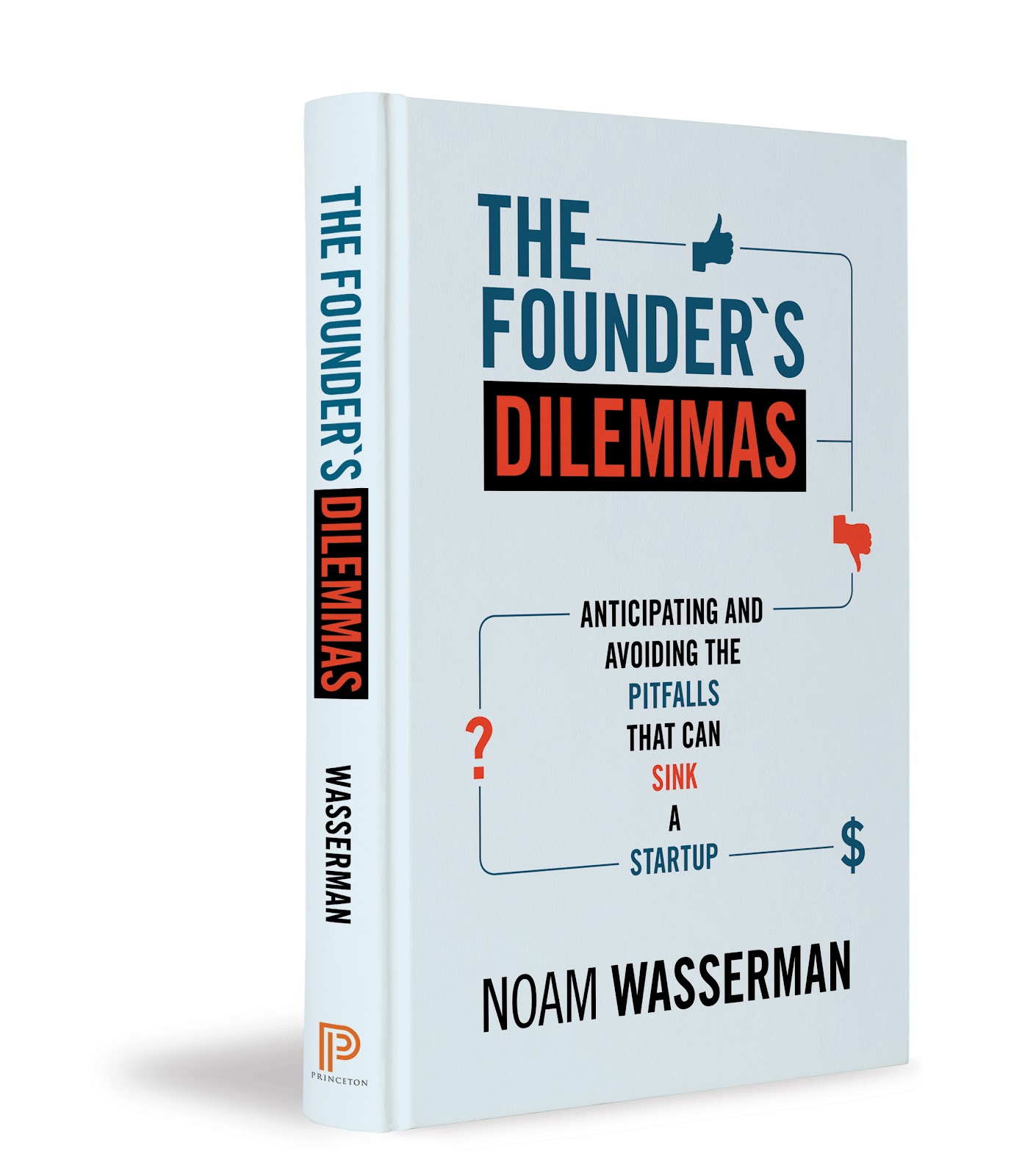
 The process from starting to managing a start-up is a daunting process for any entrepreneur. In that journey, founders from different companies face a challenging set of questions which they struggle to come up with answers for.
While browsing through the Kinokuniya bookstore on a Saturday, I came across this book “The Founder’s Dilemma” by Noam Wasserman, which has the extraordinary nature of combining scholarly research and practical advice on dealing with a couple of sensitive issues from founding team dilemmas to division of equity and other financial rewards among the founding team.
Highly recommended for those who plan to embark or are already living the entrepreneurial lifestyle, it can serve as a guide to very tough situations for founders to evaluate the best possible way out.
Here are a set of a common questions that I often get in my day-to-day communication with people who are thinking of starting up and people who have already started their own companies.
1. Pre-Founding Situation: “I have a great career at company X, should I quit and launch a start-up?” or “I have done some research on the idea but I am not sure if the market is receptive to my idea or my perceived situation may be unfavourable to me.” Even with the data that might back the venture, you might be caught in a hesitant mode because of family reasons.
2. Founding Team Issues: Here’s one which I know that it might have implications for start-ups seeking funding: “Should I launch the business myself or try to attract co-founders?” or “Should I ask my friends, family, acquaintances, co-workers or strangers to be my co-founders?”
Even you manage to overcome that, the next question is the role of each co-founder and his or her area of responsibility which probably intersects each other early but will become more specialized when the company grows. Then the next problem is about how a team should make decisions in the midst of facing a tough call that might affect the company in the long run. Of course, the most sensitive enquiry I often get is how the team should divide equity and financial rewards among the founding team.
3. Beyond the Founding Team: This is the part which both the growth of the start-up and gaps in the founding team’s abilities or resources will require them to add non-co-founders and people who might be able to scale their company, which brings a few dilemmas on hiring, dealing with investors and founder-CEO succession.
What Wasserman did in the book is collect 10,000 case studies of founders from various industries, and help to decipher how some of them might have a great story to tell but made decisions that are very absurd or not logical during any of the three stages of the companies.
He broke the problem down in a similar way to how venture capitalist Brad Feld did in his book “Venture Deals”: Entrepreneur seeks to balance between wealth and control, two important aspects of the business. Put simply, do you want to have control over the business or make a lot of money? The follow-up question to that is what kind of trade-offs can you make in the process?
The way the author distills decisions into a matter of wealth and control is, in my opinion, brilliant. The principal case studies used by the author are: Tim Westergren with Pandora Radio, Evan Williams with Odeo & Twitter, Genevieve Thiers of Sittercity and other founders. In each chapter, Wasserman organizes each founder’s dilemma and set up a framework that helps the founder to find an answer with the issue involved.
The most contentious and sensitive chapter is in the reward dilemmas in the form of equity splits and cash compensation. One of the things the author showed in the book is that natural inclinations about equity splits are wrong and counter-productive.
How does one circumnavigate these difficult and tough calls? There is an inherent conflict to how the founders’ contributions (relative or absolute) can never be precisely defined or measured while their equity stakes & cash compensation are specific down to the decimal point.
The key is that founding teams need to avoid potential disastrous consequences of early and static equity split. They need to devise a good compensation plan that one, reflects each member’s past and expected contributions and motivating each co-founder without seeming unfairness to the others, including future employees.





Stay updated on the go with our mobile app.
Get latest insights with smoother, more personalized experience through TIA mobile app.













📅 Upcoming Events
22 October 2026
Payoneer x CSPN Summit 2026