Osman Husain · · 3 min read
Forrun aims to solve Pakistan’s delivery trust issues with tech
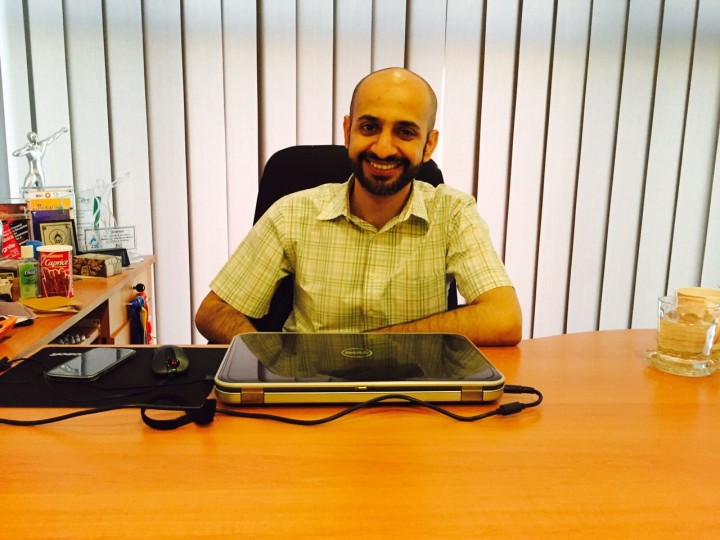
Faizan Laghari, founder Forrun
Delivery services in Pakistan are a relatively untested phenomenon, with the market restricted to mainly restaurants and cafes and few entrepreneurs daring to scale the business into other channels. However, the recent launch of Forrun aims to radically alter the playing field.
Forrun, a startup that promises to deliver anything “instantly,” is a clever play on the Urdu word ’Fauran’ (immediately). The company has already achieved a significant milestone by signing Foodpanda as one of its clients – becoming the first delivery service company in Pakistan to do so. Its ambition – as explained by founder Faizan Leghari – is to emulate the model of Postmates and capitalize on the time value proposition by doing users’ errands such as paying bills, picking up groceries, and getting your laundry.
Serial entrepreneur Laghari, who is already running startups such as Happening.pk, Textualy, and The HQ, has over a decade of experience in the realms of web development, tech-based disruption, and brand management. He is confident about the success of his latest venture. “Trust, reliability, and efficiency are the most integral parameters for a service like Forrun to succeed,” he tells Tech in Asia. “We are working around the clock to make sure there is a seamless user experience.”
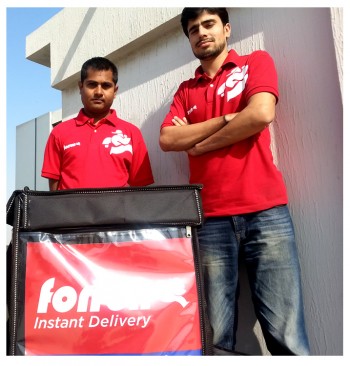
Using technology to overcome barriers
The core operations of Forrun hinge upon location-based data that helps match a delivery order to the courier closest to them. As soon as an order is placed, all nearby couriers get a notification on their smartphone app that includes shipment and delivery details. When the order is ‘accepted’ by a courier, a simultaneous notification is sent via text message and email to the recipient, confirming the delivery.
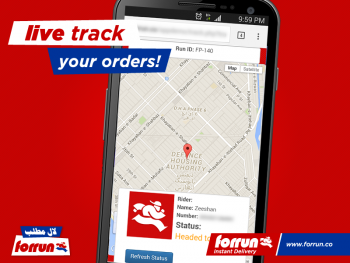
What happens next is what will ultimately set Forrun apart from its immediate competition. As the courier picks up the items destined for delivery, he pushes another button on his smartphone app, intimating that the products are en route to their destination address. At this point, the end customer is sent a web link which allows them to remotely track the courier via Google Maps. This live tracking gives transparency to the entire process – an element which is crucial for the model to succeed in Pakistan, where consumers are sometimes unrealistic in their expectations.
Leghari is quick to explain that even established players in the courier business such as TCS and Leopards are not interested in implementing such a system or exploring this new space. Therein, he believes, lies the opportunity as a more tech-savvy urban populace realizes the convenience that Forrun offers.
Pakistan’s urban demographics certainly suggest that the startup has significant opportunity to scale up. The coastal metropolis of Karachi – Forrun’s target market for now – is a teeming urban sprawl of approximately 22 million residents and high rates of internet and smartphone penetration. Consumers have, so far, shied away from mass acceptance of delivery services but that is mainly down to an absence of trust and little faith in the state’s ability to dispense justice where necessary. If such concerns are addressed adequately, then there seems to be no reason for Forrun not to succeed.





Stay updated on the go with our mobile app.
Get latest insights with smoother, more personalized experience through TIA mobile app.