- Insights This article was written by a TIA community member. Insights pieces undergo the same rigorous editorial process that newsroom-produced articles have.
 Tim Romero · · 4 min read
Why this SaaS startup isn’t going freemium or expanding to other industries
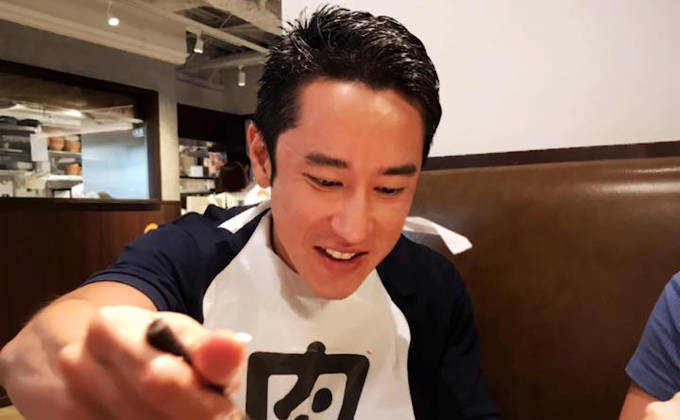
Yu Taniguchi, CEO and founder of Vesper
This article is part of Tech in Asia’s partnership with Disrupting Japan where we publish the revised transcripts from the show’s podcast interviews with Japanese entrepreneurs. This is heavily revised from the original transcripts. For the full interview, go here.
Growing a business after raising money is always hard. But it’s even harder when you are competing against 100 other funded startups with the same business model.
I’d like to introduce you to one of those companies. Yu Taniguchi is the CEO of Vesper, the creator of Table Solution. It’s a SaaS service similar to OpenTable in that it helps restaurant owners manage their reservations and understand their customers. They have thousands of paying customers, are profitable, and are beginning to expand globally.
In this interview, Taniguchi talks about the business model and shares some insights on the industry.
Tell us about Table Solution
We’re in a super competitive space. A lot of people think that our competitors are companies such as Gurunavi and Tabelog, but OpenTable is actually our competitor. The difference between their business model and ours is the cover fee. Every time a customer makes a reservation through OpenTable, the restaurant has to pay them a fee. We charge nothing.
What we charge is a flat monthly fee between JPY 12,000 (US$108) and JPY 20,000 (US$181) depending on the restaurant’s size. We don’t have a free tier.
Did you experiment with a freemium model?
We did think of various scenarios such as charging advertisement fees to companies who want to approach restaurants, then provide our solution completely free to these restaurants.
However, we interviewed 300 restaurants prior to releasing our product and they all said that they would be willing to pay roughly US$100 a month if their operations become smooth or automated. So, we decided that it’s better to start charging restaurants rather than going for a freemium model, where the conversion rate is usually really low.
To be honest, we also didn’t have much cash in the bank.
Tell us about your customers
We serve 2,000 restaurants right now, including global hotel chains like Hilton, InterContinental, and Hyatt, and Michelin-starred restaurants. All these restaurants are using our service as a table management system. Sometimes, we integrate with other existing systems that the restaurants are using, such as POS. But not too deeply because we are essentially replacing paper and pencil bookings.
You shut down a version of your product for beauty salons. Is it better to focus rather than expand horizontally?
Our customers are willing to pay JPY 12,000 to JPY 20,000 per month because the product suits their business model. Google Calendar, for example, is good enough to manage reservations, but restaurants won’t be willing to pay a lot for it. We wanted to increase the average revenue per user to maintain profitability.
Expanding horizontally may be good for a multimillion-dollar company with, maybe, 100 engineers who can develop products for every industry. In our case, we have very limited resources and the restaurant industry itself is big enough. Also, I love eating and restaurants. I wasn’t as motivated when I interviewed hair salons.
Should B2B startups focus on enterprise deals early or build their reputation with small businesses first?
Consider whether the market you’re approaching will get you access to all other markets. In terms of restaurants, the largest company in the market, McDonald’s, has only about 2 percent market share. So, if you’re approaching only enterprises, you will be missing 98 percent of the market. We have to approach both enterprises and smaller shops.
What would you change in Japan to make it a better place for startups?





Stay updated on the go with our mobile app.
Get latest insights with smoother, more personalized experience through TIA mobile app.