- Insights This article was written by a TIA community member. Insights pieces undergo the same rigorous editorial process that newsroom-produced articles have.
 Joash Lee · · 6 min read
Who will foot retail’s decarbonization bill?
Joash Lee is a venture partner at VNTR Capital and a limited partner at 4Ward.VC.
Every industry faces increasing pressure to tackle climate change, but reducing carbon emissions doesn’t come cheap for anyone. The retail sector is no exception.
Decarbonization will require cooperative action and money – a lot of it. But who’s going to foot retail’s multitrillion-dollar decarbonization bill?
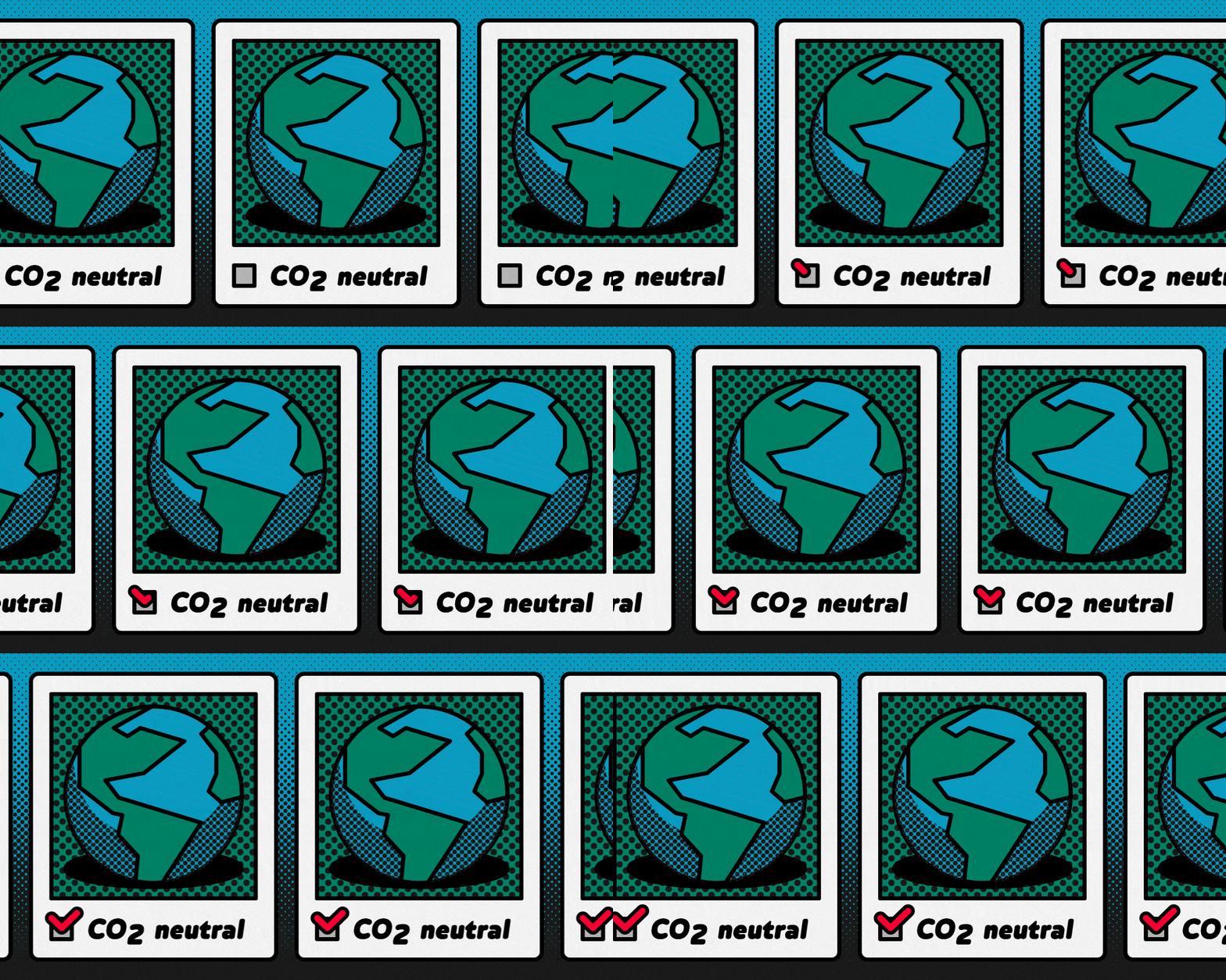
Image credit: Timmy Loen
Stepping up
Beyond government action with initiatives like the Paris Climate Agreement, businesses need to step up to the plate, according to experts like Rebecca Henderson of Harvard Business School.
While we might suggest that governments charge greenhouse gas emitters for the harm they inflict, “there’s not much sign governments are up for this … I think business should step up,” she says.
A report by McKinsey found that the number of retailers setting science-based emission targets grew 5x between 2019 and 2021, with a growing number of retailers jumping on the bandwagon – a clear sign that the private sector is starting to take things seriously.
But these commitments don’t come for free. Costs for businesses will surely increase and funding requirements will be in the trillions, making investors critical for the transition to a green economy.
Investors’ dual role
For a start, investors consider a firm’s ESG strategy a fundamental component of their investment decisions, driven by pressure from partners, lobbyists, and new ESG reporting standards such as those published by the International Sustainability Standards Board.
Blackrock CEO Larry Fink mandated firms to detail and report on their sustainability efforts in his most recent letter to CEOs of portfolio companies, and he is not alone.
The global sustainable finance market is expected to increase 6x in the next ten years. This doesn’t come as a surprise, as we’ve seen both the emergence of green funds at incumbent investment firms like Vanguard’s Global Environmental Opportunities Stock Fund as well as the upsurge of new investors focusing on climate like 4Ward.VC.
Some investors now prioritize purpose-driven firms and carbon footprint metrics when making investment decisions. The former involves a bias toward firms with a profit-with-purpose strategy, while the latter could include analyzing common metrics like carbon emissions, energy and water usage, and waste diversion.
Patagonia is one such purpose-driven firm. It encourages customers to buy fewer items and repair older ones, catalyzing the shift to a more sustainable future. Likewise, Ikea is promoting circular practices like furniture leasing as well as investing in renewable energy and sustainable sourcing.
Gen Z, the next generation of consumers, has proved to be environmentally conscious, with 72% saying they have already changed their behavior to reduce their environmental impact.
What can retailers do on their own to curb emissions?
The path forward: shifting mindsets





Stay updated on the go with our mobile app.
Get latest insights with smoother, more personalized experience through TIA mobile app.








📅 Upcoming Events
22 October 2026
Payoneer x CSPN Summit 2026