This article is brought to you by Studios, Tech in Asia’s advertising arm that connects brands with Asia’s tech community through the power of storytelling.
Driven by the pandemic in 2020, Southeast Asia experienced massive digitization and cemented its position as a mobile-first consumer economy.
In order to appeal to the mobile-first consumer, many brands are shifting their focus to building a strong video content strategy because they realise the inherent potential of videos in connecting with their customers.
Have you tapped into the power of video content as part of your marketing strategy?
Always-connected devices driving video media in SEA
The smartphone boom in SEA is perhaps the single biggest factor driving video consumption in the region. Mobile connectivity in SEA was at 141 percent in 2017 and has been growing ever since.
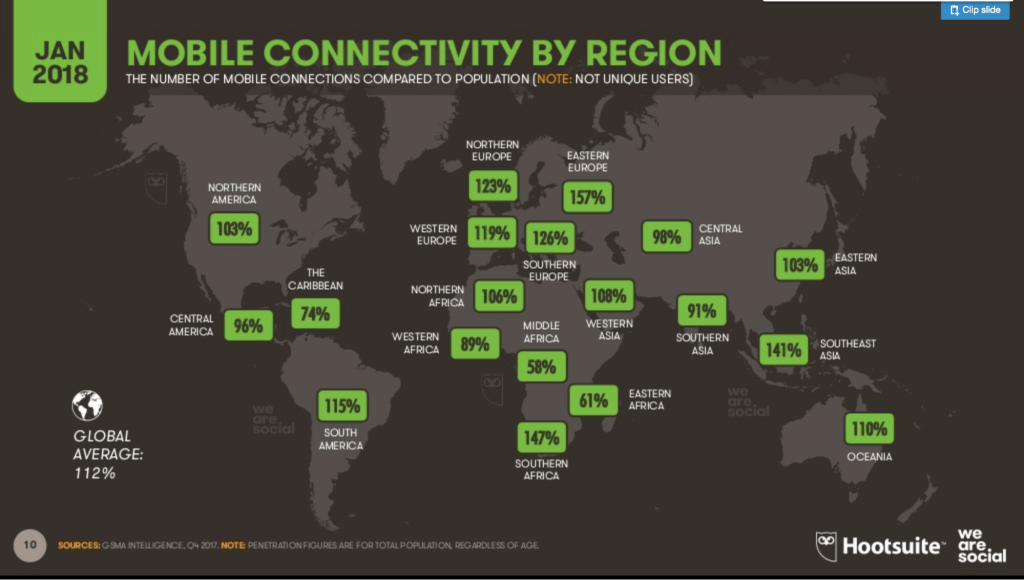
Source: Hootsuite
With more people in SEA accessing and watching online videos through their mobile devices, there’s a hot opportunity for you to engage an audience primed and ready to consume video content.
1. Video has the highest engagement rate of all content types
Of all the content formats posted by Facebook pages in SEA, videos consistently received the highest average engagement rates (9.94 percent in Brunei, 9.70 percent in Indonesia, and 6.27 percent in Cambodia to name a few).
Furthermore, 54 percent of consumers want to see videos from brands – more than any other content format.
Perhaps even more impressive is the length of time users spend on online video websites like YouTube. In the Philippines, for example, the average Filipino internet user spends approximately 23 minutes on YouTube per visit.
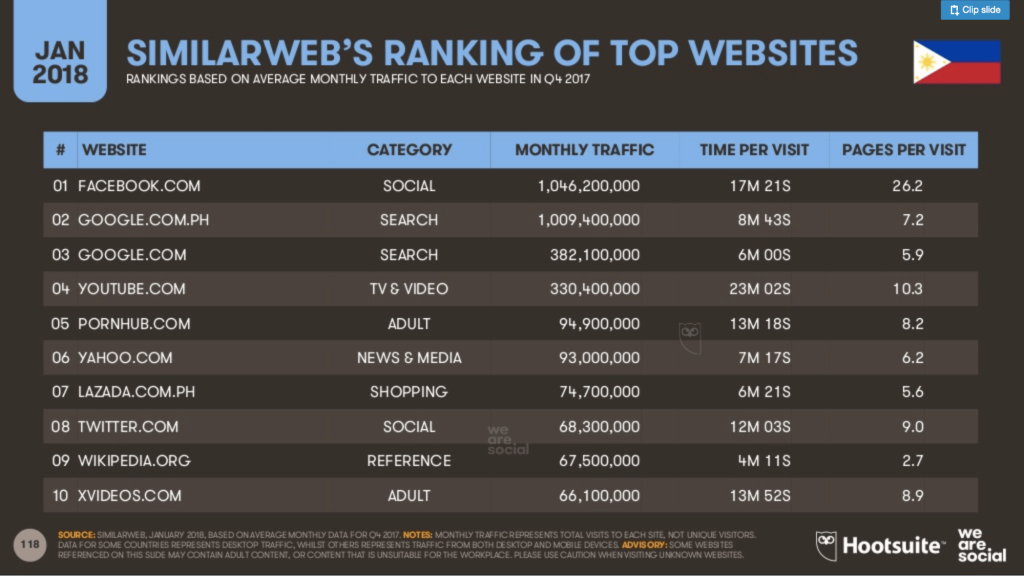
Source: Hootsuite
This is consistent with the online video viewing habits of people in Malaysia (30 minutes) and Indonesia (23 minutes).
2. Locals want local content
In a region as diverse as SEA, there’s no one-size-fits-all when it comes to designing a video content strategy. You have a much higher chance of making locals a fan of your brand when you create localized content that is relevant and relatable to them.
For example, when it was entering the competitive Indonesia market, Amazon Alibaba Cloud worked with Tech in Asia to create a series of “Future Indonesia” video content that helped to differentiate them from their competitors and highlight their local products.
Want to see what the crew here at Tech in Asia can help you reach the tech and startup community in SEA? View our media kit below.
3. Online video ads in SEA are delivering ROI
According to a report by mobile ad platform InMobi, SEA saw its video ad spending grow by 65% in 2020. This comes as no surprise, given that click-through rates for videos outperformed other in-app formats by 179%, making it the most effective ad format.
Taking advantage of this growth are brands in the retail and food and beverage industries, whose ads are preferred most by SEA consumers on mobile devices.
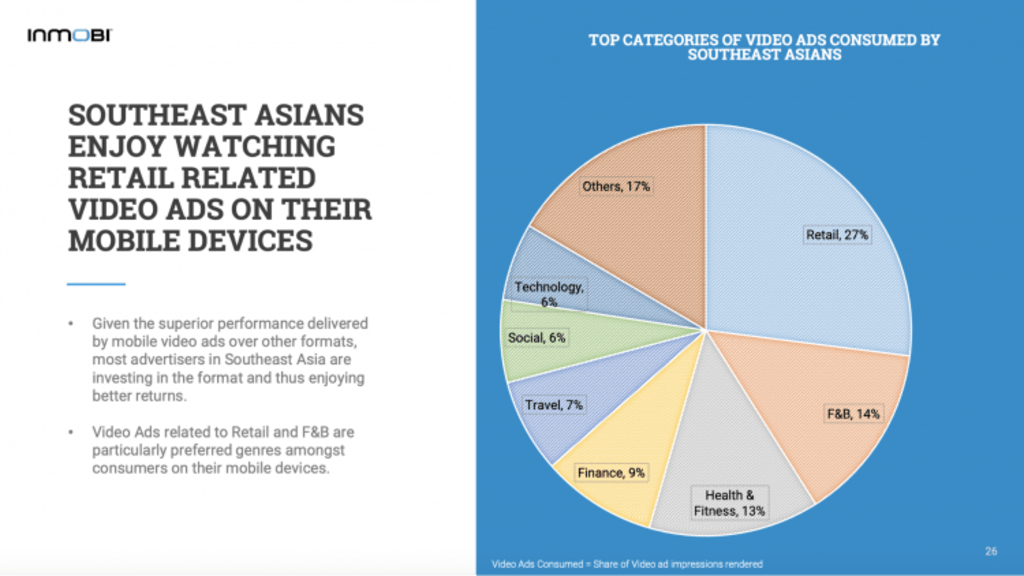
Source: InMobi
4. YouTube is unmatched in its ability to maintain user attention
Back in 2014, Google acknowledged the high number of YouTube viewers in Thailand and launched a Thai version of YouTube under a new local domain: YouTube.co.th. Watching online videos seems to be a national pastime in Thailand, with 57 percent of users doing it everyday.
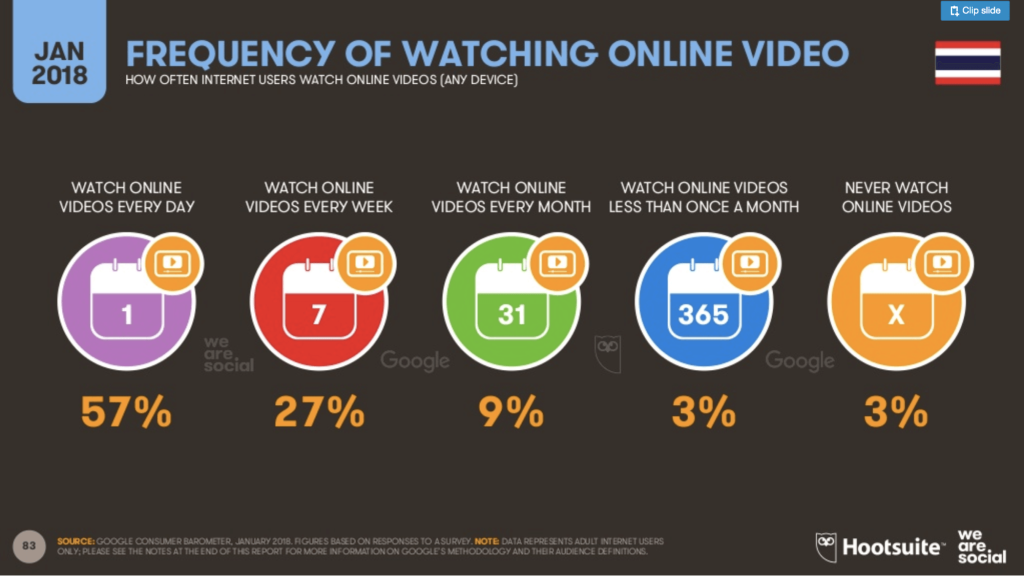
Source: Hootsuite
By Google’s estimates, however, that number is much higher: 89 percent.
But the real reason Thailand’s relationship with YouTube is special is because of the full attention Thai users give YouTube content, even when they’re multi-screening (i.e. looking at their phones while watching TV or looking at a desktop screen).

Source: Google
These behaviors are by no means unique to Thailand either. As Google points out, SEA has several YouTube enthusiasts who are keen on online video.
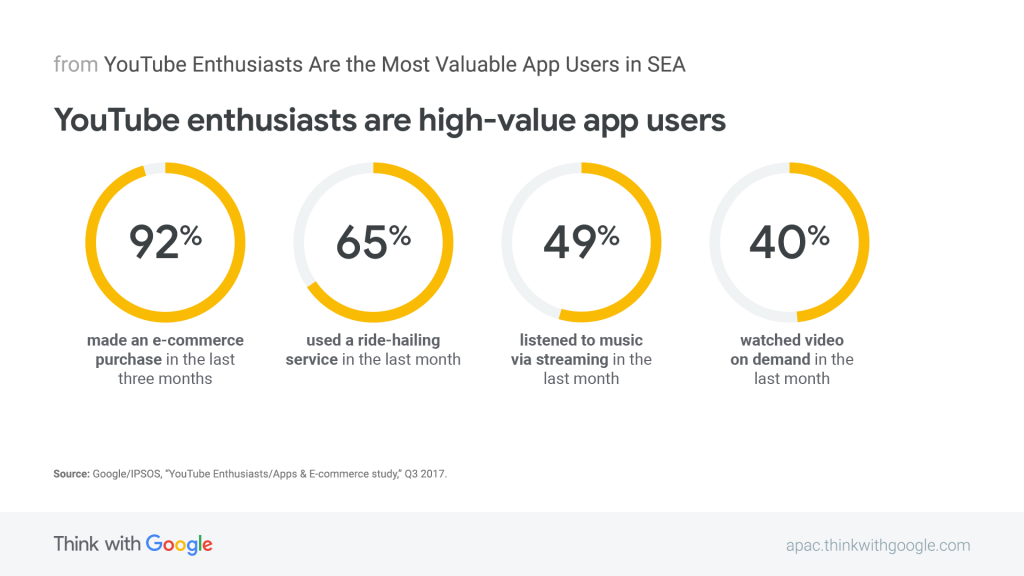
Source: Google
But more importantly, these YouTube enthusiasts are also more likely to shop online, spend more, subscribe to music streaming and video-on-demand, and use ride-hailing services. Coupled with the fact that 30% of SEA consumers have increased their online spending due to the pandemic, this presents an opportunity for brands to create video content that targets these preferences and drive higher engagement and sales.
5. Mobile is replacing TV as the first screen for video
SEA is unique for being a true mobile-first region. While the internet took off in the mid-1990s in the West, in SEA, the internet arrived much later. By then, most SEA users’ first online experience involved Facebook and mobile access to the Internet.
Naturally, this has also shaped the online video experience in SEA, where more users spend more time watching videos using mobile devices. In Thailand, for example, 72 percent of users watch online videos compared to only 45 percent and 40 in the United States and United Kingdom, respectively.
There has also been a rise in popularity of mobile-friendly, short-form video content driven by the meteoric rise of TikTok. As of August 2020, the video-sharing social networking platform has had more than 360 millions downloads in SEA, with 151% growth year-on-year for 2020. Now is the best time for you to tap into the popularity of mobile videos for your ad campaigns.
For example, Tokopedia succeeded in driving traffic to its online marketplace using six-second Bumper ads in a mobile-friendly format. This strategy generated 22 million impressions and a 47 percent increase in ad recall.
Businesses in SEA should invest in video marketing
SEA occupies a unique position in the video content space. Aside from being a mobile-first region, local users are genuine video enthusiasts eager to watch content from brands they like. That in itself should compel you to seriously consider producing their own videos.
Video is no longer the future — it’s here and brands are already seeing results. Now is as good a time as any to begin investing in online video content for marketing.
If your organization wants to reach the tech and startup community in Southeast Asia through compelling video content, Tech in Asia has the storytelling tools and loyal audience base to help you reach your goals. You can get in touch with us here or view our media kit below.
Stay updated on the go with our mobile app.
Get latest insights with smoother, more personalized experience through TIA mobile app.
Recommended reads
 Indonesian AI startup goes global
 Forrest Li on scaling Sea, building smarter bots, and founder grit
 An AI assistant that joins sales calls and scores team skills
 SGX’s CEO says it doesn’t need a unicorn to win
 SMEs want AI too, but not the kind Big Tech is selling
 Oatside’s alt-milk rise hits a profitable gear
 Alibaba’s financial health in 12 charts
 Asia’s telcos bundle AI into mobile plans. Will it pay off?
 M-Daq chases bigger clients as revenue falls, losses grow
 VC tracker: Accel raises US$3.5b, including US$550m for India





Editing by Cheong Hui Min and Lim Jia Xin
(And yes, we’re serious about ethics and transparency. More information here.)





