- Premium Content It takes our newsroom weeks - if not months - to investigate and produce stories for our premium content. You can’t find them anywhere else.
 Simon Huang · · 7 min read
The rush among food delivery apps to deliver more than just food
In recent years, companies in the food delivery space have branched out into adjacent segments.
Grab, in particular, lets users order items ranging from groceries, stationery, to books through its app, while food delivery players Foodpanda and Deliveroo have expanded into the groceries vertical too.
Underpinning this shift is the concept of quick commerce, otherwise known as q-commerce.
Broadly speaking, there are two kinds of consumption habits: people either schedule orders ahead of time or they have something delivered urgently. Think about the difference between someone placing an order for a week’s supply of groceries for delivery the next day versus a customer who uses the app because they’re craving for ice cream in the middle of the night.
The latter is an example of q-commerce, which Foodpanda has described as “the superlocal and superfast delivery of anything to your doorstep.”
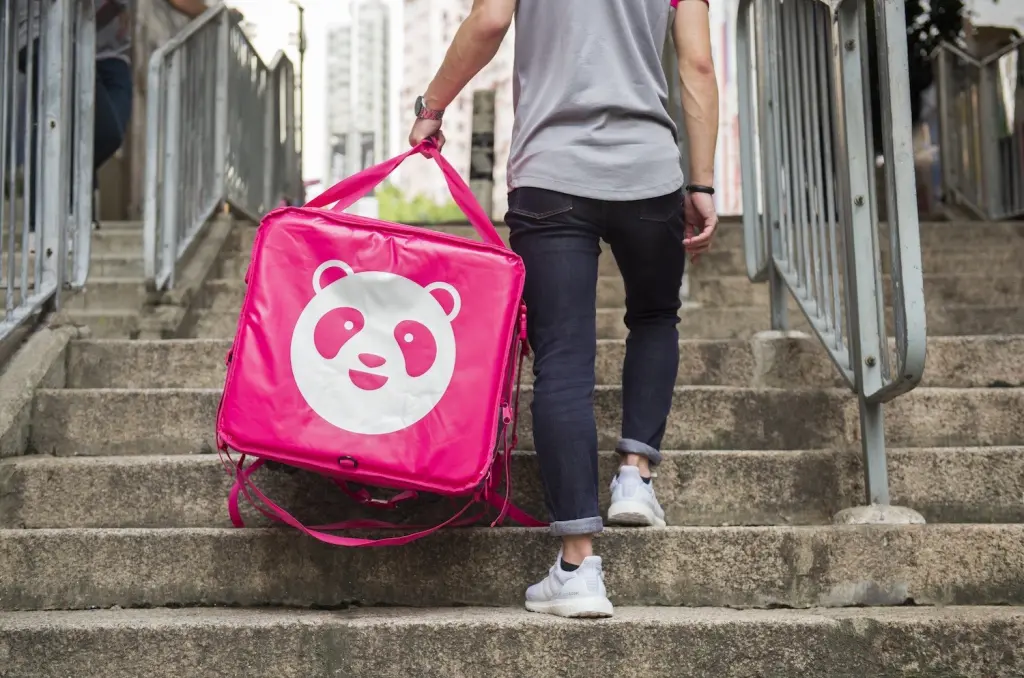
Photo credit: Foodpanda
There’s a good reason why food delivery players are getting into q-commerce: the orders occur throughout the day. In contrast, food orders spike during lunch and dinner, creating a lull at other times. With a consolidated offering, platforms can provide drivers with a more steady source of income.
In countries like Indonesia, this synergy is even more pronounced, as Gojek and Grab drivers can also pick up passengers in addition to delivery parcels.
Q-commerce model depends on needs of local consumers
In its efforts to expand into the groceries segment, Grab has had to get creative due to the varying market conditions in places like Singapore and Indonesia.
In Singapore, existing supermarkets offer a wide selection of products and are densely spread over a small geography. So it made more sense for Grab to tie up with existing players. Its partnership with local supermarket chain Hao, which currently has 49 outlets across the island, is a prime example of this.
The groceries market in Indonesia, meanwhile, is largely skewed toward purchases from mom and pop stores. Traditional retailing accounts for 83% of the country’s grocery retail share, compared to only 28% in Singapore. Convenience stores, which offer a narrower selection of products than supermarkets or hypermarkets, are also a popular option for the nation’s citizens.
To work around this, Grab built micro and central warehouses in Indonesia in areas with low supermarket penetration. This made for shorter delivery times to underserved areas.
But as with food delivery, Grab faces stiff competition in the online grocery space.
Don’t forget parcel delivery
A minefield
Stay ahead in Asia’s tech landscape
This is premium content. Subscribe to read the full story.
It’s more than just making the numbers look good.
We know this is not ideal. ⌛ Sign up in 20 seconds. Cancel anytime.
Our subscriber community includes professionals from these companies:





Stay updated on the go with our mobile app.
Get latest insights with smoother, more personalized experience through TIA mobile app.