
Welcome to The Offset! Delivered once a month via email and through the Tech in Asia website, this free newsletter breaks down the biggest stories and trends in greentech. Get it in your email inbox by registering here.
Hello Readers,
As a consumer, I have been trying to make more sustainable food choices. When I eat out with friends, I try to get the plant-based version of whatever I feel like having. Living in a city, I don’t find it difficult to find meat alternatives ever since they made their way onto the menus of many restaurants and fast-food chains.
Although the plant-based movement is having a moment, the companies making these sustainable protein products have struggled to grow their sales since the pandemic. In this issue, we take a look at some possible explanations.
Happy reading!
THE BIG STORIES
1️⃣Sunseap records biggest loss in 7 years

Image credit: Timmy Loen
Singapore-based renewable energy startup Sunseap recorded an operating loss last year as revenue growth slowed and expenses nearly doubled from a year ago.
2️⃣Behind Nafas’ plan to offer ‘clean air as a service’

Image credit: Timmy Loen
Indonesian startup Nafas hopes to tackle air pollution with a B2B subscription model that allows businesses to centralize and customize their filtration systems according to their needs.
DEEP READS
1️⃣Plant-based meat sales are flat – here’s why
Retail sales of plant-based meat hit a snag almost across its biggest markets – most notably in the US. The numbers began stagnating in early 2021 after solid growth throughout 2020, according to a Financial Times report.

Image credit: Timmy Loen
There are a few possible explanations as to why sales have flatlined in recent years. One is that the pandemic created an unprecedented demand for plant-based meat, which bumped up 2020 sales figures. The slowdown we are seeing now is just a normalization from elevated levels.
Some reports suggest inflation is the culprit – rising prices have hurt consumer demand as such products come at a premium.
See more: Alt-meat makers race for palatable prices
Other explanations attribute the problem to plant-based meat’s taste and texture, which is often considered inferior.
At the same time, skepticism is swirling around health claims that alt-meat companies make.
So, cost, taste, or health – which is it? All of the above, experts say. And the nascent industry is trying to come up with solutions to address these problems.

Photo by Wine Dharma on Unsplash
2️⃣Junk carbon offsets are what make these big companies ‘carbon neutral’
What’s the secret to becoming carbon neutral? Bogus carbon offsets, apparently. In the past few years, many large companies – including Credit Suisse, Delta Air Lines, and Etsy – have started buying carbon offset credits instead of actually reducing emissions. They do this simply because it is easier and cheaper. Some argue these offsets function like an accounting maneuver that allows more greenhouse gas to enter the atmosphere.
Research has shown that most purchases of renewable-energy offsets are not credible: They tend to be low-quality credits that do not avoid or reduce greenhouse-gas emissions.
For example, while purchasing credits to support solar or wind projects sounds good, some experts consider these offsets largely bogus because many renewable-energy offsets go toward solar and wind power – which have already established themselves as the cheaper than dirtier alternatives.
Moreover, there is little transparency on what specific buyers pay for an offset or what each project charges for them. Almost half of the carbon offsets purchased last year did not have enough information to attribute them to buyers.
TRENDING NEWS
You can also check out Tech in Asia’s coverage of Asia’s greentech scene here.
1️⃣Razer launches green ecommerce checkout solution
Razer, the Singapore-based gaming company, has rolled out a carbon-neutral ecommerce checkout feature that allows customers to offset their purchases with traceable carbon credits
Why it matters:
Razer is one of the first tech companies to provide carbon offset solutions on its platform.
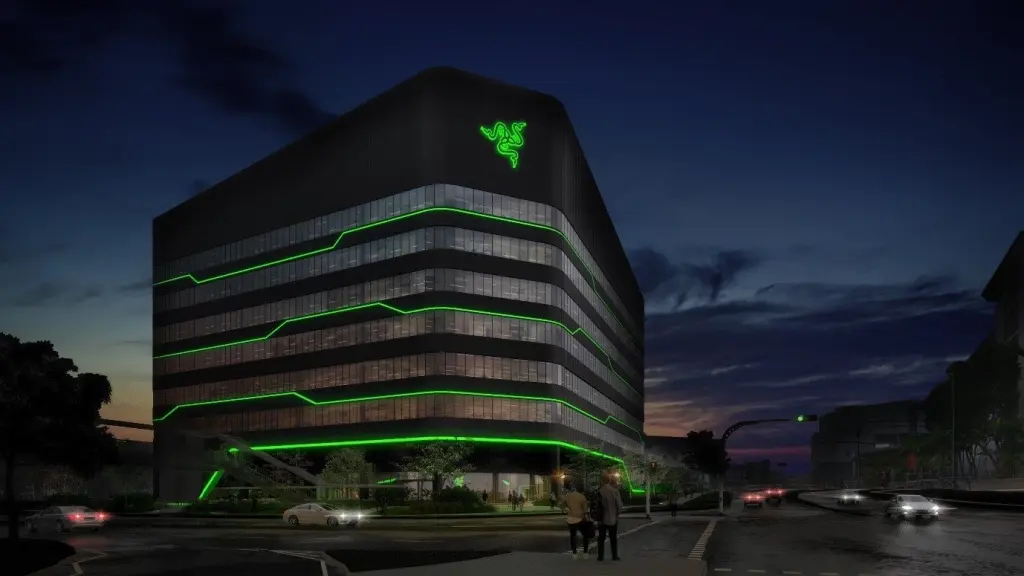
Razer’s new Southeast Asia headquarters in Singapore / Source: Razer
2️⃣Climate tech deal flow holds up amid threat of economic downturn
Overall climate investment from VCs and private equity dropped for the third consecutive quarter, but the number of deals increased.
Why it matters:
There seems to be a lack of investment in the climate tech sector, but there are funds ready to be deployed. The issue is that there aren’t enough startups at the right stages currently.
3️⃣Layoffs at big tech a boon for climate change firms
Climate tech firms are snatching up top talent from Amazon, Facebook, Twitter, and the like amid an industry-wide hiring slowdown.
Why it matters:
For years, the climate tech sector struggled to compete with the lucrative salary and benefits packages Big Tech could offer.

Image credit: Timmy Loen
4️⃣Singapore investment company Wavemaker Impact completed the first close of a US$25 million fund that focuses on technologies battling climate change
Singapore-based VC Wavemaker Impact raised US$13 million at the first close of its planned US$25 million debut fund from investors, including JG Digital Equity Ventures, Kajima Ventures, and Pavilion Capital.
Why it matters:
Since its inception, Wavemaker Impact has established four new firms and aims to launch another 12 companies by the end of 2024.
STARTUP WATCH
1️⃣Houston’s Solugen wants to make greener chemicals — and profits
Chemical startup Solugen has raised US$200 million in a series D round led by Kennivik, Lowercarbon Capital, and Refactor Capital. Other investors, including Temasek, Baillie Gifford, and Fifty Years, also participated in the round.
The company mixes corn syrup with genetically engineered enzymes to create substitutes for common chemicals typically made using phosphates and oil.
The cash injection bumped the company’s valuation up to around US$2 billion.
2️⃣Swell Energy’s $120 million raise proves renewables are getting more love than ever
Energy management and smart grid solutions provider Swell Energy has raised US$120 million in a series B round led by SoftBank Vision Fund 2 and Greenbacker Development Opportunities Fund. The Santa Monica-based company plans to use the new funding to grow its virtual power plants.
Photo by Matthew Henry on Unsplash
3️⃣Samsara Eco raises US$37 million for its ‘infinite plastic recycling’ tech
Samsara, a Sydney-based recycling startup, has raised US$34.7 million in a series A round. The company’s enzyme-based tech breaks plastics down into molecular building blocks to produce new plastic products – which can, in turn, be broken down again. Investors in the round include Breakthrough Victoria, Temasek, Assembly Climate Capital, DCVC, and INP Capital. Existing investors like deeptech fund Main Sequence, Woolworths Group’s W23, and Clean Energy Finance Corporation also participated.
4️⃣BeZero Carbon raises £42m for environmental scoring platform
BeZero Carbon, a London-based carbon-rating agency, has netted US$50 million in a series B round led by Quantum Energy Partners. Other investors include EDF Pulse Ventures, Hitachi Ventures, Intercontinental Exchange, Molten Ventures, Norrsken VC, Illuminate Financial, Qima, and Contrarian Ventures. BeZero provides ratings and risk analytics for the voluntary carbon market. The proceeds from the round will go toward establishing a new location in Singapore and expanding the firm’s New York office.
That’s it for this edition – we hope you liked it! Do subscribe to continue receiving The Offset.
See you next month!
Stay updated on the go with our mobile app.
Get latest insights with smoother, more personalized experience through TIA mobile app.
Recommended reads
 Forget startups. Buy the business running on Excel
 Life’s a game, and AI agents are Animoca’s new play
 Indonesian AI startup goes global
 Forrest Li on scaling Sea, building smarter bots, and founder grit
 An AI assistant that joins sales calls and scores team skills
 Beyond the check: Why VCs need more than capital
 SGX’s CEO says it doesn’t need a unicorn to win
 SMEs want AI too, but not the kind Big Tech is selling
 Oatside’s alt-milk rise hits a profitable gear
 Alibaba’s financial health in 12 charts





Editing by Arpit Nayak
(And yes, we’re serious about ethics and transparency. More information here.)