- Premium Content It takes our newsroom weeks - if not months - to investigate and produce stories for our premium content. You can’t find them anywhere else.
 Aditya Hadi Pratama · · 7 min read
How Amartha went from near collapse to become a top P2P lender in Indonesia
Four years ago, Andi Taufan almost closed Amartha, an Indonesia-based microfinance company that he established in 2010. At that time, the startup had plenty of borrowers, but the demand for loans outpaced the sources of funding. He turned to banks and other financial institutions for money, but without the guarantee of collateral, these lenders were hesitant to release funds. As a result, the majority of Amartha’s borrowers left.
So Taufan threw his last dice: He changed the business model of the company from conventional microfinance into peer-to-peer (P2P) lending. The new model allowed individuals to lend their money to Amartha’s borrowers, increasing the supply side of the startup’s business.
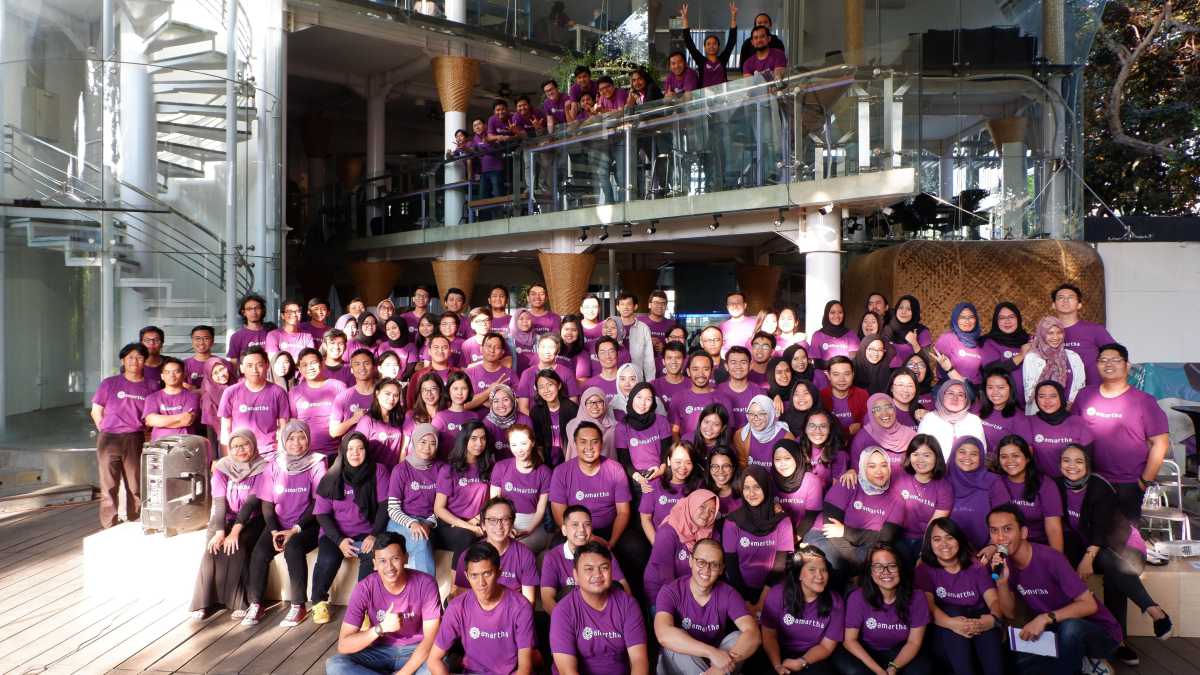
Amartha’s team / Photo credit: Amartha
Today, Amartha is one of the biggest P2P lenders in Indonesia in terms of borrowers for a specific financial product: productive loans, which are designed to help increase business and economic activities. The startup has disbursed loans to 350,000 recipients since it began operations. For comparison, Tech in Asia looked at the websites of prominent P2P players in the same space, such as Modalku, Investree, and KoinWorks. Their data shows that most of them have less than 50,000 borrowers.
Amartha has raised more than US$10 million from four funding rounds so far. It counts Beenext, Midplaza Holding, Mandiri Capital Indonesia, SBI Holdings, Line Ventures, Bamboo Capital Partners, and UOB Venture Management as its investors.
The startup almost reached profitability this year, but Taufan chose to pursue expansion in its home market instead.
Group lending method
Taufan set up Amartha nine years ago without any entrepreneurial or banking experience. Initially, the company focused on granting small loans – starting from 500,000 rupiah (around US$36) upwards – to housewives and other women in rural areas, who mainly used the money as working capital for their microventures.
And unlike other microfinance companies, Amartha only disbursed loans to groups – a practice that was popularized by Grameen Bank in Bangladesh. The borrowers must form groups with 15 to 20 people. If someone in the group can’t make payment, then other members have to cover for her. Once the loan has been repaid, borrowers can apply for another one with a higher amount.
Amartha acts as the middleman between those borrowers and institutional lenders, taking a cut from both sides once the loan and interest are paid back.
By 2013, however, the startup could only get 2,000 borrowers and struggled to fund the loans. One of its co-founders even quit the company. “Maybe he felt uncertain about Amartha’s future. We only served people in Bogor (a small town located south of Jakarta) and didn’t know where we want to go,” says Taufan, who also serves as the company’s CEO.
Undeterred, he kept going. Amartha had 7,000 borrowers by 2015, but Taufan kept facing the same problem: Banks were unwilling to shoulder the risk of lending to microentrepreneurs. “I had to get 500 million rupiah (US$35,800) per month for the loans. But I could only get 200 million rupiah (US$14,300),” he recalls. As such, he could only offer loans to selected borrowers, and those who felt frustrated and disappointed left.

Andi Taufan, CEO of Amartha / Photo credit: Amartha
Fortunately, he got seed funding from Beenext and Midplaza Holdings that same year and used the money to transform Amartha into a P2P lending marketplace. And he did all this while he was taking a master’s degree at Harvard Kennedy School in the US.
Large network of field employees
Close to profitability
A call from Indonesia’s president
Stay ahead in Asia’s tech landscape
This is premium content. Subscribe to read the full story.
It has raised more than US$10 million and is inching closer to profitability.
We know this is not ideal. ⌛ Sign up in 20 seconds. Cancel anytime.
Our subscriber community includes professionals from these companies:





Stay updated on the go with our mobile app.
Get latest insights with smoother, more personalized experience through TIA mobile app.