 Stefanie Yeo · · 6 min read
Driving Asia’s growth: Public-private partnerships in action
The book Teamwork Makes the Dream Work by American author John C. Maxwell espouses the importance of teamwork across all aspects of life. While the phrase has gone beyond being just a book title, showing up in aspirational social media posts and even in memes, the sentiment remains incredibly relevant today.
Working collaboratively can yield great results – that’s never been truer considering Asia’s growing economic landscape. As the region’s economies continue to thrive, joint efforts by the government and private sector can create more opportunities.

Photo credit: Inside Creative House / Shutterstock
Known as public-private partnerships (PPPs), these projects pull together resources, expertise, and funding from the private and public sectors to develop key infrastructure, services, and facilities to serve the public and drive economic growth. They are often long-term undertakings and have goals that go beyond profit.
Here’s a look at three successful PPP projects that have emerged in Asia in the last 30 years.
1. Keppel Seghers Tuas Waste-to-Energy Incineration Plant (Singapore)
The Keppel Seghers Tuas Waste-to-Energy (WTE) Plant was the first incineration plant in the city-state to be developed under the National Environment Agency’s PPP initiative. Keppel Seghers, the environmental tech arm of Singaporean global asset manager Keppel, led the project.

Photo credit: Keppel
Construction of the plant began in 2006, and it was fully operational by 2009. It used in-house solutions from Keppel Seghers, such as its air-cooled grates and flue gas cleaning system, making it the first incineration plant in the city-state to utilize WTE tech from a local company.
The project delivered mutual benefits. It allowed Keppel Seghers to showcase its expertise through working on a government project, building up its credentials. Meanwhile, the government of Singapore tapped into Keppel Seghers’ innovations to effectively address the challenges it was facing with waste management and land scarcity.
“[The PPP approach] creates new opportunities for the private sector and also allows them to build up their technical and operational expertise. This will in turn improve their credibility when Singapore companies market such services overseas,” Yaacob Ibrahim, then minister of environment and water resources, said in a speech during the ground breaking of the plant in 2006.
“A PPP approach can also lead to cost advantages as there is strong incentive for the private sector partner to optimise the operating and maintenance costs of the plant. The private sector can also exercise more flexibility and opportunities for innovation in its operation,” he added.
2. Trans Java Toll Road (Indonesia)
Spanning a length of 1,167 kilometres – equivalent to about 11 FIFA football fields put together lengthwise – the Trans Java Toll Road is a massive expressway network that runs across Indonesia’s Java Island. It goes through five of the six provinces on the island and connects the major cities of Jakarta, Cirebon, Semarang, Solo, and Surabaya.
Construction on the Trans Java Toll Road started in the 1980s, and the expressway has been gradually built over the last three decades. As of 2023, only a 170-kilometer stretch between Probolinggo and Banyuwangi in East Java remained incomplete in the project.
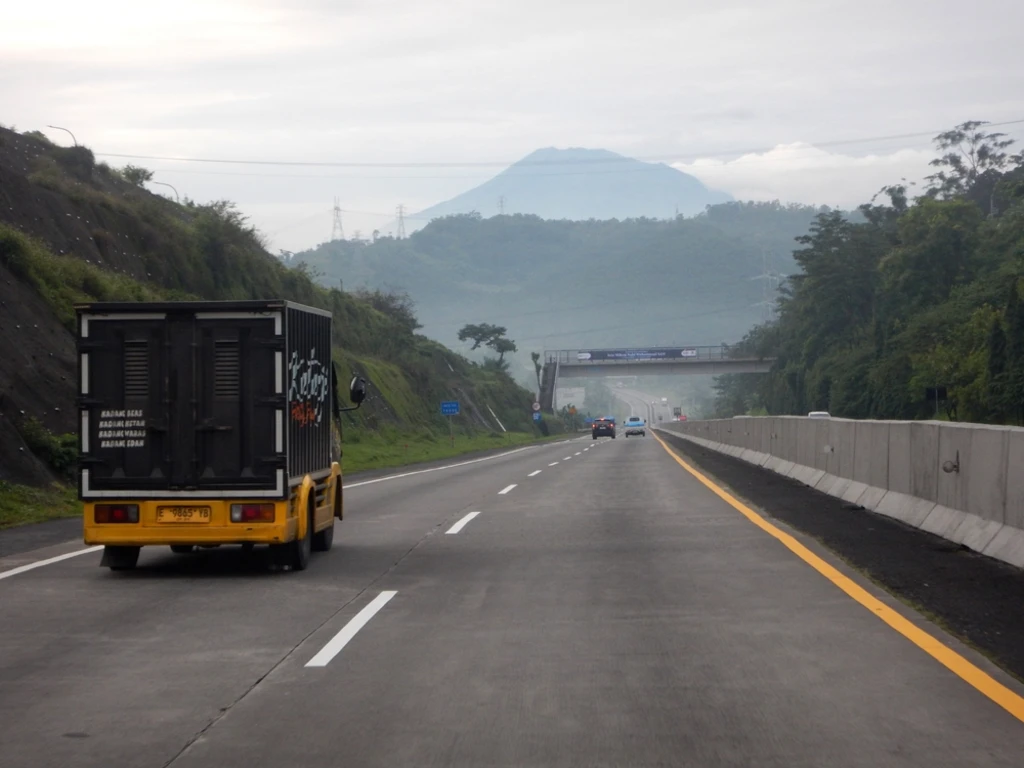
A part of the Trans Java Toll Road / Photo credit: Purnomo Setiawan / Shutterstock
Adopting a PPP approach made sense, given the scale of the project. This decision also allowed Indonesia to leverage private sector investment for development and optimize risk and task-sharing between the public and private sectors.
Over the course of its development, the project has involved many private sector players, including Astra, Citra Marga Nusaphala Persada, MPTC, and Salim Group. It has also received foreign investment, with the Philippines’ Metro Pacific Tollways Corporation and Singapore’s GIC putting in some US$1.36 billion into a unit of Indonesian state-owned toll road operator Jasa Marga, which oversees the Trans Java Toll Road.
The toll road has played an important role in Indonesia’s economic development, reducing travel time significantly, reducing congestion, and improving connectivity across Java Island.
For example, driving from Jakarta to Surabaya – a distance of about 760 kilometers – used to take more than 12 hours, but travelers now report that their journeys have been shortened to 10 hours, thanks to the construction of the toll roads.
This connectivity opens up new opportunities for growth, especially in sectors such as logistics and transportation. It’s an example of how PPPs can successfully deliver large-scale infrastructure projects by combining public oversight with private investment and expertise.
3. AsiaWorld-Expo (Hong Kong)
The AsiaWorld-Expo (AWE) opened in Hong Kong in 2005. It is one of the two major convention and exhibition facilities in the city.
Built to further enhance Hong Kong’s position as a leading exhibition and events hub, AWE was a joint project involving the city’s government, its Airport Authority, and a consortium of private sector companies led by construction firm Dragages.
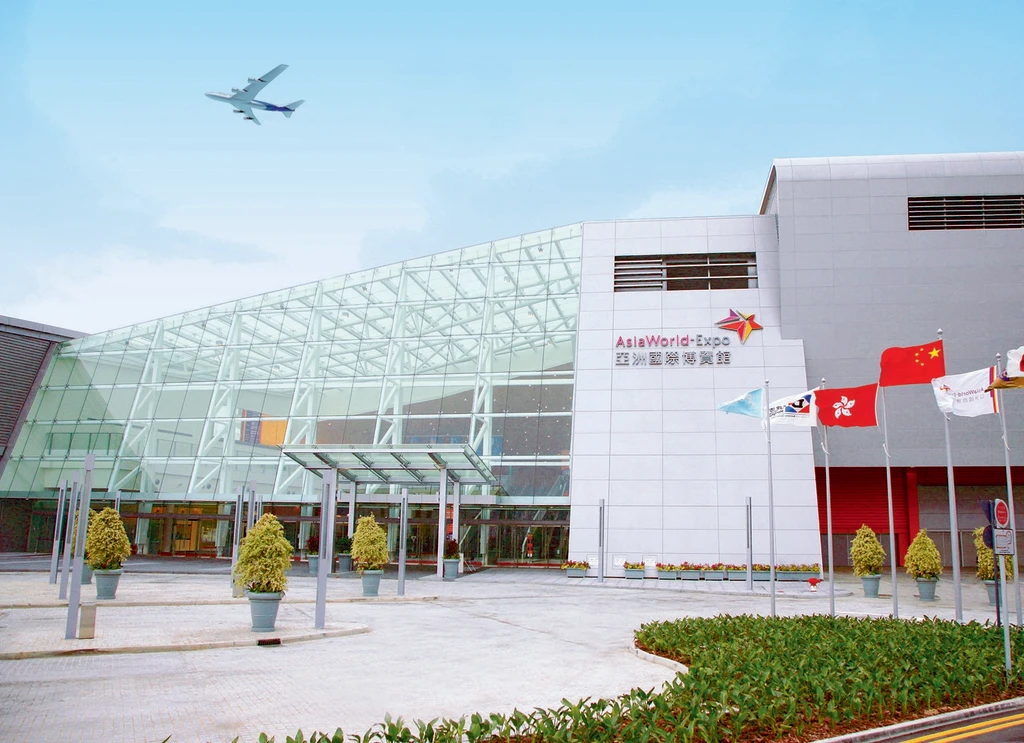
Photo credit: Wikimedia Commons
AWE is a testament to how PPP can help execute projects that would otherwise not take off as governments have a broader vision beyond just finances.
Initial cost-benefit analyses suggested that AWE would not be financially viable because the potential profits would not be enough to repay the investment in a “reasonable time frame.” Despite this, the project went ahead, driven by the economic and social benefits AWE could bring in the grand scheme of Hong Kong’s development.
The government provided land and regulatory support and funded part of the project alongside the private sector players who financed, constructed, and currently operate the exhibition center.
With the help of different stakeholders, the building was constructed with maximum efficiency, with design choices made to reduce energy consumption, limit the need for heavy concrete slabs and supporting columns, and streamline future maintenance needs.
The project highlights how PPPs can lead to not only more sources of funding but also risk sharing and the addition of private sector expertise to deliver better service to the public more efficiently.
Partnerships to power a better future
These examples are just scraping the surface of how PPPs can power significant opportunities for countries, addressing infrastructural and environmental challenges, boosting connectivity, and creating new avenues for income and economic growth.
Projects like these are crucial to the larger story of Asia’s economic growth, which is on an upward trajectory.
In April 2024, the International Monetary Fund revised its regional growth forecast for Asia for the year from 4.2% to 4.5%, after a 5% expansion in 2023. According to McKinsey, Southeast Asia’s economies held up despite the turbulence of 2024, with almost all economies achieving 5% growth or above in the fourth quarter of that year.
Still, there’s much more to be done to propel Asia forward, and PPPs will play a pivotal role in this development.
At Tech in Asia’s upcoming Asia Economic Summit, we’re bringing together policymakers, business leaders, innovators, and other movers and shakers in the region to discuss the growth of the region’s economy.

Set to take place in Jakarta on June 26, the event aims to uncover the opportunities in store for Asia, catalyze new avenues for transformation and innovation, and of course, connect private sector players with decision-makers from the public sector to potentially come up with even more valuable PPP projects.
Get your tickets today to have a seat at the table as we discuss how to build the enterprises, economies, and ecosystems of tomorrow at the Asia Economic Summit.
This content was produced by Tech in Asia Studios, which connects brands with Asia’s tech community. Learn more about partnering with Tech in Asia Studios.
Stay updated on the go with our mobile app.
Get latest insights with smoother, more personalized experience through TIA mobile app.
Recommended reads
 Tracking AI hiring in Singapore: OpenAI, Anthropic, and more
 Last to board: why travel may be AI’s final frontier
 Why ‘cheaper’ no longer wins dev deals for Vietnam
 Alibaba’s capex isn’t the full story
 Forget startups. Buy the business running on Excel
 Life’s a game, and AI agents are Animoca’s new play
 Indonesian AI startup goes global
 Forrest Li on scaling Sea, building smarter bots, and founder grit
 An AI assistant that joins sales calls and scores team skills
 Beyond the check: Why VCs need more than capital





Editing by Jonathan Chew, Ainun Nadhifah, and Mina Deocareza
(And yes, we’re serious about ethics and transparency. More information here.)







📅 Upcoming Events
22 October 2026
Payoneer x CSPN Summit 2026