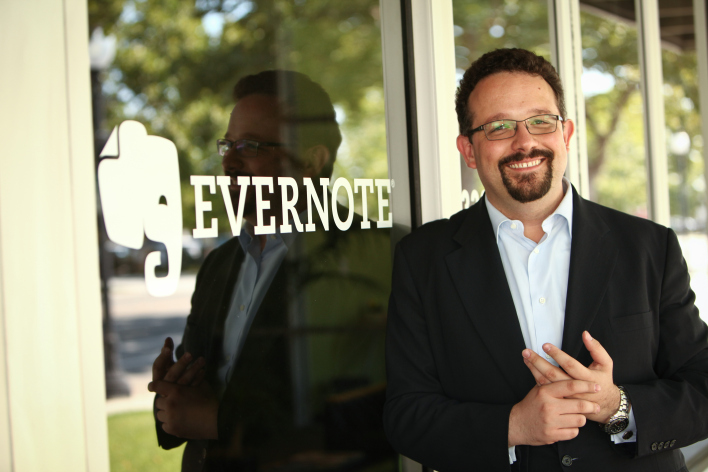
Evernote CEO Phil Libin has a serious addiction to kaya toast – a staple snack in Singapore. He joked that it was all he thought about while on a flight to Singapore to attend Techventure, a conference for startups and investors.
I’d guess that his desire to eat that dish is driven by two things – a love for kaya toast, and to a lesser extent, the fear of missing out. He doesn’t visit Singapore that often after all.
Fear is often a main motivator in our decision-making. It’s useful for short-term choices, such as whether to “fight or run away,” says Libin in a speech at the conference on September 25. And the part of the brain (called the lizard brain) that makes those decisions leans towards negativity and fear.
While the claim that the lizard brain serves as our fear center is shaky, researchers have figured out that humans have a negativity bias, which means we react more strongly to negative or unpleasant stimuli.
“We’re optimized to make decisions based on fear,” he says, cautioning however that it is a bad way to make long-term decisions, which include: “What product should I build? What should I name my company? What should my long-term strategy be?” We tend to decide between two options by comparing the positives and negatives of each:
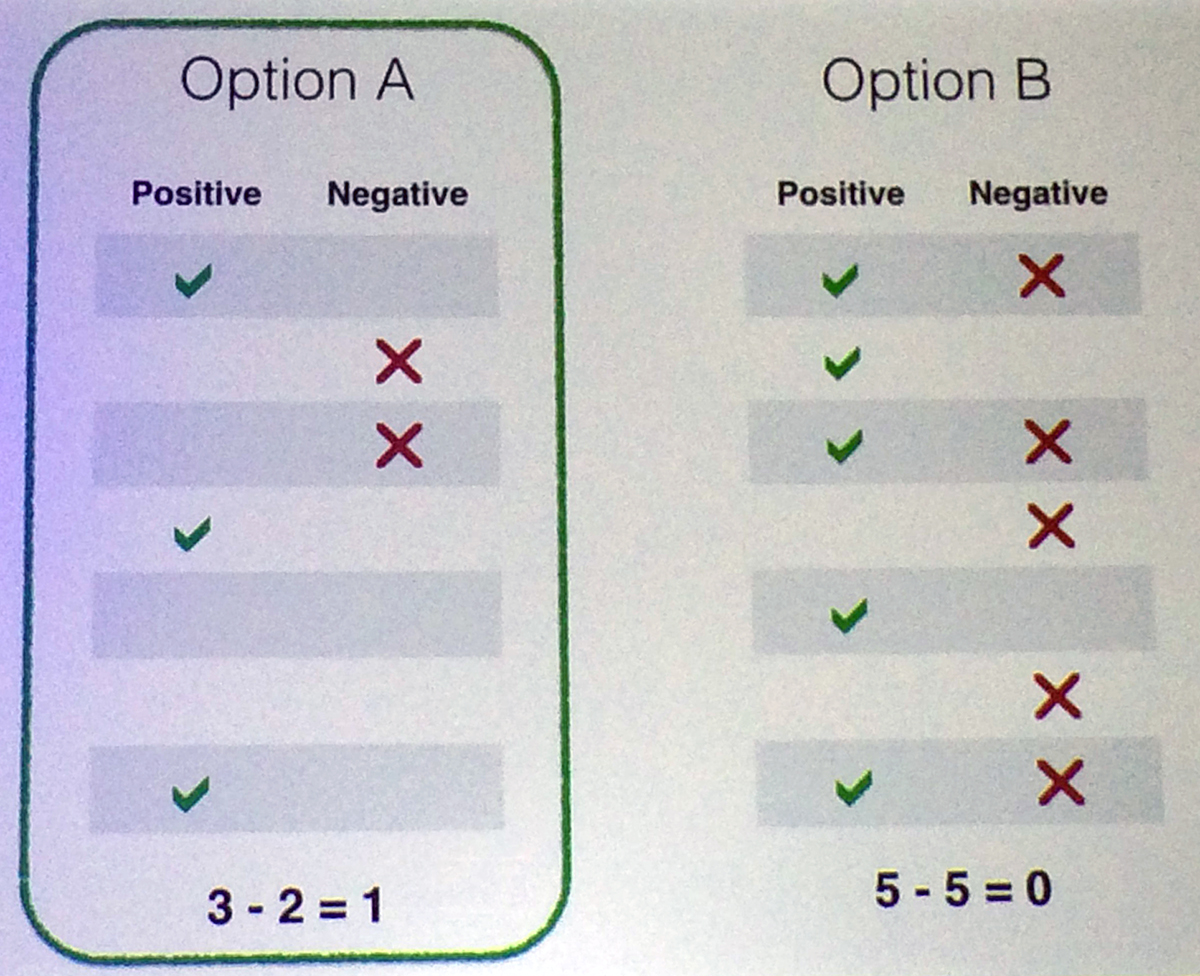
We should just weigh the positives instead, he says. By doing so, we avoid letting fear overwhelm us, and this gives room for the logical thinking part of our brain to operate.
This is Libin’s strategy for overcoming negativity bias. He derived it after some soul searching on the root causes of the mistakes he and Evernote have made. Most of these errors arose out of decisions made in fear, he concluded.
In his talk, Libin lists a few types of decisions where fear could creep in and lead to bad choices.
What’s the competition doing?
“If you’re a startup and you’re thinking about your competition, you’re using your lizard brain. You’re probably making poor decisions. It’s as simple as that. Very, very difficult to make good long-term strategic decisions based on what your competition is doing,” he says. The enemy here is the “if Google can’t fix this, then I probably can’t either” mentality.
Should I go local or global?
A lot of companies outside Silicon Valley struggle with this. He says: “Why are there so many companies in Southeast Asia saying: we’re gonna be the Yelp for Southeast Asia; we’re gonna be the Facebook for China? These decisions to go local, to constrain yourself, are often fear-based.”
Should we ever remove a feature?
Startups shudder at the thought of users complaining vocally if one feature is removed. Yet bloated software often gets in the way of the company’s goals, especially if it has features used only by a small segment of customers.





Stay updated on the go with our mobile app.
Get latest insights with smoother, more personalized experience through TIA mobile app.