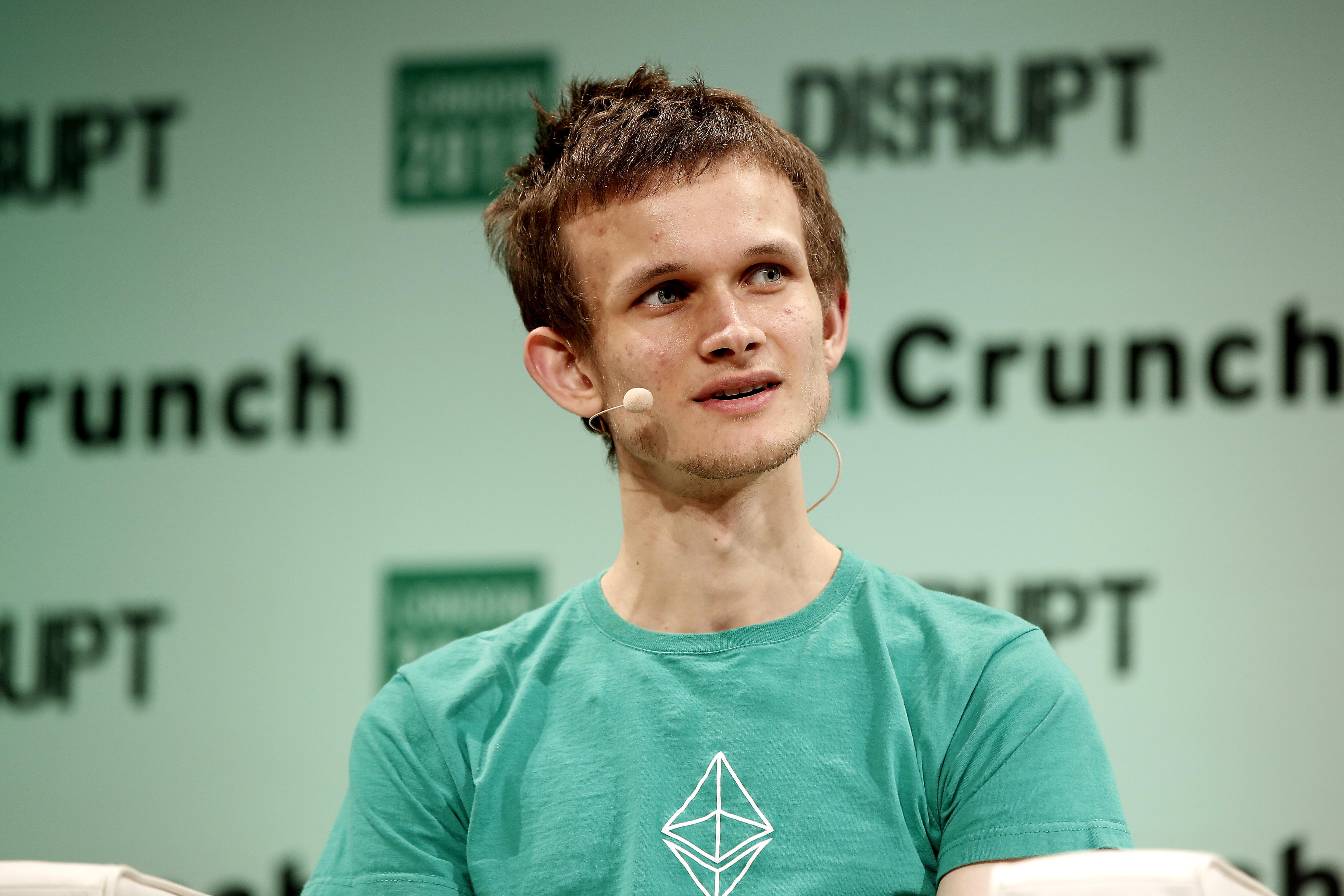
Ethereum creator Vitalik Buterin / Photo credit: TechCrunch
Ethereum, the world’s second-largest cryptocurrency, has crossed over 100 million tokens in circulation, according to CoinMarketCap, renewing concerns about the eroding value of the currency.
While Ethereum has opted not to set an upper limit on its total coin supply, the blockchain network’s community is worried about how an oversupply could depress prices and scare away speculators and miners. This could be disastrous for the network.
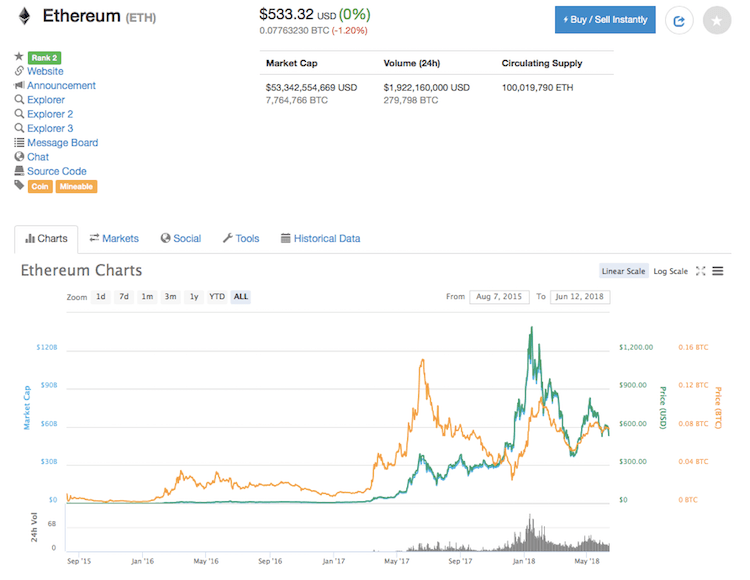
Photo Credit: CoinMarketCap
Ether’s total supply has grown around 10 percent per year. Bitcoin, the number one cryptocurrency based on market value, has a supply of 17 million coins, with a cap of 21 million.
Demand and supply in the crypto world works similarly to the physical world: For a price of a commodity to rise, there must be scarcity in supply. If a currency is constantly being printed, it cannot be scarce.
The same goes for ether, the currency of Ethereum: The more coins there are in circulation, the less scarce the currency is, which means it loses value. Ethers are the “fuel” for running decentralized applications on the Ethereum blockchain. They can be used to pay for transaction fees and computational services on the network. They can also be bought and sold for trading.
While capping a token’s supply may make it more valuable, this measure also has downsides. For example, it may end up as purely a speculative product when demand far outstrips supply.
Ethereum founder Vitalik Buterin has dabbled with the idea of setting a cap of around 144 million ethers recently, but nothing has been cast in stone so far.
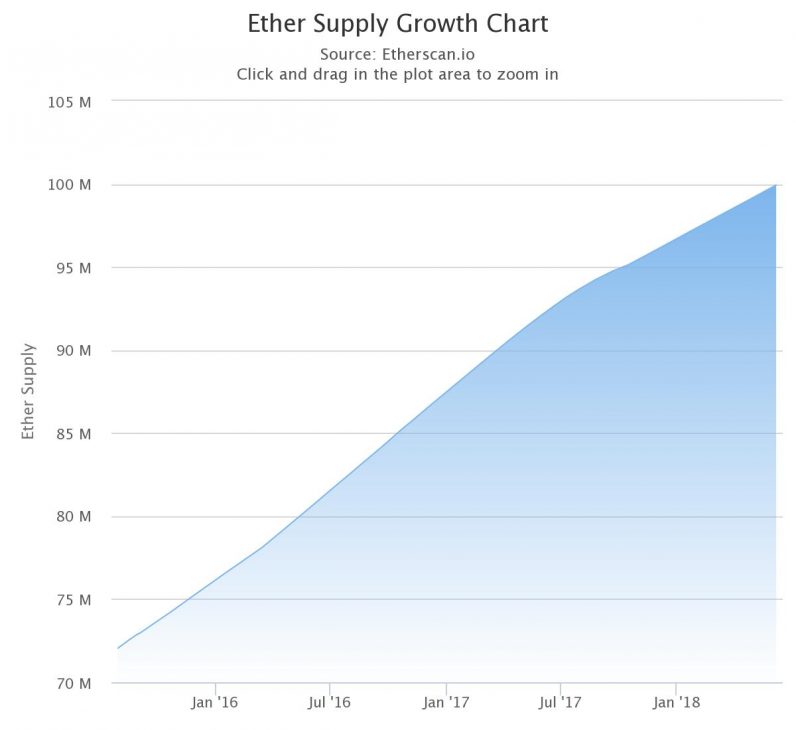
Photo Credit: Etherscan.io
Ethereum faces other problems
This supply issue compounds with other concerns the network faces, including scalability problems. The Ethereum community has been calling for the network to transition into a new form that consumes less energy and processes more transactions, among other benefits.
Bitcoin and Ethereum now process around six transactions per second. In comparison, large payment networks like Visa process thousands of transactions per second.
Proof-of-stake, sharding, and “validators”
Competition is heating up





Stay updated on the go with our mobile app.
Get latest insights with smoother, more personalized experience through TIA mobile app.












📅 Upcoming Events
22 October 2026
Payoneer x CSPN Summit 2026