Malavika Velayanikal · · 5 min read
What superbosses do to energize talent – and bossy bosses don’t
Photo credit: Pixabay.
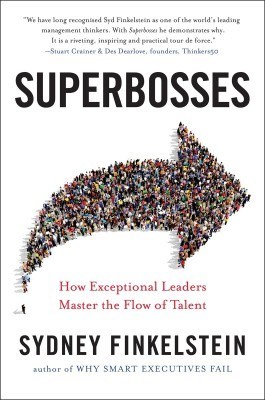
“Why would a person want to wait until he is on his deathbed before starting to eat right and exercise?” asks Sydney Finkelstein, professor of management at the Tuck School of Business and author of a new book published this week, titled Superbosses: How Exceptional Leaders Master the Flow of Talent.
Sydney’s question is rhetorical and also a dig at Harvard Business School’s John Kotter.
John Kotter’s eight-step model for Leading Change has become a bible on leadership, and Sydney acknowledges there’s much to learn from it. But its basic premise hinges on creating a “sense of urgency” for change. It advocates creating a “burning platform” within the organization for pushing change initiatives. What that implies, argues Sydney, is change can only happen when a company is seen to be in dire straits, faced with a new, challenging business environment. His own 10-year-long research on great leaders suggests they don’t wait to feel such a sense of crisis – their organizations are “built to change” – they’re proactive about change, rather than being reactive to tough times.
“Superbosses never get to the crisis point envisioned by Kotter because they are constantly growing and evolving in an organic way. They lead the change in their industry,” writes Sydney, who is listed in Thinkers50, a global ranking of management gurus, which includes the likes of Michael Porter, Clayton Christensen, and, well, John Kotter.
The habits of superbosses
It makes you stop and think when two of the world’s top management gurus have such a fundamental difference in perception on leadership. It’s a reminder to always apply one’s own mind in adapting management mantras to different contexts and people.
The superbosses Sydney describes in his book are never formulaic in their approach. They are first and foremost true to themselves, and so what they do comes naturally to them. At the same time, we can learn from the traits and practices that make them super successful as bosses, whatever the leadership role we have. It can also help us assess the leaders we follow with high hopes they will make us grow. The book comes to our aid by distilling the habits of superbosses. But first, who are these superbosses anyway?
Sydney is eclectic in his choice. The superbosses he’s identified come from different walks of life: Oracle founder Larry Ellison; Intel co-founder Robert Noyce; billionaire investor Julian Robertson, who founded Tiger Management; chef and restaurateur Alice Waters, who pioneered the farm-to-table movement for fresh, local food; American football coach Bill Walsh; jazz musician Miles Davis; newspaper editor Gene Roberts; Star Wars creator George Lucas; fashion designer Ralph Lauren, and nine others: 18 in all.
What does such a diverse bunch of leaders have in common?
Grow a “tree of talent”

Photo credit: Pixabay.
They spawn talent. Julian Robertson seeded a constellation of Tiger Cubs, who were once his proteges, including Chase Coleman of Tiger Global Management. In 2008, the year after Bill Walsh’s death, coaches once trained by him led 26 of the 32 teams in the NFL (National Football League). Gene Roberts produced 17 Pulitzer Prize winners in his 18 years at the Philadelphia Inquirer. The pattern repeats in superboss after superboss. They stand head and shoulders above their peers in growing a “tree of talent” – that is, the leaders they nurture, in turn, build up new cohorts of talent.
Get in the trenches





Stay updated on the go with our mobile app.
Get latest insights with smoother, more personalized experience through TIA mobile app.