Meghna Rao · · 5 min read
Meet Mike, a little underwater robot that scuttles beneath the sea taking videos
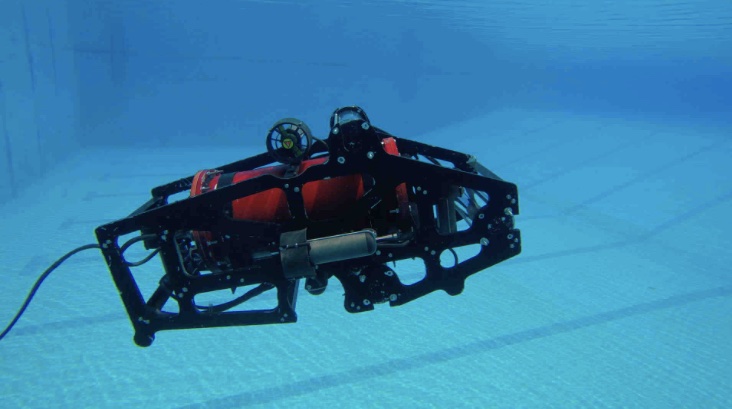
Looking good, Mike. Photo credit: Planys Technologies.
Mike scampers quietly along the Coromandel coast in the Bay of Bengal, thirty meters below the surface of the choppy waters of the old port of Chennai. Today, it’s recording the hull of a ship that is docked at the port. That video footage will be analyzed and taken back to its owners, who have hired Mike to check for damages their ship may have suffered.
That’s not all Mike does. Yesterday, it was checking an underwater oil pipeline for leaks. Last week, it was surveying the gate of a dam to check if water was flowing properly. One day, it even hopes to help the environment by detecting radiation levels in the water.
Mike is a remotely operated vehicle (ROV) developed by a team of 25-year-olds that goes by the name of Planys Technologies. According to co-founder Tanuj Jhunjhunwala, Mike is indigenized – meaning it’s affordable, bite-sized, and perfect to span the 7,562-kilometer coast of the Indian peninsula.
Indigenized, lightweight, affordable
In countries like India, where money isn’t abundant, divers are hired to inspect underwater activities. This is a dangerous job. Alternatives are other ROVs, but most are built to dive into deep water, which makes them expensive and bulky. Some can even weigh a few tons.
Mike is lightweight and designed to descend just 100 meters. Right now, its primary skill is recording underwater footage, but it is what’s done with this footage that’s exciting. Tanuj brings up the example of a nuclear power plant, where Mike will be testing for radiation leaks. Once it has collected data, the team at Planys will work on analyzing radiation levels in the water, and check whether it’s safe to enter.
“The most important thing here has been to sell a concept,” says Tanuj. “You have to explain to people why they should use this.”
Tanuj adds another example. “Sometimes, we collect depth data at various GPS coordinates. These are plotted against a chart and given to the client as a deliverable.”
Since its launch in June 2015, Mike has completed a total of 15 projects.
The concept was incubated at IIT-Madras, a top-tier university in Chennai, Tamil Nadu, where the two graduates – Vineet Upadhyay and Tanuj – collaborated with two of the university’s academics, Professor Prabhu Rajagopal and Professor Krishnan Balasubramaniam, to develop it.
Tanuj explains that hiring for some of their more technical roles is a big challenge, especially because those with heavy expertise in technology don’t generally look to startups. “We’re creating a certain excitement around what we’re doing though,” he says. “That will make more people want to join.”
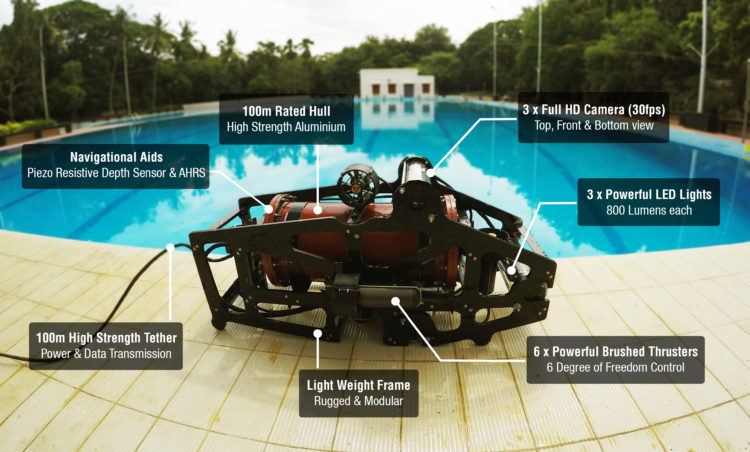
Tanuj doesn’t tell me the name of Planys’ next project, but says that it will launch in two weeks. “When we realized that we could do lots of other things, like acoustic mapping, we decided to integrate it into our next vehicle,” says Tanuj. He also adds that it will be able to inspect ships deeper, like measuring the thickness in a ship hull, so owners can figure out whether to replace it.
Getting it out into the real world





Stay updated on the go with our mobile app.
Get latest insights with smoother, more personalized experience through TIA mobile app.