Erik Crouch · · 4 min read
China’s Didi wants to make traffic jams a thing of the past
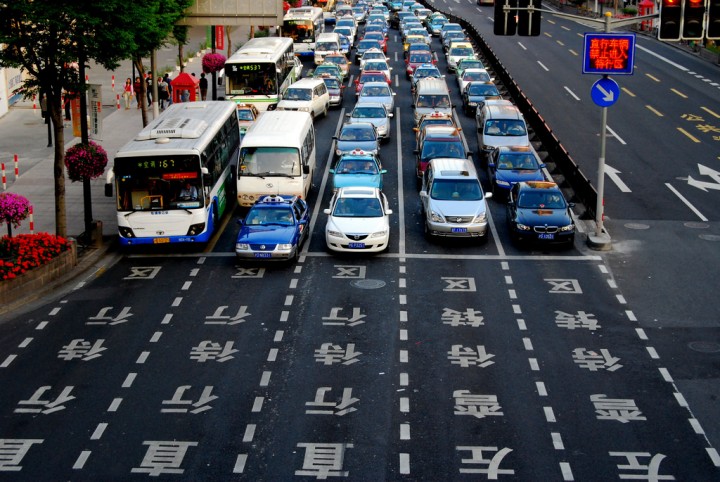
A junction in Shanghai. Photo credit: Carlos ZGZ.
Didi Chuxing, China’s biggest ride-hailing app, has had an eventful month. After raking in US$1 billion from Apple a few weeks ago, the company has now made public some details of its big data operation.
The philosophy behind the program, which it dubs “The Great Tidal strategy,” and has also been referred to simply as “Tides,” is that traffic is a problem that can be solved. If the vehicles on Didi’s network – which includes private cars, taxis, carpoolers, and more – could be properly dispatched, then traffic as we know it could cease to exist.
It’s a big, tricky, goal – but if any company has the incentives, resources, and cold hard cash to pull it off, it might be Didi Chuxing.
Beyond surge pricing
Uber’s surge pricing represents one attempt at fixing the ride-hailing supply and demand curve. By charging more during busy times, more drivers are encouraged to hit the streets and fewer riders are likely to hail a car.
The big data sorcery can predict traffic hotspots in advance.
But surge pricing is an axe, not a scalpel. If you’re looking to go on a long trip – say, from downtown Shanghai to the airport – even a 2x surge might be enough to scare you away from Uber. This ignores, however, the fact that some drivers would jump at the chance for a long, easy airport ride, even if it meant just a standard non-surge fare.
“[Tides] will help mitigate traffic jams before they develop and allow us to prevent surge pricing at peak hours,” a Didi spokesperson told Tech in Asia. The company aims to use its massive repository of traffic, rider, and driver data to get a more granular view of the situation.
The service can pair that airport-goer with a driver who is already headed in that direction, and plot a course that avoids traffic on the way there – and then assign the driver another passenger as soon as they arrive at the airport. If the rider is on carpool mode, then the driver could also pick up and drop off several other users while on the way to the airport, potentially making more money than with surge pricing, without raising the cost to the user.
And while surge aims to limit traffic by raising the costs (for riders) and benefits (for drivers), Didi’s number crunching aims to outsmart traffic. The big data sorcery can predict traffic hotspots in advance, based on previous day’s data – and can route drivers accordingly.
It’s more than just sending tons of drivers to a congested area all at once. Instead, Didi’s system can see both a rider’s location and their desired destination, and route traffic along a path of least resistance. It can also notify inactive drivers of an uptick in demand in order to get them out on the streets in a way that subtracts from, rather than adds to, a city’s traffic.
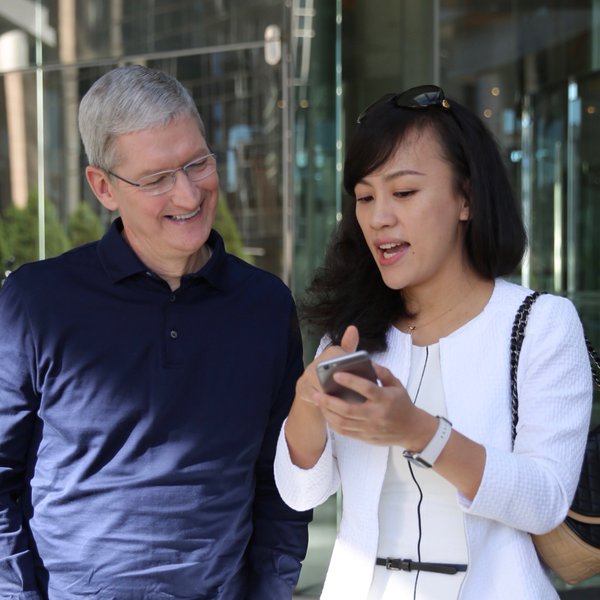
Apple’s Tim Cook with Didi’s Jean Liu, pictured in Beijing shortly after Apple’s investment was announced. Photo credit: Tim Cook on Twitter.
Tides also dips into the driver’s star-based rating system to evaluate particular drivers for their efficiency. If you like to rip off your customers with long, unwieldy routes, then you may find yourself last to be pinged when there’s an uptick in customers. On the other hand, if you’re a conscientious and efficient driver, then you may get more of those treasured airport drop-offs – and have another Didi user ready for a pick-up once you get there.
A unique advantage





Stay updated on the go with our mobile app.
Get latest insights with smoother, more personalized experience through TIA mobile app.