- Premium Content It takes our newsroom weeks - if not months - to investigate and produce stories for our premium content. You can’t find them anywhere else.
 Melissa Goh · · 8 min read
Battery swapping faces uphill climb in Singapore’s EV market
Singapore is years away from its goal of fully electrifying all vehicles by 2040, but it has hit a speed bump around the use of swappable batteries.
In April, Singapore-based Mo Batteries bowed out of the EV race in the city-state, just a year into a trial of its battery-swapping solution. The company cited high costs and the complexity of commercializing its solution in the city-state for the move.
With this exit, only one operator remains in the pilot: Taiwan-headquartered Gogoro.
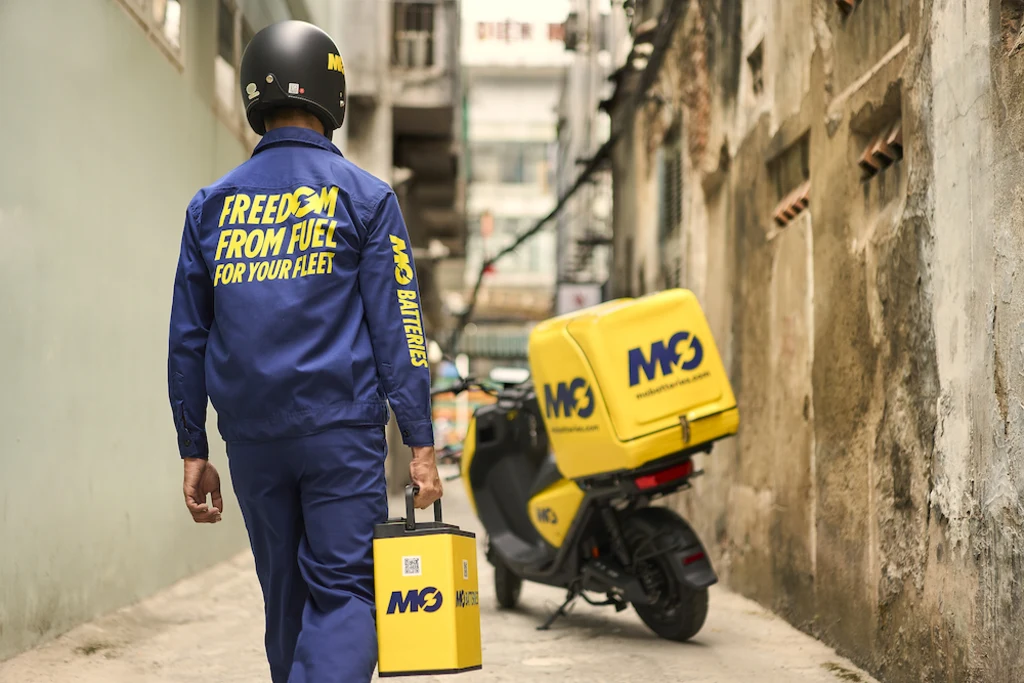
Photo credit: Mo Batteries
Mo Batteries’ withdrawal raises questions about whether swappable batteries are still viable in Singapore in light of other EV charging solutions, which are springing up across the country.
Lower costs, higher adoption
EVs with swappable batteries are but one option for drivers in Singapore looking to make the switch from internal combustion engine (ICE) vehicles. Others have fixed batteries that require charging.
As batteries can account for between 30% to 40% of an EV’s price tag, taking out this component can slash the upfront costs of an EV.
In China, consumers can purchase Nio’s ET5 – an electric sedan – for 298,000 yuan (US$41,300) if it comes with a battery and pay 228,000 yuan (US$31,600) for one without. Those opting for the latter pay less upfront, but they fork out a monthly fee of at least 980 yuan (US$136) for a battery lease.
Rather than recharging batteries when they run low, drivers of EVs with swappable batteries either pay a fee each time they require a new battery or take a monthly subscription based on their level of use.
In a typical set-up, EVs make stops at battery-swapping stations – a garage-like structure – scattered around a city. At some of these stations, drivers can manually do the swap, while in others, robot arms switch out spent batteries for fully charged ones.

Image credit: Timmy Loen
The process is commonplace in China, where players such as Nio operate more than 3,500 battery-swapping stations. It also takes around five minutes, putting it on par with a fuel stop at a petrol station.
In contrast, using EV chargers can take up to eight hours at a standard charging point in Singapore.
Not a fit
The Mo model
Swap or no swap?
Fully electric by 2040?
Stay ahead in Asia’s tech landscape
This is premium content. Subscribe to read the full story.
Singapore’s rules for electric vehicles are “high on safety” and “robust,” but they “didn’t fit together” with Mo Batteries’ model, its co-founder says.
We know this is not ideal. ⌛ Sign up in 20 seconds. Cancel anytime.
Our subscriber community includes professionals from these companies:





Stay updated on the go with our mobile app.
Get latest insights with smoother, more personalized experience through TIA mobile app.











📅 Upcoming Events
22 October 2026
Payoneer x CSPN Summit 2026