Malavika Velayanikal · · 6 min read
Why edtech is getting so little love from VCs in India

Photo credit: Soma Mukherjee
“India is the only country in the world which is trying to become a global economic power with an uneducated and unhealthy labor force,” says Amartya Sen in a recent discussion at the London School of Economics. The Nobel laureate and author of The Argumentative Indian is in the habit of bringing up inconvenient truths and this was one of them.
Professor Sen’s ironical point was that it couldn’t be done. India can’t sustain economic growth without improving the quality of its workers.
You would think this is a situation crying out for tech startups to step in. A huge population hungry for education as an escape from poor living standards, a new government promising economic reforms to spur growth and development, and a booming tech startup scene attracting billions of dollars in funding – they make a heady cocktail for edtech entrepreneurs and investors.
The media is full of stories about how edtech is transforming education in India, and how edtech startups are “raising millions to provide millions with world-class education.” The reality is sobering. Edtech, despite its great need and potential in India, isn’t setting the venture capital scene on fire.
Yawning gap between hype and reality
According to venture capital analytics firm Tracxn, Indian edtech startups have raised US$66 million in funding disclosed so far this year, which is nearly two-and-a-half times the US$27 million invested in 2014. But it is still less than 1 percent of the total funding for Indian tech startups which has already crossed US$7 billion this year. Besides, the top three funded edtech startups accounted for US$40 million out of the US$66 million invested in the domain – and only eight edtech startups had funding rounds of US$2 million or more.
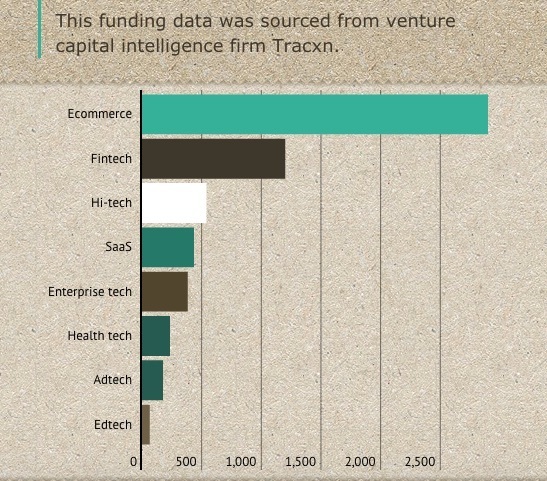
To put the Indian edtech scene into perspective, learning tech companies globally got US$3.8 billion in funding in the first three quarters of this year, according to a white paper from Ambient Insight. In other words, India’s share of the global edtech investment pie is less than 2 percent.
A report by US-based Compass ranked Bangalore sixth among global startup hubs this year in terms of access to venture capital – further evidence that the pittance in funding for Indian edtech runs contrary to the trend in most other sectors. Ironically, the Compass report ranks Bangalore a relatively low 17th among startup hubs in quality and availability of tech talent – something of an anomaly in such a highly populated country with decades of legacy in IT services. The talent crunch makes it all the more surprising why edtech isn’t getting the push one would expect in such a scenario.
Insights from an edtech entrepreneur-turned-VC
Sid Talwar, who had a successful exit as an edtech entrepreneur before turning VC, is well placed to provide some answers to this apparent paradox. His VC firm Lightbox invested in test prep startup Embibe last year.
Education is a vast field in India, but most of it is highly regulated by the government, making it hard to break into. The highly competitive engineering and medical college entrance exam scene is, therefore, one area that edtech startups have targeted. Millions of students don’t have access to good tutors and study material to prepare for these exams which provide a small window of opportunity to break free from a humdrum existence for many. Online test prep portals can help. But even here we have few tried and tested paths to scaling and monetization.
“There is no Uber for X in this space,” explains Sid, referring to the difficulty of importing business models from abroad into the edtech scene in India. “Indians are much more goal-oriented than in the West, and learning habits are different. That’s why you haven’t seen any real foreign player enter the Indian education market yet.”
Lessons from the shutdown of SmartOn
Edtech’s time will come





Stay updated on the go with our mobile app.
Get latest insights with smoother, more personalized experience through TIA mobile app.