 Sumit Chakraberty · · 9 min read
She’s studying Hindi in China with an eye to the future of tech
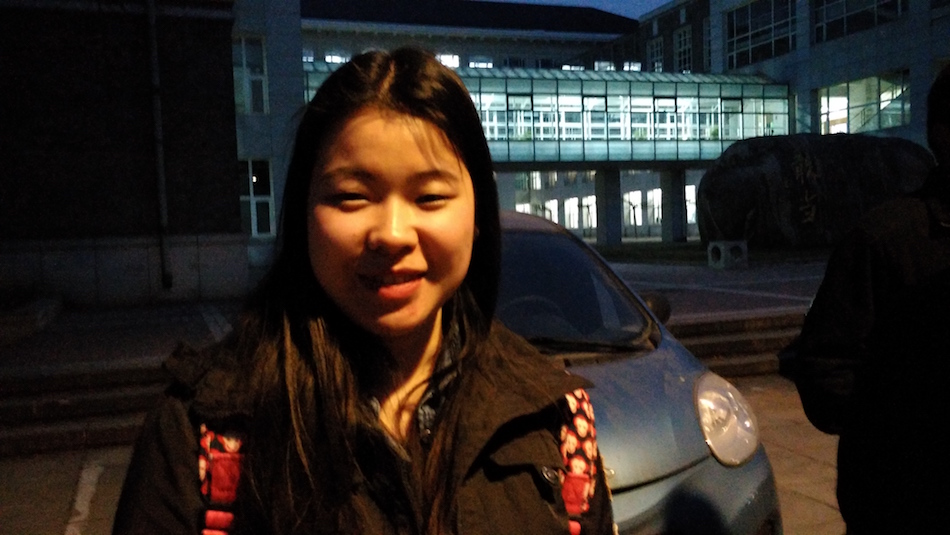
Tian Siwei in the campus of Peking University where she opted to learn Hindi. Photo credit: Tech in Asia.
The tree-lined streets were peaceful and quiet at dusk inside the Peking University campus. It was the start of spring, so the trees had no leaves – only sticks as branches. It blended well with the grey stone buildings.
It was only when Tian Siwei pointed to the ornate, colorful roofs that I became aware of its century-old history. She prefers to live on campus and study, even though her home is in Beijing. That gives her more time with fellow students as well as the chance to soak in the college environment.
We met earlier on Beijing’s “startup street” called Inno Way, which has co-working spaces and offices of startups, incubators, and investors. Dotcoffee, Garage Cafe, and 3W Cafe are cheek by jowl and humming. It adjoins Peking University, so it’s also a hang-out for students seeking inspiration. I was there with a group of visitors from India, and Tian surprised me with her Hindi. Then she took me across to the campus.
She’s doing her B.A. in Peking University, majoring in Hindi.
The VPN generation
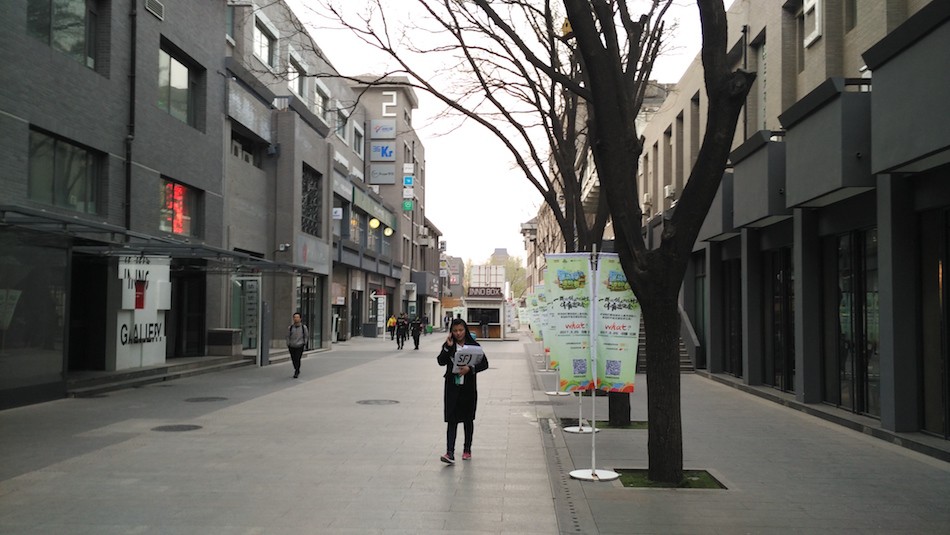
Beijing’s startup street Inno Way near Peking University is lined with incubators and co-working spaces. Photo credit: Tech in Asia
The 22-year-old feels a deceleration in China’s growth is inevitable at some point, and the next biggest land of opportunity is neighboring India. Fluency in Hindi will help her to understand the local culture better. She has already traveled in northern India and loves the color and vibrancy of the country.
Her mother is an accountant and father a networking engineer. She belongs to a new outward-looking generation of Chinese born in an era of successive reforms that catapulted the country’s economy to be the second largest in the world. Positive vibes of this are everywhere you look – from the shiny, tall buildings of Beijing to the cheery optimism of its students.
I ask the inevitable question about how she’s affected by China’s curbs on internet access. Tian Siwei is candid about it: most of the students around her have a fear of missing out on the access to knowledge that their counterparts have around the world, and hope the internet will be opened up. At the same time, like other young Chinese I met on the trip, she appreciates the need to maintain order for the government to focus on economic growth.
The fruits of that growth are evident not only in the way the Chinese live, work, and commute, but also in the waves of private enterprise it has unleashed. Tian and students like her are riding the newest wave as China gives a push to innovation in an effort to rebalance its economy which has become too dependent on low-value manufacture and exports.
Mobile internet boom

A young woman in Shanghai uses an app in her smartphone to unlock an Ofo bicycle parked on a Shanghai street. Photo credit: Steven Millward.
Earnings from manufacturing and exports, coupled with state investments in infrastructure, fueled China’s rocketing GDP over the last three decades. The resultant purchasing power of over 730 million Chinese online has spawned giant internet companies like Baidu, Alibaba, and Tencent – the so-called BAT trio. But they’re only the more visible ones abroad.
Catalysts of innovation
Chindia connections
Indian dream





Stay updated on the go with our mobile app.
Get latest insights with smoother, more personalized experience through TIA mobile app.










📅 Upcoming Events
22 October 2026
Payoneer x CSPN Summit 2026