 Terence Lee · · 5 min read
Echoes, which lets anyone create soundmaps, wins free trip to Tech in Asia Singapore
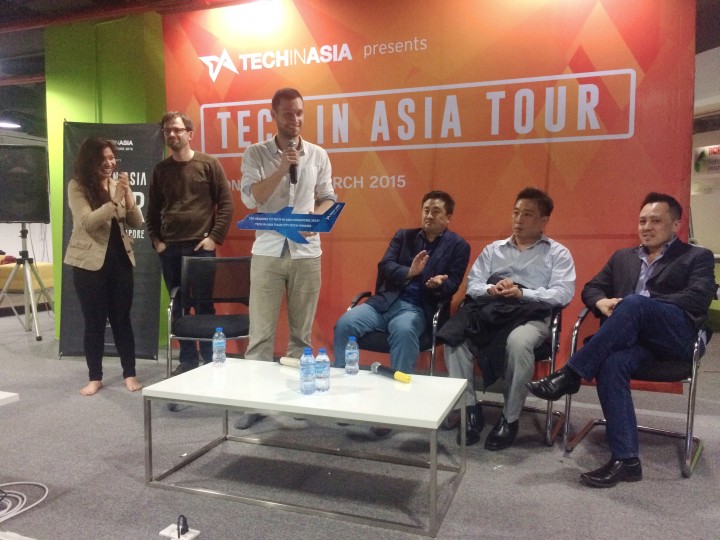
Josh Kopeček of Echoes (2nd from left) crowned the winner.
A common gripe among investors is that there aren’t enough startups in Vietnam and perhaps Asia that have the potential to scale beyond their home countries.
“We look at startups that can grow outside of Vietnam. A lot of startups that we see in Vietnam don’t have a plan down the road to expand beyond the country. The Vietnamese market size alone is good but not great. Meaning if you can cover the region, there’s a lot more scale and opportunity,” says Inspire Ventures partner Quan Nguyen. He was a panelist and judge at the Tech in Asia Tour Hanoi, held at coworking space and startup incubator Hub.IT.
Echoing his sentiments were fellow panelist and judges Ben Liu of Kamia and Ronnie Wee of Incuvest. Fortunately, the five startups who pitched all had products that can potentially go global. This is especially true of Echoes, the winner of the Hanoi Tour, who will free tickets and a booth at our Tech in Asia Singapore conference in May, with flights and accomodation paid for.
Here’s a rundown of what each of these startups are about, and what the judges think of them.
Echoes
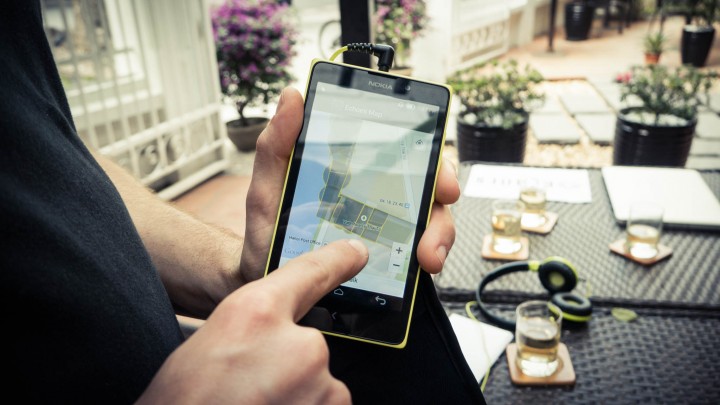
Founded by Hanoi-based Josh Kopeček, a PhD in music composition, Echoes consists of two parts. There’s an app that lets anyone create soundmaps – which are simply audio overlayed on a geographical area in a map – and another app for consumers to download and listen to soundmaps.
The tourism industry would find use for this tech. Kopeček has created audio city tours in Copenhagen and Hanoi that play recordings based on your current location. Tour guides can potentially generate extra income by recording their own tours and posting it on a marketplace.
The service hasn’t launched to the public yet, and he’s still figuring out a revenue model, but he anticipates making money on a project basis.
Echoes won the contest because the judges found the platform innovative and unique. The business could be lucrative too: Echoes can potentially score contracts with government agencies that want to promote their cities as tourism destinations.
The judges however feel they need to figure out a more detailed strategy to crowdsource content, since it’s something that requires plenty of resources to get done.
OnOnPay
OnOnPay lets users do prepaid mobile top-ups through an app in exchange for guaranteed rewards like extra credits, coupons, gift certificates, or lucky draws. This saves mobile users the need to use scratch cards, and gives telcos a higher average revenue per user (ARPU) and a lower churn rate. The company, founded by telco executive Sy Phong, plans to start in Vietnam and expand to other emerging markets.
It wants to monetize through taking a portion of top-ups, helping advertisers with direct marketing, and white-labeling its solution to telcos. It believes it can break even at 60,000 active users. It plans to raise a US$700,000 seed round, which will be spent on marketing to acquire users.
The judges were concerned that OnOnPay is choosing to be a third-party service first instead of partnering with telcos right away to offer the service. That means lower profit margins and a higher cost to acquire consumers.
HotTab
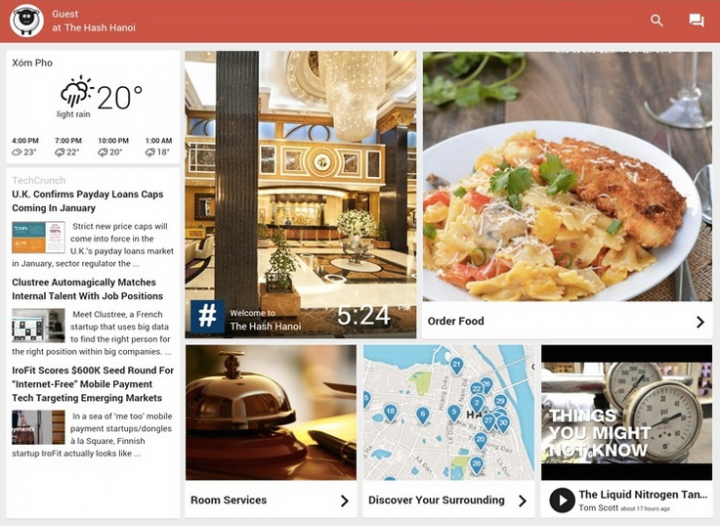
HotTab offers a tablet-based room service and conceirge platform for hotels. Founded by Sanjeev Sapkota, the Vietnam-based startup wants to install tablets in hotel rooms that will allow guests to access a city guide, book taxis, order food, and uses the hotel’s services.
The startup believes it can help hotels earn more by increasing the likelihood that guests will use their services due to the convenience factor, multi-language support, and the fact that millenials are so used to tablets and the instant feedback it gives. Hotels also get a platform to manage customer requests. They could potentially earn a share of referral fees from the external services provided on HotTab.
HotTab plans to charge hotels US$40 per room per month. The startup will provide the tablets, which cost US$150 each to purchase in China. Sapkota hopes the tablets will pay for themselves through subscription fees.
The startup hopes to do a live trial with 100 tablets by the end of this month. It has secured a partnership with Vietnamese ticket booking site Ticketbox, and has distribution deals with mPOS.vn for its point-of-sale system, and TRG for hotels. They’re in the midst of working out partnerships with taxi app GrabTaxi and food ordering site Foodpanda.
The judges were concerned about the cost of implementing the system and asked why he didn’t just develop an app. Sapkota’s response was that such apps have been tried before but hotels had no urgency to push these apps to customers. Putting these tablets in the rooms would hopefully nudge customers to use them.
The judges also wondered about the competitive nature of the space. Consumers already have tons of city guide apps sitting on their phones as well as booking services. Would they see a need to even use HotTab?
AZ Stack
AZ Stack is a service that allows app developers to add rich messaging and peer-to-peer calling to their apps just by inserting a few lines of code. It does this through an API, SDK, and a UI Kit. It promises peer-to-peer calls over a 3G connection at low bandwidth – useful in emerging markets.
Founded by Quang Mai Duy, the cloud-based platform is free to start, and users will be charged based on usage. Other income sources include revenue sharing from in-call ads, as well as licensing for a private cloud solution. A demo app can be downloaded here.
The startup plans to raise US$300,000 to US$500,000 to build its infrastructure and refine the product. It’s currently working on a trial basis with potential customers. The judges were generally intrigued by the idea, and saw potential in it to scale.
GCall
GCall is a tool that wants to break down the language and age barrier in ecommerce by allowing anyone to buy on any ecommerce site. It does this by adding a “call” button to a site. When users click on it, they’ll be matched to support staff that can converse in their language and help them complete the order.
The technology is based on webRTC and an auto-routing technology that connects users to GCall’s own help center. The startup is working towards implementing the product on their first ecommerce site. Pham Tan Phuc is the founder.
Judges were concerned about the security of the product. To complete the purchase, users would have to give their credit card numbers over the phone, making them susceptible to eavesdropping. Also, the support staff would have access to their credit card information, which means there’s potential that the data can be abused.
Echoes
Echoes combines sound and geolocation
- Location
- Vietnam
- Founded
- 2014
- Employees
- 2 – 10
- Website
- echoes.xyz
- Latest Funding
- US$11.5k / Seed
- Hiring
- 0 positions
Stay updated on the go with our mobile app.
Get latest insights with smoother, more personalized experience through TIA mobile app.
Recommended reads
 Indonesian AI startup goes global
 Forrest Li on scaling Sea, building smarter bots, and founder grit
 An AI assistant that joins sales calls and scores team skills
 SGX’s CEO says it doesn’t need a unicorn to win
 SMEs want AI too, but not the kind Big Tech is selling
 Oatside’s alt-milk rise hits a profitable gear
 Alibaba’s financial health in 12 charts
 Asia’s telcos bundle AI into mobile plans. Will it pay off?
 M-Daq chases bigger clients as revenue falls, losses grow
 VC tracker: Accel raises US$3.5b, including US$550m for India





Editing by Paul Bischoff
(And yes, we’re serious about ethics and transparency. More information here.)




