- Insights This article was written by a TIA community member. Insights pieces undergo the same rigorous editorial process that newsroom-produced articles have.
 Ryan Holmes · · 6 min read
From 100 to 1,000 employees, here’s how we built our company culture without going broke
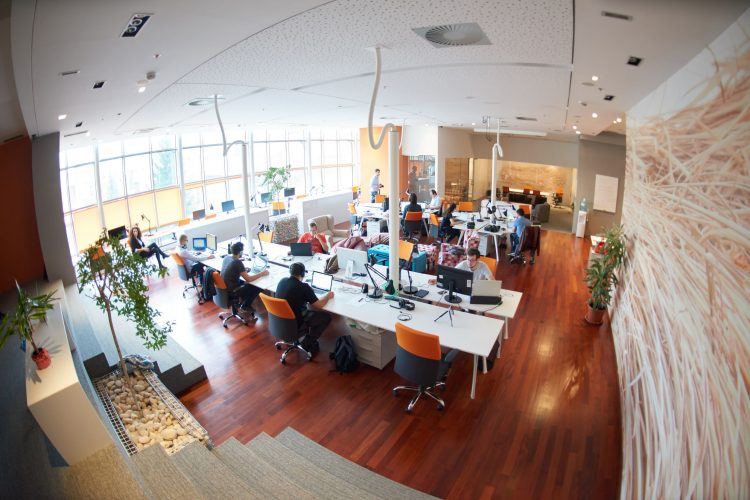
Photo credit: dotshock / 123RF Stock Photo.
My first office was my loft apartment in Vancouver. There wasn’t a fancy coffee machine or a foosball table or even a real desk to work at. But there was a rooftop patio — a little space where my tiny team and I could retreat to after work to have a drink and admire the view. To this day, I’m convinced that that rooftop, and the culture it created, was one of the main reasons they stuck around.
The phrase “company culture” is used so often that it can feel like an empty buzzword. But culture is what inspires employees to come to work and to work hard. It’s what differentiates you from all the competitors out there, selling the same products in the same space. It’s the extra gas in the tank that helps you weather the bad times and excel during the good times.
Some elements of culture are deep and sacred: the values and mission that underlie whatever it is you sell or make. Others represent a real — and important — investment: benefits and options plans, company retreats, sleek offices, and others.
But building culture doesn’t always have to entail a huge cost or commitment. In fact, some of the most powerful culture-building tools are essentially DIY hacks.
Pretty much everything has changed since the early days of my company, but one constant has been finding creative ways to cultivate culture without breaking the bank. Here’s a look at some of the most effective tools we’ve found over the years.
The rooftop patio principle
After my first experience with a rooftop patio, I was hooked. My second office had one and, when we outgrew that, so did my third. These weren’t fancy spots by any measure (and they didn’t add much to our leasing costs), but they did offer a space to retreat to that wasn’t related to work. I think having this kind of safe zone completely changes how people interact and also blends the lines between office and life (which is one of the real secrets of great culture).
The rooftops became the scene of impromptu lunches and after-work beers, and also where they hosted parties and off-kilter competitions. They offered a refuge from the pressures of growing a company and a place to let off steam. I was reminded how important this principle was recently when our London office finally graduated to a new space with an expansive rooftop patio. Suddenly, they’re hanging out after work and gelling as a team.
At the end of the day, just putting a keg beside your desk doesn’t make a party. A dedicated space can make all the difference.
The company that eats together, stays together
Food is a natural bridge builder. But company dinners, especially when you grow to a certain size, can get prohibitively expensive. Not to mention, when you’re stuck at a table it can be a challenge to mix and mingle, which kind of defeats the purpose. We overcame this early on with the “guac-off,” a pot-luck style strategy that brought together the joys of eating with the thrill of competition.
Our first guac-off in the company’s early years featured 11 competitors and three simple rules: no pre-made guacamole mixes; contestants have to prepare their creations live; and everyone had to have fun. Since then, it’s become an annual tradition. We’ve evolved it to have different categories (authentic, fusion, freestyle, etc.) and on occasion added margaritas to the equation.
Over the years, we’ve embraced other DIY food traditions as well. Among my favorites: “rookie cookies.” New employees have the option of baking (or buying) cookies for their department. These are set out on their desk, which lures over the rest of the team for casual introductions throughout the day. It’s a low-stress way to meet new colleagues and informally onboard new hires.
Company clothes people actually wear
Lots of companies pump out piles of t-shirts, beer koozies, keychains, hats and stickers with their name and logo on them. This swag is then pawned off on employees, as well as customers and prospects. Nine times out of 10, it’s ugly, poorly made, and discarded as soon as it’s handed out. We found that taking an entirely different approach can be an effective differentiator and culture builder.
For starters, we handed the creative process over to our own graphic designers. We emphasized that the goal wasn’t to plug Hootsuite but to create t-shirts, hoodies, even socks, that people wouldn’t be embarrassed to be seen in. The result: company clothes that people actually want to wear, inside and outside the office. In fact, there’s always a backlog of orders for the latest designs.
The power of random coffees
DIY parties are more fun





Stay updated on the go with our mobile app.
Get latest insights with smoother, more personalized experience through TIA mobile app.