- Premium Content It takes our newsroom weeks - if not months - to investigate and produce stories for our premium content. You can’t find them anywhere else.
 Willis Wee · · 5 min read
It’s too easy to villainize founders
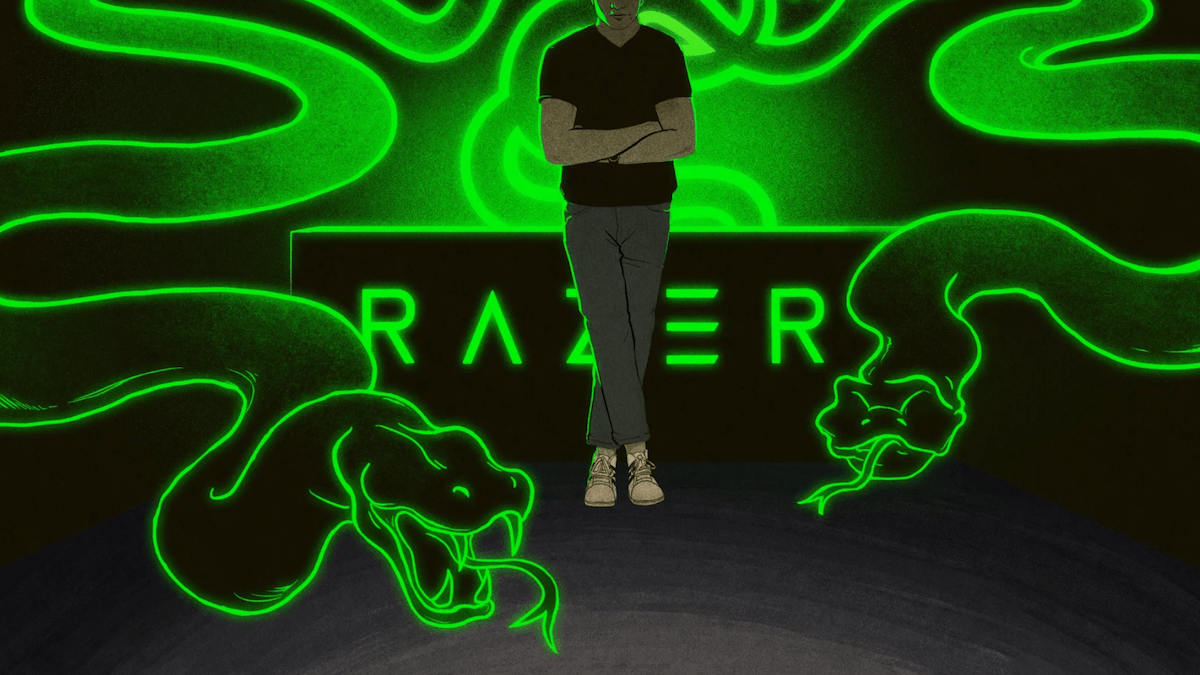
This image makes Razer and Min-Liang Tan look evil. / Photo credit: Kotaku and Angelica Alzona
Most startup founders are somewhat eccentric. And those who have “been there, done that” aren’t just unconventional – more often than not, they’re intense pushers instead of laidback cruisers.
People are the building blocks of all organizations. So founders need to bring the best out of their direct reports and coach them to do the same for their own teams. That’s the only way for any company and organization to meaningfully scale and be successful.
Sure, there are many ways to “bring out the best in people.” And yes, there are certainly founders who primarily lead by fear – but they don’t usually stick around. Razer, which was established by Min-Liang Tan and Robert Krakoff in 2005, has been around for more than 14 years. For this company to stay in the game for over a decade, I presume that Tan cares a lot about the business and has been through thick and thin with his crew, building Razer from a scrappy startup to a publicly listed firm.
Founders also express their care in many different ways. Most founders are passionate and aggressive, and some may even flip at the tiniest sign that something’s amiss, like an unhelpful mindset. For example, a lot of folks probably think along these lines: “So what if we lost this deal, don’t hit the targets, or don’t get featured in a prominent publication this time?”
This kind of thinking is pretty normal, but maybe it shouldn’t be the case. Winning or losing isn’t purely an output or numbers game – it’s mindset that separates those who thrive and those who tank. So founders tend to get nervous when they sense that their team has lost their grit – it’s usually because they got used to continuous success and fundraising. At the same time, founders genuinely want the best for their people, to see them be paid well and happy doing their jobs. It’s hard to strike that balance, though.
So when I read the story “Razer CEO Berated And Threatened His Staff,” I thought that there was more to it than meets the eye.
Say what you want – it’s fine
Everyone is entitled to their opinion. So while I’m not totally convinced by the report, I think it’s fine that it came out. A bunch of former Razer employees are dissatisfied and did an “exposé” via the media. If doing this helps them find closure, then perhaps it’s for the best.
It’s likely that the majority of people who read the article quickly concluded that Tan is an asshole. And it’s also likely that’s the very agenda of the people who leaked details about his behavior.
While there’s probably a certain measure of truth to the report, the experience of several ex-staff shouldn’t be representative of Razer’s entire work culture. But we live in a world where news, especially the negative kind, travels fast, and people are determined to get their side out in the public because they want to be heard. With the help of one publication, these accusations were circulated and even got picked up by other media outlets, sending tremors and rocking Razer’s boat.
But let’s take a pause and dig deeper: Is Razer a terrible place to work?
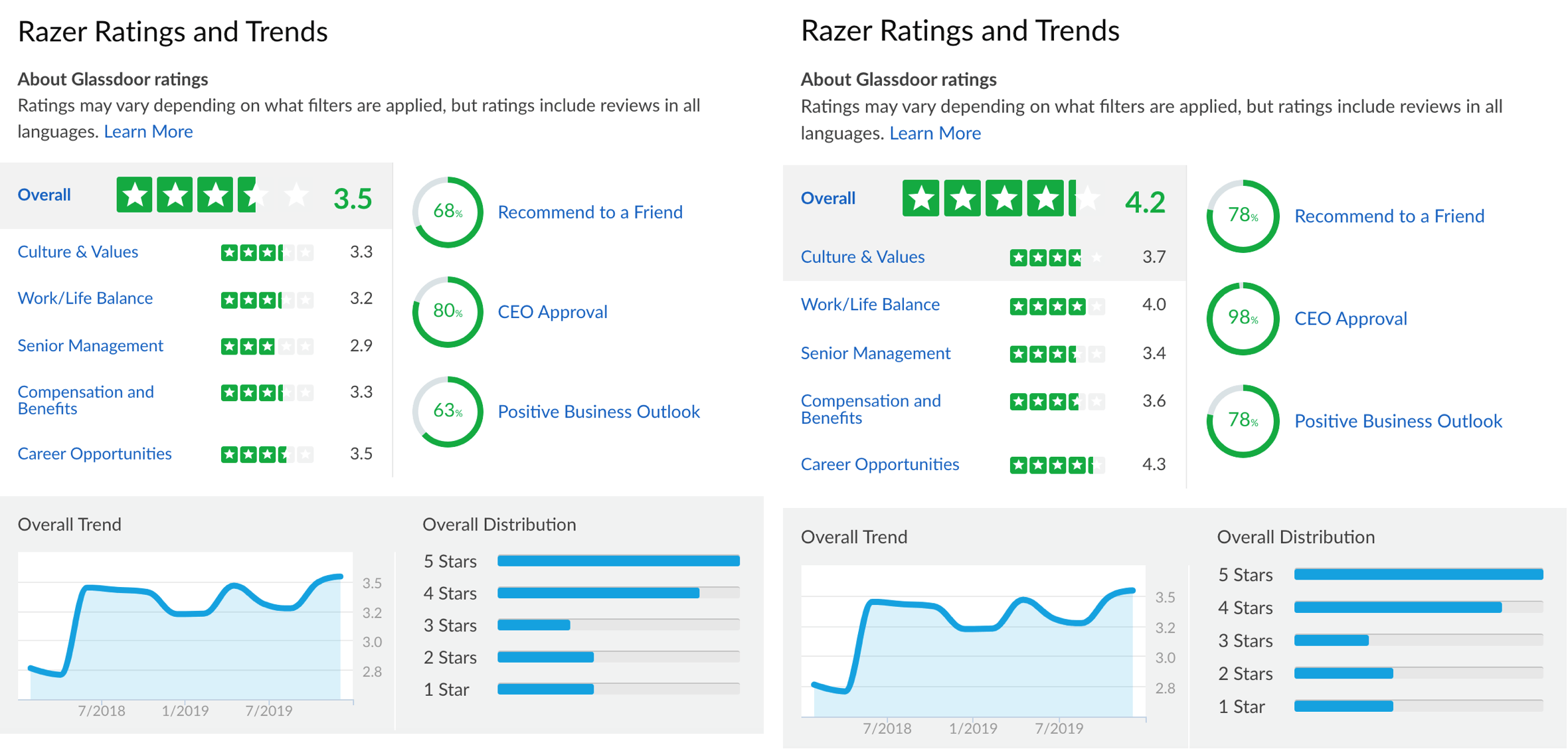
Its Glassdoor review ratings seem to paint a different picture. In fact, both Razer’s overall (left) and Singapore (right) office ratings are trending upwards, with 80% and 98% approval ratings for Tan, respectively. Keep in mind that the company has 18 offices across the world, and the Singapore branch is its largest, with about 500 people.
Good founder, bad founder
Stay ahead in Asia’s tech landscape
This is premium content. Subscribe to read the full story.
Founders are often misunderstood and sometimes even have a limited voice.
We know this is not ideal. ⌛ Sign up in 20 seconds. Cancel anytime.
Our subscriber community includes professionals from these companies:





Stay updated on the go with our mobile app.
Get latest insights with smoother, more personalized experience through TIA mobile app.