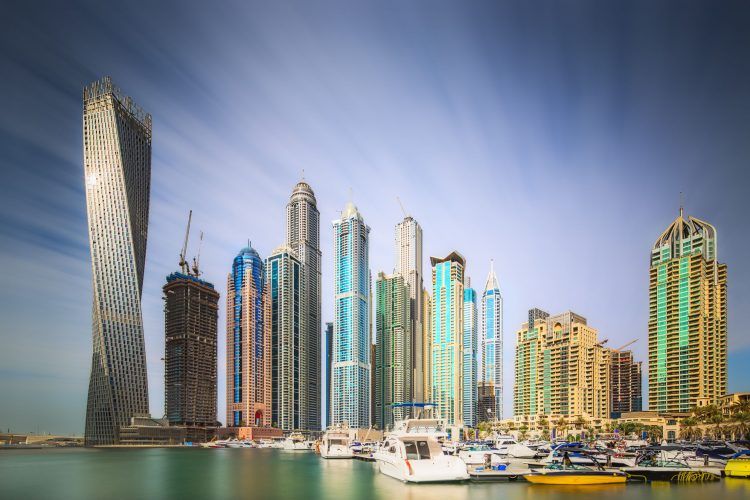
View of the Dubai marina. Photo credit: boule13 / 123RF.
The wealthy Gulf city of Dubai has long been viewed as a hub of business and commerce in the wider Middle East region. Nestled in an area that’s been wrecked by war, conflict, and political turmoil, the desert oasis has managed to cultivate a glamorous image as a city with pristine infrastructure, debaucherous nightlife, and delectable cuisine.
It attracts a combination of wealthy businesspeople looking for a central hub, as well as highly-educated talent from across the world to help these companies grow – much like Singapore.
But if Dubai wants to continue its dizzying pace of growth, it needs to constantly reinvent itself and maintain its competitive edge. Regional threats – such as from Doha, Kuwait, and even Riyadh – aren’t entirely out of the question.
Qatar alone has US$335 billion under assets via its sovereign wealth fund. Saudi Arabia recently ploughed US$3.5 billion into Uber and wants to continue investing in tech startups. Kuwait’s fund for small and medium businesses is worth about US$6.5 billion. They’re all armed with a tremendous amount of oil and gas revenue, while Dubai has very little.
One of the ways it’s doing so is through the Dubai Future Foundation (DFF) – an umbrella of entities that’s tasked with transforming Dubai as one of the key players in the knowledge economy.
The future is within reach
Within the ambit of the DFF is the Dubai Future Accelerators (DFA) – an ambitious program to pair the world’s top startups with government bodies in Dubai. The goal is to solve futuristic challenges envisioned by cities around the globe.
For example, one of the goals of the Dubai Police is to improve policing across the city through the extensive use of drones. They’re also trying to glean data for better crime prediction. DFA plans to pair them up with companies working on similar products. If accepted into the program, these companies will enjoy free office space, accommodation, and mentorship for 12 weeks.
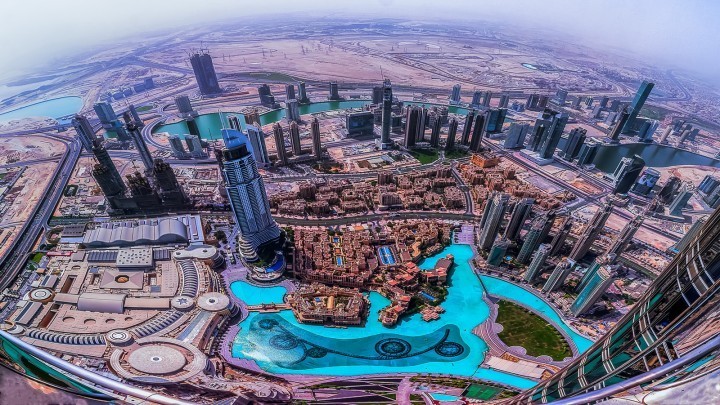
Photo credit: Maher Najm.
Other wings of the government have their own priorities. The roads and transportation authority wants to develop autonomous public transport options, the municipality wants to reduce waste by 75 percent, and the immigration department wants to use AI to clamp down on illegal overstays.
So there’s a real chance of signing multi-million dollar contracts with the government if both parties feel they can work together.
“Dubai 1.0 was all about trade and pearls. Then came 2.0, which was about real estate, buildings, and infrastructure. Now Dubai is moving to a 3.0 phase, which targets a knowledge-based economy,” says Vera Futorjanski, head of communications at DFF.
The DFA is now in its second batch of incubated companies. In the first batch it accepted 30 applicants out of a total of over 2,000. Nineteen of those went on to sign contracts with the Dubai government, worth a total of US$33.5 million.





Stay updated on the go with our mobile app.
Get latest insights with smoother, more personalized experience through TIA mobile app.












📅 Upcoming Events
22 October 2026
Payoneer x CSPN Summit 2026