Nathaniel Fetalvero · · 15 min read
A startup’s guide to establishing an efficient remote-working culture

In a remote-working environment, it can be difficult to foster a strong office culture. There’s no water cooler to huddle around and make small talk, and spontaneous team lunches or afterwork hangouts are incredibly difficult to organize, if at all possible.
However, forcing employees back to the office just to meet in person every now and then sounds like every work-from-home enthusiast’s worst nightmare. So how can businesses build a team culture without stripping their workers of choice?
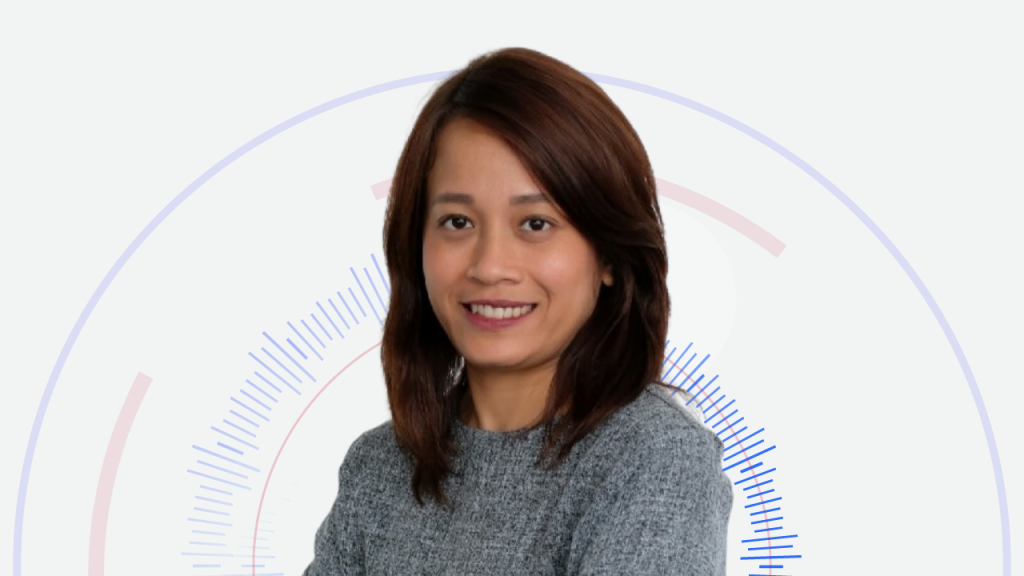
Libertha Hutapea, vice president of people business partner, talent development at Tokopedia / Image Credit: Tech in Asia
In this episode of A Startup’s Guide to Remote Talent, G-P’s Charles Ferguson chats with Libertha Hutapea, vice president of people business partner, talent development, and performance management at Tokopedia, about the Indonesia-based ecommerce major’s own path to designing a working model that works for its teams, the importance of company values in a remote working environment, and how to keep employees engaged in a remote setting.
Timecodes:
00:00 – Intro
01:18 – Introducing Libertha Hutapea, vice president of people business partner, talent development, and performance management at Tokopedia
03:39 – How the pandemic shaped Tokopedia’s remote working policies
05:53 – How Tokopedia adapted in the “return to normalcy”
07:11 – How Tokopedia envisions the future of work
10:19 – What about those who can’t work from home?
13:01 – Organizational change management wasn’t that easy to tackle
15:05 – Everything was intentional
17:25 – A work in progress
18:34 – The recap so far
19:45 – Next episode: How to manage workers’ performance in a remote-working environment
Hosts:
- Charles Ferguson, Singapore-based general manager for G-P’s Asia-Pacific operations
- Nathaniel Fetalvero, managing editor of Tech in Asia Studios and host of the Startup Snapshot podcast
Featured Interviewee:
- Libertha Hutapea, vice president of people business partner, talent development, and performance management at Indonesia-based ecommerce major Tokopedia
A Startup’s Guide to Remote Talent is a podcast by Tech in Asia, produced in partnership with G-P. Visit G-P’s website to learn more about the increasingly remote working world and how your business can gain an edge in the talent economy.
Transcript
Nathaniel Fetalvero:
Hey, Charles.
Charles Ferguson:
Hey, Nat.
Nathaniel Fetalvero:
When was the last time you had a water-cooler chat with a colleague?
Charles Ferguson:
Aw, man, it’s been such a long time since I got around a watercooler or even a coffee machine with a colleague. Why do you ask?
Nathaniel Fetalvero:
Well, we were talking last episode about recruiting and retaining remote talent and all the boons and benefits that came with embracing a remote work culture.
Charles Ferguson:
Right, being able to hire anywhere in the world, fostering innovation, a happier workforce.
Nathaniel Fetalvero:
Yeah, but I also started thinking about the things you’d lose in a remote work environment, like, bumping into a co-worker at the watercooler, spontaneous lunches with the team, grabbing a couple drinks after work.
Charles Ferguson:
You know, Nat, I actually spoke to someone who might have the answer you’re looking for. But how about we open today’s episode first?
Nathaniel Fetalvero:
Please.
Charles Ferguson:
Hello, and welcome back to A Startup’s Guide to Remote Talent. My name’s Charles Ferguson, I’m the APAC general manager at G-P, and my co-host is Tech in Asia Studios managing editor Nathaniel Fetalvero.
In this podcast miniseries, Nat and I explore the new age of hiring and how businesses of today – and tomorrow – can navigate the talent economy of the future. And it looks like today’s topic is going to surround establishing an efficient remote working culture.
Nathaniel Fetalvero:
So who is this mystery person you spoke to about the exact thing we were just talking about?
Charles Ferguson:
Well, let me introduce you to Libertha Hutapea, assistant vice president of people, partner, and talent development at Indonesia-based ecommerce company Tokopedia.
Libertha Hutapea (Recorded Interview):
I also have like a very, very unique experience.
Charles Ferguson (Recorded Interview):
I’m sure.
Libertha Hutapea (Recorded Interview):
Because I was an industrial engineer, actually.
Charles Ferguson (Recorded Interview):
Wow.
Libertha Hutapea (Recorded Interview):
Haha, so yeah, I didn’t even think of becoming a people or HR practitioner at that time. So I started my career as a consultant in industrial engineering and then, after two or three years working, and then… yeah, I mean, it happens a lot that, you know, meeting many people as a consultant, and then, and at one project, I thought, “Oh, actually, people management is very interesting.”
And then I took a master’s degree in people and knowledge management.
Charles Ferguson (Recorded Interview):
Wow.
Libertha Hutapea (Recorded Interview):
And then after that, I worked as a consultant in people areas, yes. And then after so many years as a consultant, I thought to myself that I think it’s a good time to move as an HR practitioner because, I mean, usually, I want to have an opportunity of, you know, exploring so many things at a time. And then, I thought that, after so many years in consulting, I know how consultants play the game. And then, I think I need to see the other side of the story as a HR practitioner.
And then I landed in Tokopedia four years ago. At that time, Tokopedia was just having, like, maybe 1,000-plus employees. So we call our employees “Nakama,” so whenever I mention “Nakama,” please understand, it refers to our employees. Only 1,000-plus and then now, we have, like, 6,000-7,000 Nakamas. So over the four years, I think I’ve learned a lot more than so many years that I’ve invested in my consulting life haha.
Nathaniel Fetalvero:
Wow, an industrial engineer turned HR practitioner.
Charles Ferguson:
Right? Libertha has a fascinating career story. And it’s really something that Tokopedia was able to grow six or seven times its size in just four years.
Nathaniel Fetalvero:
Yeah, I’m actually pretty familiar with Tokopedia – we cover the company quite a bit here at Tech in Asia – but I’m curious as to how it adapted to the pandemic and the whole shift to remote working.
Charles Ferguson:
Well, I’m sure you’d know then that, even before the pandemic, Tokopedia had already initiated some remote-working policies.
Libertha Hutapea (Recorded Interview):
So basically, before the pandemic started, actually Tokopedia already applied, some, you know, like, remote working or flexible working policies – but still in a limited way. And at a time, we, you know, gave the opportunity to our engineering team, the data scientist team, to have more flexible working hours compared to the rest of the groups.
Since the pandemic started, it has prompted new habits, changed so many aspects of our lives, including the way businesses operate. And I think, in that situation… I mean, we saw that as a challenge, as well as an opportunity for Tokopedia as well in our business, because at the time, actually, the business gained so many advantages as well because many merchants are moving, you know, to online platforms and, you know, shifted away from the conventional operational.
And then, during the pandemic, I gladly say that, actually, with the 7,000 Nakama, actually everyone is working 100%, from home. And then we chose this policy, actually only to, you know, to support the health and safety of each of our Nakama and their families. Because during the pandemic, I mean, even in Jakarta, the situation is very crazy at the time. So we don’t have any choice other than yes, we allow everyone to work from home.
And then after two years plus, we can see that, actually, with adequate technology to support our Nakamas’ work experience, we’ve seen that our employees keep the productivity rate high.
Nathaniel Fetalvero:
Wow, so even with a workforce 7,000 Nakamas strong, Tokopedia was able to get everyone onboard a fully remote working environment and saw an increase in productivity.
Charles Ferguson:
All in a day’s work for one of Indonesia’s most prolific tech companies.
Nathaniel Fetalvero:
Right, and how did Tokopedia handle return to, I guess, normalcy once lockdown measures began to ease in Indonesia?
Charles Ferguson:
Well, as Libertha tells it, adapting to the situation took a lot of hard work.
Libertha Hutapea (Recorded Interview):
So, after two-plus years, the pandemic is getting better. And then with that, even though during the two plus years, we actually successfully, you know, having like 100% working from home, while keeping and maintaining the productivity good. But we also noticed that people are, you know, like, lacking high-touch moment kind of things, because everything is just conducted virtually and then, you know, in the last two to three years, we onboarded so many new people as well. And then they didn’t even know where our offices are.
You know, even on my team, I onboarded, like, maybe less than 10 people, and then when I first met them, and then “Oh, I don’t realise that you are that tall,” you know, and maybe if I met him or her, you know, outside, you know, in maybe a mall or maybe in other places, I don’t even recognize them haha.
Nathaniel Fetalvero:
This is exactly what I was talking about at the start of this episode.
Charles Ferguson:
Yeah, but as we discussed last episode, the solution isn’t to go back to the office every day like nothing happened because two years of fully remote working has a real impact on people’s idea of what it means to work – and Tokopedia knew that.
Libertha Hutapea (Recorded Interview):
We, you know, revisit all the working models once again. And then, together with our peers group in GoTo, we announced the new future of work in Tokopedia and also in GoTo Group. So the future of work that we are mentioning is actually not just transforming the where we work, but also how we work to create a new working model that better serves our consumers, our people, our business, and also our community.
And then we understand that Tokopedia already has so many leaders, so many functions, with so many Nakamas, and together with the GoTo Group, it’s adding more complexity. So we also realize that in this era, we cannot, you know, force everything, like, one-size-fits-all kind of thing. So we wanted to promote flexibility and accountability at the same time. Therefore, we apply the function-led working arrangement, which mainly considers different job requirements and business needs, as well as continue to cultivate the trust based culture, empower the leaders and the team to drive results together.
So with this new model, actually, we encourage an agile collaboration. We open up our offices for everyone, but then we also encourage the trust-based culture for Nakama to enjoy the flexibility of working outside of the office.
So let’s say if I’m an engineer, and then there’s a given period whereby all the leaders and the team can decide which working model suits their business, their customers, and their working ways best. So let’s say one team decides, “Oh, well, because our, you know, team members is actually spread across so many continents, spread across regions, and even countries.” So they thought that, you know, having like a full on-site or hybrid is not really possible for them, and then they are already used to remote working, then yes, they can choose to apply the
flexible, remote working.
But then we also announce to everyone that, even though you announce the remote-working model for your team, it doesn’t mean that you never have an off-site, you know, meeting or session together with them. So once in a while, we encourage leaders to, you know, have a team engagement, team bonding session, or even, maybe some critical brainstorming ideation, a cross-functional collaboration, it’s allowed or even encouraged to do it off-sites in office. And everyone, even though you are in a remote working kind of way, you need to, you know, go back to your office and spend your time with your team members, and do whatever is required during the work-from-office session.
Nathaniel Fetalvero:
OK, so what about teams that can’t do their work from home? I’d imagine there’d be at least a couple of teams whose jobs require being physically present.
Charles Ferguson:
Oh, yeah, Tokopedia considered that as well.
Libertha Hutapea (Recorded Interview):
Let’s say we have a sales team, and then on a daily basis, they’re actually required to meet their customers, their partners off-site, you know, the salespeople usually meet people everyday, right? And then I thought, “Oh, I don’t think remote working is actually 100% effective for us, because we need to maintain, you know, a close connection or relationship with our customers and partners as well.” Yes, so the sales team will choose, “Let’s apply the hybrid,” and then they can choose the schedule to work in the office together with a team within a month, decide, agree on it, and then ensure that everyone is added to the agreed schedule. So that‘s you know, just an example of how we do the function-led working arrangement.
Nathaniel Fetalvero:
You know, this reminds me of something we talked about in the previous episode regarding choice.
Charles Ferguson:
Yeah, it’s not going to work if you just say, “Everyone work from home,” or make everyone come in on certain days or even go back to just working from the office every day. Different people – and different teams, for that matter – have different priorities and preferences, so it’s important to give them the freedom and flexibility to choose where and how they work.
And the beautiful thing about going about it that way is that it serves as an employment branding opportunity to showcase one’s trust-based and choice-led culture in the workplace.
Libertha Hutapea (Recorded Interview):
So we really understand the impact of whatever decision people practice in Tokopedia. I mean, yes, we… when we are, you know, designing this future of work model, we try to analyze from different angles. I mean, if we do this, what will be the impact to the recruiter or the hiring team? What would… if you do that, what would be the impact towards our Nakama, who actually spread across so many regions? Because after two-and-a-half years, many of them are, you know, coming back to their hometown, right? So if we ask them to be, you know, physically present in Jakarta, then we need to, you know, encourage everyone to relocate back to Jakarta.
Charles Ferguson (Recorded Interview):
That’s huge. Everyone in Surabaya and Jogja pack your gear and come back to Jakarta,
you know?
Nathaniel Fetalvero:
I can already see the headlines if Tokopedia had actually forced everyone to come back to Jakarta to work in the office.
Charles Ferguson:
Yeah, the media would have a field day haha.
Nathaniel Fetalvero:
I wonder how everything went over from an organizational change management perspective though.
Charles Ferguson:
Well, I can tell you one thing – it wasn’t easy.
Libertha Hutapea (Recorded Interview):
We also understand that change management would not be that simple and easy, right?
Charles Ferguson (Recorded Interview):
Yeah.
Libertha Hutapea (Recorded Interview):
So yeah, we’re thinking so many ways, and even what we want to achieve towards this future of model, because it’s not just the way we work, right? But then the objective, the culture that we want to promote, the value that we want to internalize within our people. And that’s why we came up to two things. Flexibility – because we want to… Yeah, I mean, our industry is extremely, very dynamic, everyday change, right?
Charles Ferguson (Recorded Interview):
Totally, totally.
Libertha Hutapea (Recorded Interview):
So flexibility, agility has already been one of our core values. So we want to emphasize the flexibility, but flexibility should go hand in hand with accountability as well, it’s, you know, it’s like a take-and-give relationship kind of thing. So when the company gives flexibility to their employees, we need to ensure that people can deliver the accountability, as expected, because if flexibility and accountability don’t work hand in hand, it will be chaotic at the end of the day.
So yeah, at that time, we will try to, you know, analyze, we try to measure whether our culture is strong enough to do this, and then we realized that, yeah, even though, you know, we’re taking, like, a big leap. But I think it’s worth it to try because we know this is what’s best for our company right now, and also what’s best for our customer, for our business partners, for our businesses.
Nathaniel Fetalvero:
Right, so everything that Tokopedia did with regards to instating remote working policies, bringing people back to the office so they could have the occasional interaction with their team members, was all very intentional.
Charles Ferguson:
Exactly, no knee-jerk reactions to just follow what other companies are doing or just thoughtlessly going back to the way things were. And it helped that this intentional culture is baked into the company’s values.
Libertha Hutapea (Recorded Interview):
Even from our founders, they believe that our three DNA – the three values that we have are actually the key to the success of our growth and what makes Tokopedia right now.
So three DNA, we call it first, focused on consumer. So basically, in every innovation that we do, we want to, you know, problem-solve our users’ problem, or customer’s problem, or partner’s problem, or even our own people’s problem. And then the second one is growth mindset. So a growth mindset means that every day, you need to be better than yesterday, and tomorrow should be better than today. And so the culture of learn, relearn, and unlearn is actually the key of continuous improvement. And then the third one is make it happen – make it better. So I think the high accountability, the strong ownership of every assignment that’s been given to Nakama is the core of smooth execution. I mean, competing in a very dynamic industry, you need to make an effort in everything every day, and not just stop at make it happen, but how you make it better throughout the day.
So, we really believe that these three DNA are the core of our company. And then, you know, when we’re thinking of how to create the best company, the best employer, you know, because as a people team as the HR team, we want to be the most admirable company in digital industry, not just in Indonesia, that’s our dream.
Nathaniel Fetalvero:
I mean, wow, Libertha makes it sound easy, you know?
Charles Ferguson:
Well, you can be sure that it absolutely wasn’t. Even for a company like Tokopedia, making such a huge change to the way its employees work isn’t something you can do overnight. In fact, Libertha says that she and her team are still working on making sure the Tokopedia model works for everyone.
Libertha Hutapea (Recorded Interview):
Yeah, so we are still in the, you know, kind of, like… it’s a continuous experiment.
Charles Ferguson (Recorded Interview):
Of course.
Libertha Hutapea (Recorded Interview):
We even give like three months for everyone to check whether this working model is works for your team or not.
Charles Ferguson (Recorded Interview):
Oh, that’s interesting.
Libertha Hutapea (Recorded Interview):
So after three months, we gather feedback and then, yeah, gain some insights and then strategize further for future improvement.
Charles Ferguson (Recorded Interview):
Well, your HR team must be, you know, extremely agile and comfortable with ambiguity to be able to flex back and forth from one model to another, depending upon the feedback they get, right?
Libertha Hutapea (Recorded Interview):
Yes, yes. We are getting used to… I mean, we are living in an industry that actually, you know, agility is a must haha.
Nathaniel Fetalvero:
Right, so basically, companies need to keep a constant feedback loop with their employees, ensure that different teams and different team members, as well, have their needs met, and stick to their values to make sure that their remote work policies don’t only drive productivity but also lead to happy and engaged workers.
Charles Ferguson:
Yeah, and my conversation with Libertha ended with a note that I think captures the entire essence of designing a working model and culture that can achieve all that.
Libertha Hutapea (Recorded Interview):
We cannot design within, you know, one locked room only, we need to open up our room and, you know, go and talk to everyone, and then check with them. What do you suggest? Do you agree with this or not? And then what’s the pros and cons? And then you gather all the insights, go back to the drawing board, and then, you know, have options, have a proposal. And when you launch something, it doesn’t work, yeah, just change.
Charles Ferguson (Recorded Interview):
That’s great.
Libertha Hutapea (Recorded Interview):
Just change it. Listen and learn everyday. So yeah, that’s part of our DNA growth mindset.
Nathaniel Fetalvero:
Wow, I should’ve just let her recap our discussion instead of doing it myself. I do think though that Tokopedia’s success with its remote-working arrangement isn’t something that every company has experienced, especially with regards to the rise in productivity. So what happens on the other end of things, when managers and business leaders have to manage their teams’ performance? That’s gotta be super hard to do in a remote environment.
Charles Ferguson:
You’re not wrong. We’ll cover that in the next episode of this podcast.
Nathaniel Fetalvero:
Why do you have to leave me hanging, Charles?
Charles Ferguson:
Gotta keep you tuned in somehow, Nat – and all of you listening from home as well. Thanks for catching this episode of A Startup’s Guide to Remote Talent, a Tech in Asia podcast, produced in partnership with G-P. Make sure to follow us on your podcast platform of choice so you can catch the rest of the episodes we have in store for you, where we’ll be discussing everything you need to know about the future of the remote-talent economy. And if you’re on an app that lets you, go ahead and give us five stars and a review. It really helps us out.
Nathaniel Fetalvero:
And before I forget, special thanks to the Tokopedia team but especially to Libertha Hutapea for sharing her experience and insights with us on this episode. We’ll put links to her LinkedIn profile in the show notes if you want to get in touch with her. And if you’re interested in a job at Tokopedia, check out the company’s career page at tokopedia.com/careers, where the company has a handful of open roles put up.
Charles Ferguson:
That’s right. And if you’re a business owner or business leader and you need or want some assistance in figuring out your remote talent strategies, visit G-P’s website at g-p.com and we’ll be sure to help you out. I’ve been Charles.
Nathaniel Fetalvero:
And I’m Nat. We’ll catch you next time.
Stay updated on the go with our mobile app.
Get latest insights with smoother, more personalized experience through TIA mobile app.
Recommended reads
 Indonesian AI startup goes global
 Forrest Li on scaling Sea, building smarter bots, and founder grit
 An AI assistant that joins sales calls and scores team skills
 SGX’s CEO says it doesn’t need a unicorn to win
 SMEs want AI too, but not the kind Big Tech is selling
 Oatside’s alt-milk rise hits a profitable gear
 Alibaba’s financial health in 12 charts
 Asia’s telcos bundle AI into mobile plans. Will it pay off?
 M-Daq chases bigger clients as revenue falls, losses grow
 VC tracker: Accel raises US$3.5b, including US$550m for India





Editing by Arpit Nayak
(And yes, we’re serious about ethics and transparency. More information here.)