Sumit Chakraberty · · 8 min read
Dissecting Snapdeal 2.0: Can it succeed where Ebay failed?

Snapdeal co-founder and CEO Kunal Bahl. Photo credit: Snapdeal.
Kunal Bahl and Rohit Bansal – co-founders of Indian ecommerce company Snapdeal – went from zeroes to heroes overnight this week in some media reports. They fought a boardroom battle and regained control from their big investor, SoftBank, by walking away from talks to sell the struggling firm to arch rival Flipkart, proclaimed a prominent newspaper.
We don’t know what derailed the deal after months of negotiation. Was it the size of the payout to the founders that was said to be part of the deal? Was the final offer of US$950 million too low for some of the early investors in a company that was valued at US$6.5 billion at the start of 2016?
These actions harm the credibility of the nascent startup ecosystem in India.
What we do know is that Snapdeal’s runway got extended last week with the sale of its payments subsidiary FreeCharge for US$60 million, all in cash, to Axis Bank. Snapdeal may also sell its logistics arm, Vulcan Express. In a letter to employees, CEO Kunal Bahl talks of a Snapdeal 2.0, which will aim for profitability in the time it gains from selling off “non-core assets” and cutting costs.
It seems clear from the letter that Snapdeal 2.0 will be an open marketplace connecting sellers and buyers, not bothering with warehousing, logistics, and so on. It will aim to serve a long tail of small sellers instead of the large merchants who account for the bulk of transactions on managed marketplaces such as Amazon and Flipkart.
The main advantages of such a model, pioneered by Ebay, are lower costs and a broader seller base. As Bahl says in his letter, Snapdeal 2.0 will focus “on being a champion for all sellers in India, enabling anyone to set up a store online in a few minutes, and on providing a large selection of products.”
Amazon vs Ebay
One problem is that it gets harder to ensure a good customer experience in a marketplace without inventories, where all and sundry become sellers and deliveries can get messy. That is why Amazon stuck to the managed model despite the early success of Ebay, which at one time could offer a much wider selection of categories and products.
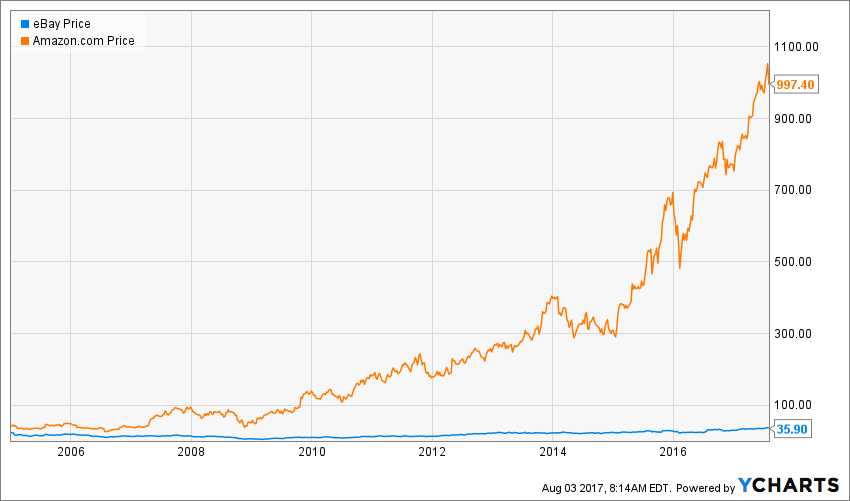
Over time, as Amazon’s product range grew, it began to trump Ebay in customer satisfaction. Its revenue took off, and so did its share price, as seen in the following chart. The share prices of Amazon (orange line) and Ebay (blue line) were within touching distance until about eight years ago, and then diverged sharply to what is now a yawning gap.
The fortunes of Ebay nosedived in India, too, once Amazon arrived on the scene. Amazon invested in a string of warehouses around the country, as did its local competitors, Flipkart and Snapdeal. Customers never had it so good, with the convenience of home delivery and payment options, not to mention the competitive discounts offered on each of the well-funded platforms. Spoiled for choice, there were fewer reasons for buyers and sellers to go to a less managed site like Ebay.
The struggle of Ebay was evident in the shutting down of operations and mass layoffs at its India centers. Finally, Ebay India was swallowed up by Flipkart as part of a US$1.4 billion funding round by Tencent, Microsoft, and Ebay earlier this year. It brought the curtain down on a journey that started 13 years earlier, when Ebay entered India with the acquisition of Indian auction site Bazee and became one of the first to foray into ecommerce in the country.
It also left a potential gap in the market for an open marketplace, which Snapdeal 2.0 hopes to fill. No doubt it makes more commercial sense to go for an asset-light, inventory-less, low-cost model when mega rounds of funding have dried up. But the question is what unique value Snapdeal 2.0 can offer to the customer.
Customer experience and price
Rapid decline of Snapdeal
Snapdeal Sale 2.0?





Stay updated on the go with our mobile app.
Get latest insights with smoother, more personalized experience through TIA mobile app.