- Premium Content It takes our newsroom weeks - if not months - to investigate and produce stories for our premium content. You can’t find them anywhere else.
 Melissa Goh · · 6 min read
New digital payments rules: a win for consumers, or the death of choice?
Prior to January 28 this year, financial technology companies in Singapore could operate with relative freedom.
That changed when the city-state recently enforced the Payments Services Act, which increases oversight on digital payments services including currency exchange, domestic and cross-border money transfers, as well as account issuance. The stricter safeguards are aimed at increasing consumer confidence in these new technologies and ultimately promoting the broader adoption of e-payments in Singapore.

Photo credit: Revolut
Major digital wallet operators and payments providers that Tech in Asia spoke to are on the fence regarding the new rules. While the impact has not yet been felt by some, many have voiced concerns over how the act could limit their operations in the country, leaving consumers worse off in the near term.
The new policies impose an individual limit on personal payment accounts of S$5,000 (US$3,600) at any given time, while limiting annual transactions to a maximum of S$30,000 (US$21,500) for digital wallets and virtual accounts. These rules would help “maintain the stability of the banking system” and guard against abrupt, massive outflows of money from the city-state’s financial system, according to the Monetary Authority of Singapore (MAS).
A spokesperson for London-based fintech company Revolut, which launched its services in Singapore with much fanfare last October, tells Tech in Asia that the new activity-based regulation “creates concerns on how best we, and other financial technology companies, can serve Singapore customers.” The spokesperson adds that the startup has yet to see any significant movement of funds in reaction to the new policies.
“We are adopting a regulatory structure that recognizes the growing convergence across payment activities,” said the country’s minister for education, Ong Ye Kung, at the second reading of the Payments Services Bill in January 2019. “For example, payment and remittance services are now often provided as one product to customers.”
Among digital e-wallet operators, differentiation comes in the form of incremental offerings: Multicurrency mobile wallet operator YouTrip offers favorable foreign exchange fees targeted at travelers, while Revolut offers commission-free stock trading and a peer-to-peer payments function on top of its remittance service. On top of its main cross-border money transfer service, TransferWise also lets users open borderless bank accounts that come with their own local bank details. They all issue accompanying physical debit cards.
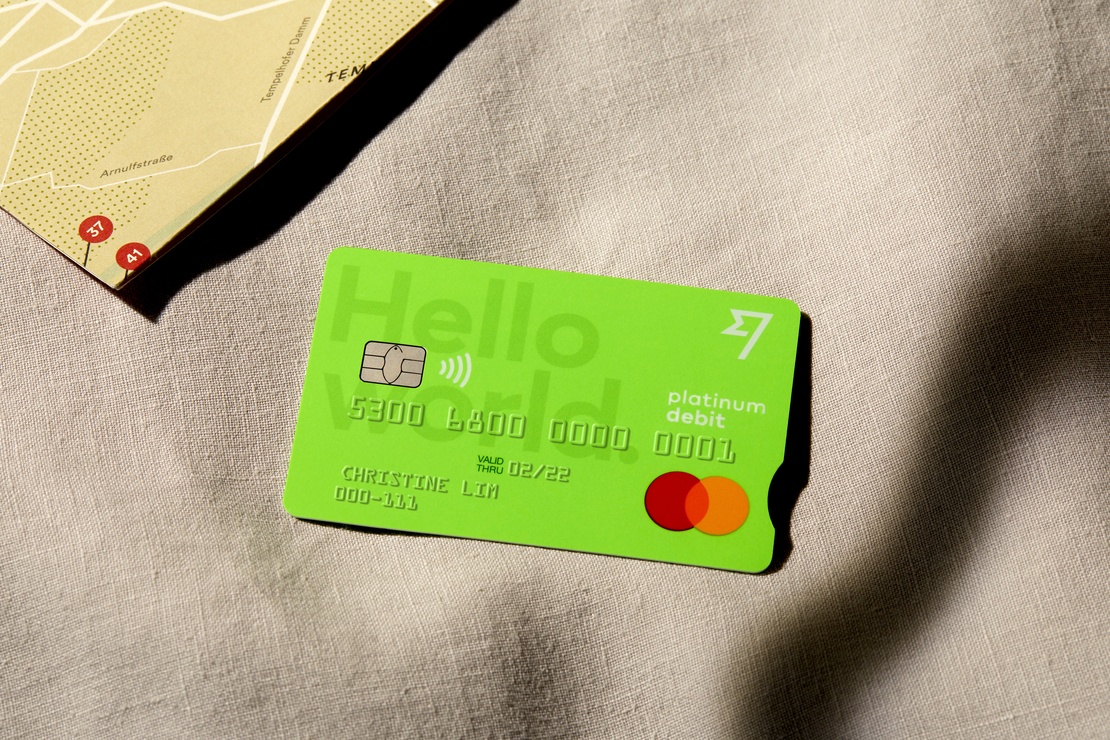
Photo credit: TransferWise
It’s arguably the constantly evolving services of these companies that the new activity-based regulation is aiming to tackle.
‘Unnecessary complexity’
The caps were designed “with due consideration to industry practices and typical household expenditure needs, and should provide sufficient headroom for most individuals,” the MAS said in December, in response to feedback received on the proposed regulations. The regulator added that these are initial limits, which can be reviewed over time.
Nium CEO Prajit Nanu tells Tech in Asia that the new regulations are “unnecessary complexity.” For the open money platform, which licenses its banking infrastructure to enterprise customers, a S$30,000 limit on annual transactions limits the addressable market for Nium to those with annual salaries below the amount.
Asked whether the Singapore market would diminish in importance for the startup relative to its other markets as a result of the new rules, Nanu said, “These are the rules – automatically it would be.”
A cashless society?
Stay ahead in Asia’s tech landscape
This is premium content. Subscribe to read the full story.
Could the new rules ultimately leave consumers worse off?
We know this is not ideal. ⌛ Sign up in 20 seconds. Cancel anytime.
Our subscriber community includes professionals from these companies:





Stay updated on the go with our mobile app.
Get latest insights with smoother, more personalized experience through TIA mobile app.








📅 Upcoming Events
22 October 2026
Payoneer x CSPN Summit 2026