J.T. Quigley · · 5 min read
Tech in Asia Tour Tokyo results: 6 pitches, 3 VCs, but only 1 startup going on a free trip to Singapore
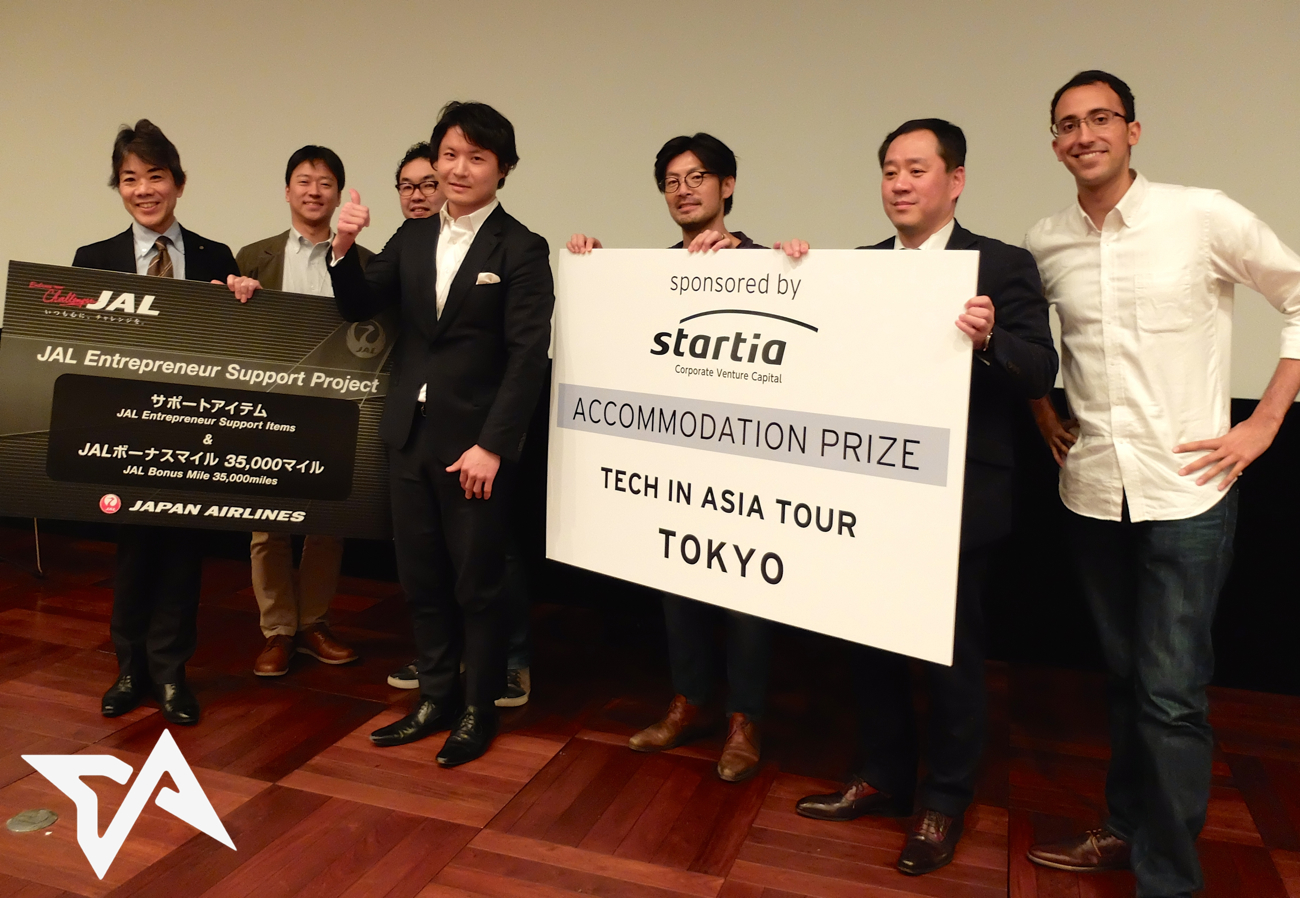
Tech in Asia Tour rolled through Tokyo this evening, with six of the Japanese capital’s most promising startups taking the stage for a chance to leave their mark on a panel of investors and gathered tech industry insiders.
There was more than glory at stake, however. The winner-take-all grand prize – round-trip airfare to Singapore, as well as accommodation, event passes, and a startup booth at Tech in Asia Singapore 2015 on May 6 and 7 – could be the winner’s ticket to fresh investment or international expansion in a lucrative Southeast Asian market.
Read below for a brief description of each challenger. Judge’s comments and the ultimate winner follow.
Genestream
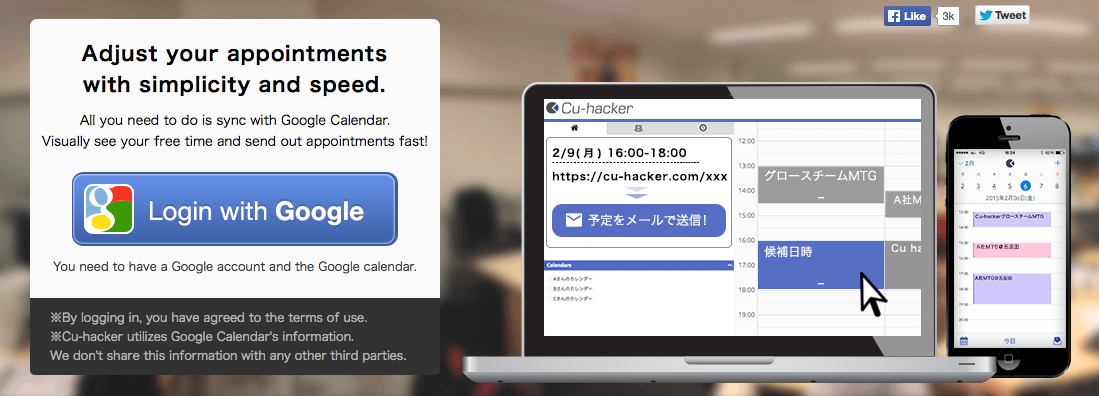
For busy individuals who rely on Google Calendar for scheduling an endless stream of meetings and events, Cu-Hacker is a tool from Genestream that allows them to simplify adjustments and better visualize free time. The service targets professionals in sales, HR, and management roles.
By clicking on an open slot in their schedule and selecting an appointment time, Cu-Hacker generates a custom URL that can be shared with attendees via email or Facebook message (in Japan, Facebook remains a more popular business communication outlet than than Linkedin). In the past three months, it has doubled its monthly active user base to 10,000 people.
The startup also offers Reserve-hacker, a companion service that just launched. It creates a personalized, open calendar that individuals can use to manage their time.
Com3Power

Com3power harnesses the power of the sun to help businesses reduce the cost of green energy.
The startup’s hardware product, Ami, helps home and business owners that use solar panels save money and boost efficiency. The first edition Ami 001 targeted solar arrays, but the most recent one, Ami 003, is for individual homes.
AirCloset
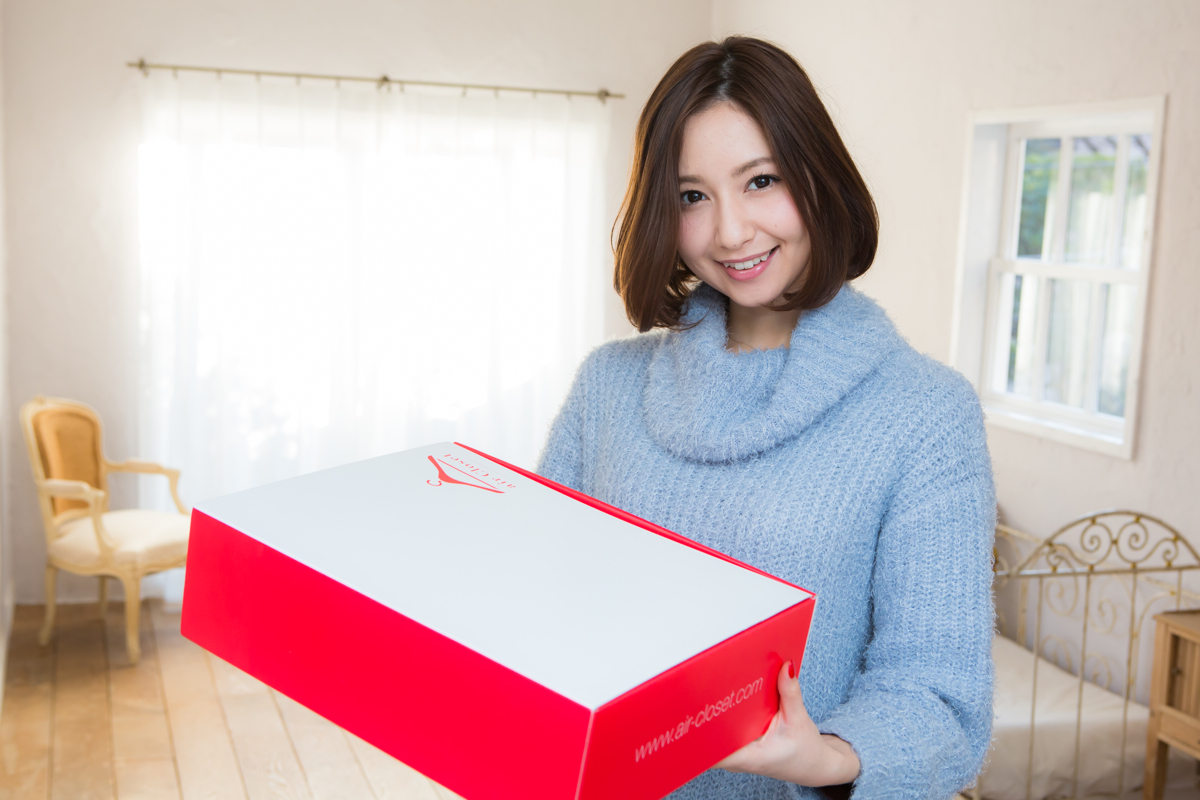
AirCloset is a subscription fashion box startup with a twist. Unlike the usual subscription box where subscribers are sent a variety of discounted items to keep, AirCloset acts more as a rental service. Women receive a curated box of three fashion items – pants, shirts, dresses, and the like – which they can exchange as often as they like with no minimum subscription period. Of course, they can also pay extra to keep what they like.
AirCloset CEO Satoshi Amanuma delivered his pitch in English and noted that, if successful in Japan, he hopes to eventually ship Japanese fashion to women in Southeast Asia. The service has attracted more than 40,000 signups from all 47 prefectures in Japan since it was announced in October 2014.
Tamecco

Japanese businesses are crazy about loyalty cards, so much so that keeping track of them can become overwhelming for consumers. Tamecco, a mobile app, digitizes stamp cards, point cards, and membership cards so users don’t have to dig through their wallets and purses to fish out the correct one. As an added bonus, the app also automatically sends coupons to users based on their proximity to any business that has signed up for the service.
On the shop owner side, Tamecco harnesses the power of big data to help retailers capture and retain shoppers when they’re needed most.
Up Performa
Kyoto-based Up Performa has designed a team-tracking wearable device to help coaches visualize their movements on the field. The device, called Eagle Eye, uses location data to measure each player’s position, gauge their speed, and generate a heatmap of the entire team as a whole. The startup looks to build on the growing interest in sports analytics and sees the 212,000 soccer teams (amateur and professional) that exist in the EU, US, and East Asia as a huge opportunity.
D Free

D Free is another wearable device, by Tokyo-based startup Triple W, but it’s probably unlike anything you’ve heard of before. Like many members of the audience, you might chuckle at its purpose – alerting wearers before they have a bowel movement. But the tiny wearable solves a very serious and embarrassing problem for elderly users and those with certain medical conditions.
The device, which is worn on the stomach, detects activity in a wearer’s intestinal tract and sends them an alert with the estimated amount of time before they should head into the bathroom. Why the name D Free? It’s short for “diaper free” – how the startup’s users would probably rather live their lives if they were able to control their bowel movements.
Judges’ comments
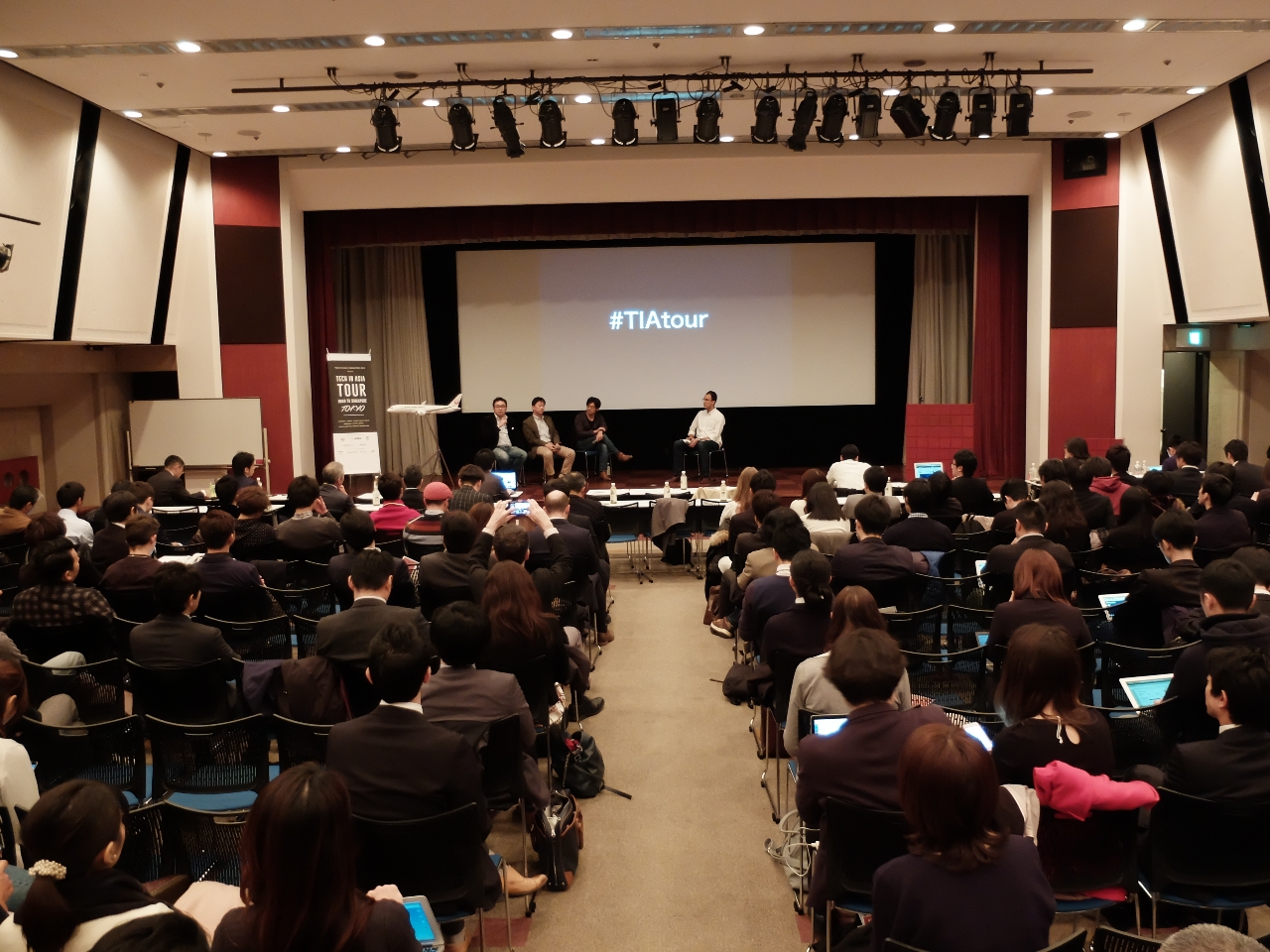
The judging panel consisted of three Japanese VCs: Shinichi Takamiya, partner and CSO at Globis Capital Partners; Jiro Kumakura, partner at Global Brain; and Yasuhiro Seo, the general manager of IMJ Investment Partners. Takamiya and Kumakura are based in Tokyo, while Seo is based in Jakarta.
While they showed some interest in all the firms, they were a bit skeptical of Com3Power’s ability to connect with consumers and of Genestream’s ability to differentiate itself from competing apps. Up Peforma’s big data analytical power and AirCloset’s early traction impressed, but the panel seemed most intrigued by Tamecco and D Free.
Both startups did a good job of explaining why their product could become an essential part of their respective industries. D Free is on the cusp of mass production, a key factor in assessing the viability of a hardware venture. Tamecco, was seen to possess an excellent balance of technical ability and business potential. The judges also saw it as a service that can succeed outside of Japan.
Ultimately, they chose (drum roll, please)… Tamecco!
Tech in Asia extends a big thank you to all of the judges, startups, and attendees. If you’d like to follow us in Japanese, you can do so on Twitter at @techinasia_jp.
Stay updated on the go with our mobile app.
Get latest insights with smoother, more personalized experience through TIA mobile app.
Recommended reads
 Life’s a game, and AI agents are Animoca’s new play
 Indonesian AI startup goes global
 Forrest Li on scaling Sea, building smarter bots, and founder grit
 An AI assistant that joins sales calls and scores team skills
 Beyond the check: Why VCs need more than capital
 SGX’s CEO says it doesn’t need a unicorn to win
 SMEs want AI too, but not the kind Big Tech is selling
 Oatside’s alt-milk rise hits a profitable gear
 Alibaba’s financial health in 12 charts
 Asia’s telcos bundle AI into mobile plans. Will it pay off?





Editing by Paul Bischoff; solar panel image via Flickr user Mike Baker
(And yes, we’re serious about ethics and transparency. More information here.)