Steven Millward · · 2 min read
Dell and Acer Look to ‘Shipping’ PCs by Train from Central China to Europe

I choo-choo-choose you, Central China! (Image rights, and sincere apologies, to The Simpsons/Matt Groenig)
Taiwanese computer maker Acer (TPE:2353) is leading where US rival Dell (NASDAQ:DELL) hopes to follow – by manufacturing PCs and notebooks in inland China, and then transporting them by rail to Europe.
Acer, the world’s number four PC vendor – who’s having a rough year with falling sales – is already making up to 40 percent of its notebooks in central China’s Chongqing municipality. And for the first time, Digitimes reports, Acer is now ready to ship 40,000 units from there to Duisburg, Germany, by rail.
Dell has a base in neighboring Chengdu province. I believe it has two operations centres in the West Chengdu High-Tech Park as well as a new manufacturing base there. Like many PC vendors whose products are made in China, most are still made in coastal regions. Dell’s primary China plant is in Xiamen. With a greater output from its central China plant in due course, Dell looks set to use the same rail route if it works well.
The rail freight journey from central China to Europe takes only 13 days, which is half the time it often takes by sea. But two challenge remain: the wildly differing temperatures and humidity across the length of the route, which risks damaging electronic goods; and the higher cost of rail, compared to air or sea freight. But the cost of using this rail line will likely fall as more frequent services are added. [Update: Engadget‘s Richard Lai is kind enough to point out that this trade rail route to western Europe opened in October last year, as reported by Xinhua].
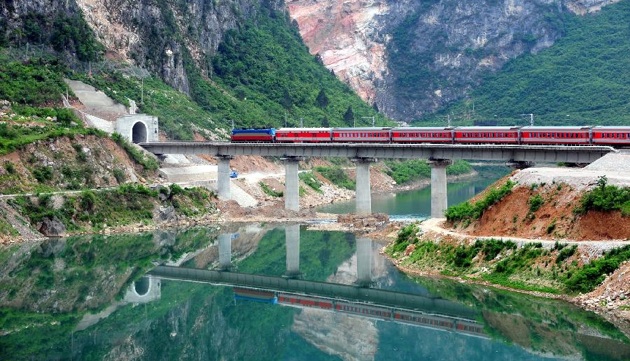
A new rail line through Central China's Sichuan province - opening it up to rail freight to Europe. (Image source: Xinhua)
Although not high-speed (see the picture above), it’s the kind of reliable and far-reaching rail infrastructure that rival emerging economies lack. That – along with cheaper labour and land than in China’s conventional manufacturing regions around Shenzhen and Shanghai – is a big part of the attraction of moving inland.
Taiwanese OEMs have been quick to follow the government lead – in the official Western-China Development Strategy – to new hi-tech zones in Chongqing and Chengdu. Foxconn and Quanta both expanded into inner China in early 2010. Dell started to set-up there pretty early as well, and its operations in the province are opening throughout 2011.





Stay updated on the go with our mobile app.
Get latest insights with smoother, more personalized experience through TIA mobile app.