 Elise Tan · · 8 min read
How Singapore’s hardware startups are competing with wearable giants
These days, most people would probably know what a wearable is. As much as I am a tech cynic (constantly worried about how companies are stealing and selling my personal data) I now wear a Mi-band and am considering getting a smartwatch next.
The “quantified self” phenomenon has become increasingly popular since 2007, when people started becoming almost obsessed with making sense of data that our bodies create, whether for the purpose of maintaining good health, sleeping better, or even increasing productivity.
At the start of the year, research predicted that 72.1 million wearable gadgets like fitness trackers and smartwatches and other self-monitoring devices would be shipped this year, tripling the number in 2014. While 72 million seems a huge number, separate evidence shows that companies are on track to achieving it.
Apple Watch has shipped some 2.3 million units, since its launch in Q2 2015, according to BMO capital markets. 2016 shipments of Apple Watch were estimated to hit 27 million, about 7 percent of the iPhone user base. Motorola and Samsung also just launched the latest version of their wearable products, Moto 360, and Samsung Gear S2 respectively in September 2015.
The wearable market is immense. Fitbit, one of the world’s top selling wearable fitness trackers, has gone for IPO earlier this year, at a valuation of close of $4 billion, just eight years since its incorporation. Two years since its debut on Kickstarter, Pebble raised US$20 million for its third product, Pebble Time, achieving over four times its target of US$500,000 in March 2015.
Besides those mentioned, there are also the Huawei watch, Jawbone, Mi band, and the list goes on. Where would Singapore-based wearable startups stand in this highly competitive market? Do they stand a chance?
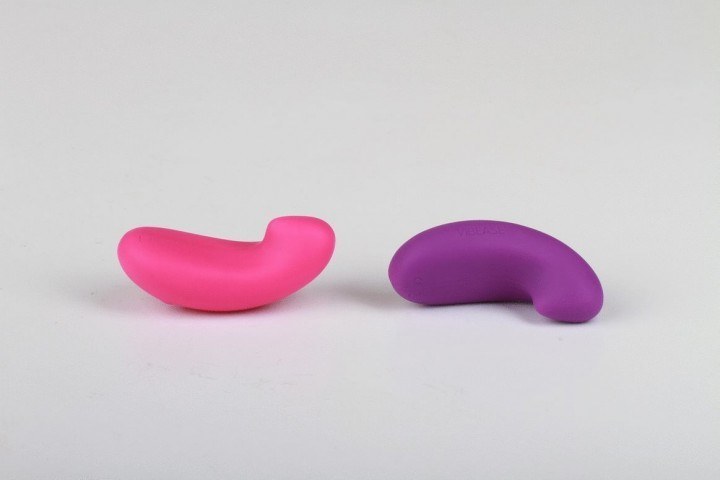
Here are three startups – Ashley Chloe, BOLDR and Vibease- that are pitting themselves cleverly against the giants with the right strategies. They may become the next Fitbit or Jawbone, they may not, but none will deny that they will put up a good fight.
1. Don’t compete where it is already crowded
A Singaporean at heart, Angela Pan, CEO of Ashley Chloe, decided that style is the key when it came to differentiating herself from the incumbents. Her strategy focuses on form beyond function for her HELIX product – a wearable cuff with stereo bluetooth headphones. HELIX was designed based on the principles of fashion and function and solves the omnipresent issue of constantly tangled headphone cords. The strategy occurred to her when she observed that the tech giants are mainly focusing on coming up with the fitness tracking features on their wearable devices.
Amidst the wearables market, which is overflowing with fitness trackers, biomarkers, and smart watches, there exists no solution that allows one to conveniently store his headphones — until Helix came. The differentiation has worked well for her.
After just two months on Kickstarter, Ashley Chloe was awarded “Kickstarter Staff Pick” saw a whopping US$264,205 worth of funds raised by 1,865 supporters- the highest for “Fashion wearable” category.

Another Singapore-based entrepreneur, Leon Leong, cofounder of BOLDR Watches, also agrees that charting blue oceans is the right way to go.
After their first successful Kickstarter which garnered them CAD$50,000 for a classic mechanical watch, their team designed and launched a ‘clever’ watch, “Voyage” (featuring a pedometer, call and app notifications, anti-loss , camera shutter functions and recent added a GMT function for the jetsetters), targeting consumers with a keen eye for aesthetic yet functional watches.
2. Hack the product cycle
3. Raising money in a different way
4. Leveraging affordable yet effective marketing channels
Conclusion





Stay updated on the go with our mobile app.
Get latest insights with smoother, more personalized experience through TIA mobile app.












📅 Upcoming Events
22 October 2026
Payoneer x CSPN Summit 2026