
Summary:
- The hype surrounding climate tech has been translated into investments driven by clear business considerations, says ADB Ventures.
- Despite a decline in overall VC and private equity funding into climate tech, corporate venture capital remains a significant source of investment, powering growth.
- AI is fueling climate tech’s rise, accelerating development and improving efficiencies.
- Dive deeper into how ADB Ventures is igniting impact in the climate tech sector and beyond.
Climate change’s impacts have become increasingly undeniable in the last few years, especially in disaster-prone Asia.
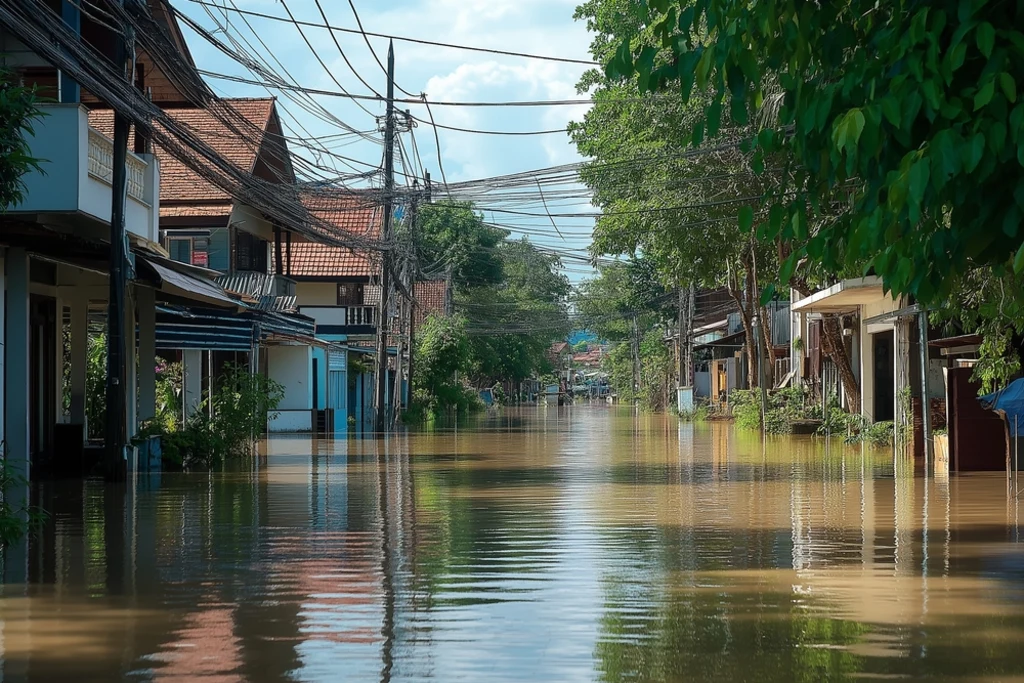
Extreme weather events, leading to disasters such as floods, have become more commonplace in Asia / Photo credit: Nmaneer / Shutterstock
But here’s some good news: Climate tech solutions have emerged as a key lever for tackling this challenge, and funding for climate tech startups has grown substantially over the years.
Still, signs that winter has come to the sector are emerging: Global investment is down by 19% in H1 2025 compared to the previous year, and deal counts are at a five-year low.
“When we look at how the investment climate has been lately, it’s been a tough market,” says Jugnu Pati, senior fund manager at ADB Ventures, the Asian Development Bank’s (ADB) VC platform. “Climate tech funding began declining in 2024, and the momentum in 2025, especially in Asia, has continued to be weak.”
Challenges such as economic uncertainty and geopolitical conflict, combined with shifting US policy, have greatly shaken investor confidence, particularly in relation to early-stage climate tech startups and ventures from Southeast Asia.

Jugnu Pati, senior fund manager at ADB Ventures / Photo credit: ADB Ventures
However, Pati argues that there’s room for cautious optimism.
“There is still a lot of dry powder to be deployed, so this is more like a readjustment in the markets,” she explains. “This is also the first time in more than a decade that some Southeast Asian markets are navigating such a pronounced correction in the early-stage tech investing space.”
“This is natural, though, as entrepreneurial ecosystems, policy frameworks, and supporting infrastructure are still evolving in the region,” Pati adds.
She believes these shifts lay the groundwork for more sustainable long-term growth as founders mature, governance structures improve, capital becomes more disciplined, and businesses become more resilient.
To better understand the landscape and opportunities at hand for climate tech in the Asia Pacific (APAC), Tech in Asia speaks with Pati, asking her to complete three fill-in-the-blank statements:
Statement 1: More companies are realizing that clean technologies make business sense
While the early years of the climate tech funding growth were somewhat steered by market optimism and investor hype, investments are now clearly being driven by business considerations.
For one thing, clean energy technologies like solar and wind are already cheaper to run than new fossil fuel plants. The same goes for electric vehicles, which are more cost-effective to operate despite their high upfront costs – a valuable consideration in industries like logistics and transportation.
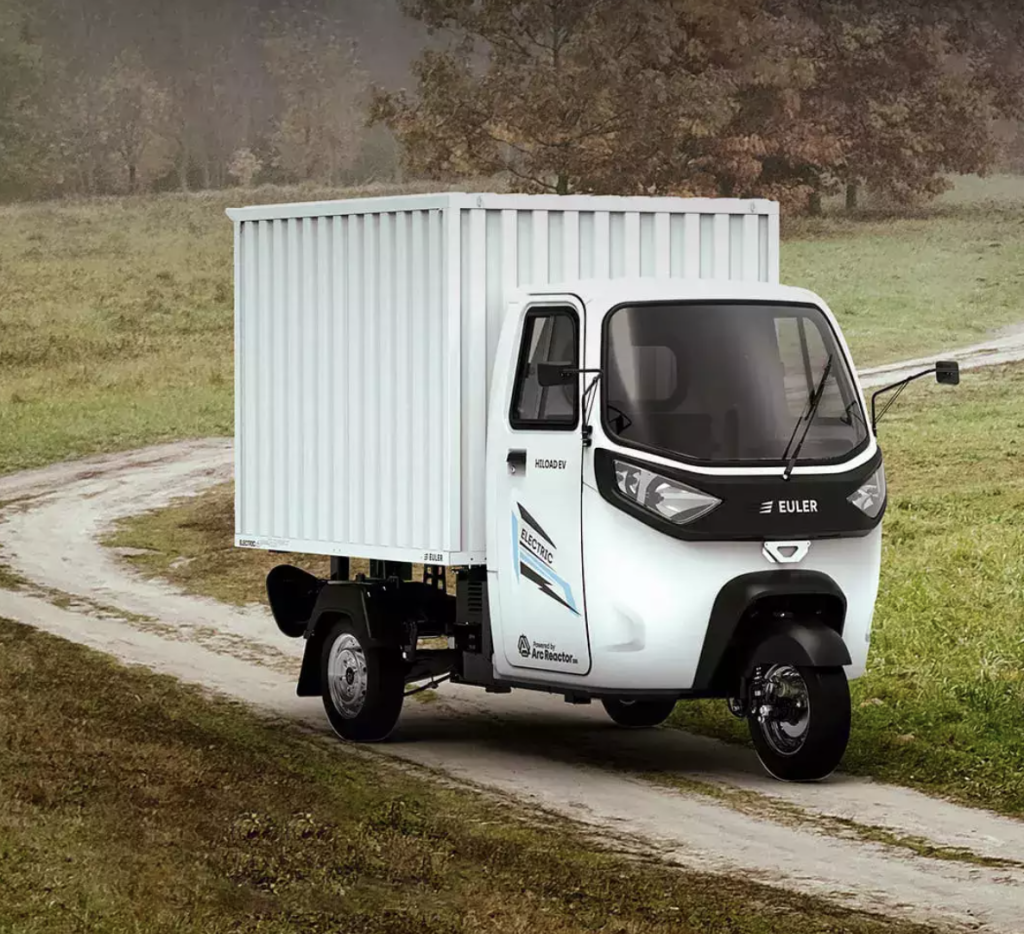
EVs are increasingly being deployed in the logistics sector / Photo credit: Euler Motors
Pati has observed larger consumers looking at solar and storage solutions to lock in lower energy costs and using EVs for last-mile logistical needs.
“It’s become more cost-efficient for corporations to actually start looking at these segments,” she explains.
Pati thinks these solutions are best delivered by startups that can tailor them to meet corporations’ needs more effectively.
Underneath these shifting sentiments lies the fact that climate solutions – as well as the startups behind them – are much more mature now than they were five years ago.
“Earlier, a lot of projects were getting stuck at the pilot stage, but now companies can actually see value being monetized,” Pati points out. “So they feel they’d be at a disadvantage if they don’t move quickly.”
Statement 2: APAC’s climate tech sector will grow because corporations are making direct investments and venture bets
While VC and private equity funding into climate tech has declined, a few focused funds remain. Corporate venture capital (CVC), in particular, continues to be a bright spot for the overall sector, with as much as US$11 billion flowing from large, established companies into climate tech startups in the first half of 2024 alone.
This shift is less about money and more about strategic fit. Large corporations are trying to identify pathways for the decarbonization of future operations through their CVC arms, says Pati.

Photo credit: SORASIT SRIKHAM-ON / Shutterstock
She adds that corporates are taking two parallel approaches to investment.
The first one is usually a fund of funds strategy, where they invest through climate-themed funds. This allows them to see a bigger spread of solutions in the market that they can run pilots with or test, says Pati.
Dive deeper into how ADB Ventures is supporting the growth of impact startups in the Asia Pacific
The second one is much more hands-on. Many CVCs are taking direct stakes in maturing climate tech startups to “get a better idea” of how these solutions could fit into their own business models or meet future customer needs. There’s also a smaller emerging class of CVCs that are willing to take on much riskier bets with a long-term horizon mindset.
With these parallel approaches, CVCs can take a more measured approach toward climate tech that focuses on the realization of actual value.
“We’re seeing more strategic, direct investment take place where corporate backing can help a startup scale much more quickly, efficiently, and cost-effectively,” Pati says.
Statement 3: Embedded AI will be a key accelerator of APAC’s climate tech growth
Like in many other sectors, AI has emerged as a critical tool in the climate tech industry. Integrated with climate tech innovations, AI helped the sector raise US$1 billion more in venture funding in 2024 than in all of 2023.
If intertwined, climate and AI technologies can significantly boost growth and efficiency across the value chain, according to Pati.
“AI can play an enabling role for companies that are already delivering much-needed solutions, helping them achieve their goals much more quickly and cost-effectively,” she explains. “It is still at a very nascent stage, though, but we are starting to see AI tools being applied in targeted, more practical ways.”
AI is already being integrated into a range of clean energy solutions, from EVs to renewable energy generation. Within ADB Ventures’ own portfolio, some exciting applications are in the market, including AI-powered robots for fertilizer application, an analytics platform that uses AI to improve vehicle performance, AI-powered imaging optimization in renewable energy applications, and AI solutions for data centers.

AI plays a role in areas such as agritech, among others / Photo credit: Earthsense
“These hybrid models are beginning to redefine what’s possible in emerging markets,” says Pati.
However, she urges caution over AI enthusiasm.
“AI isn’t a silver bullet for business performance,” Pati says. “They don’t drive value in isolation.”
There are two concerns with AI in use in particular – accessibility and the energy paradox.
“We need to make sure that AI is being used to benefit people, not exclude them,” Pati emphasizes. “And considering the computing power required, climate tech companies must ensure their AI implementations don’t undermine their sustainability goals.”
Impact for all: the next bets
As climate tech startups ride out today’s challenging funding environment, ADB Ventures is also keeping a close eye on a range of other impact areas in APAC.
Tackling food security issues through agritech ranks high on the priority list. This is because of Southeast Asia’s vulnerability to climate-driven disruptions in food production, with supply chain resilience being a particular area of focus.
Circular economy and alternative materials represent another major opportunity, especially in light of the significant challenges the region faces with waste management.
These are big problems that need innovative solutions, and Asia can be a leader in this space because of how integrated social impact is within the business models of most local startups, according to Pati.
“Startups in Asia are usually trying to solve unmet needs for a large cross-section of people who have been historically excluded or lacked access,” she adds. “When the scale-up of business and social impact goes hand in hand, it obviously has immense potential.”
But of course, the road ahead will be far from easy. Realizing this potential requires strong execution, and getting the fundamentals right is more critical than ever.
“Companies have to be more resilient, given the current difficult funding environment now,” Pati says. “Achieving that means addressing genuine problems with cost-effective solutions. If they can do that, there’s a really large opportunity at hand – and investors will be willing to back such founders.”
ADB Ventures is a platform created by the ADB to scale tech solutions that create real impact for communities across APAC. The fund supports startups at different stages of growth and works in key sectors, including climate, agriculture, waste management, and alternative materials.
Find out more about ADB Ventures and its impact.
This content was produced by Tech in Asia Studios, which connects brands with Asia’s tech community. Learn more about partnering with Tech in Asia Studios.
Stay updated on the go with our mobile app.
Get latest insights with smoother, more personalized experience through TIA mobile app.
Recommended reads
 An AI co-pilot for scientists designing new biomaterials
 Airwallex is redefining how founders think about finance
 Antler’s 2026 AI push skips agents for robotics
 Investors pour in as quantum threat nears reality
 How AI is forcing VCs to rethink their timelines
 The 22-year-old student rethinking AI
 Startup offers cleaner activated carbon without coal use
 Why SEA won’t shake in an AI bubble pop
 Aspire targets 2027 breakeven, taps Antler for startup push
 Hong Kong: a fertile ground for global startup growth





Editing by Stefanie Yeo, Winston Zhang, Jonathan Chew, and Mina Deocareza
(And yes, we’re serious about ethics and transparency. More information here.)