- Premium Content It takes our newsroom weeks - if not months - to investigate and produce stories for our premium content. You can’t find them anywhere else.
 Elisa Valenta · · 5 min read
Competition, boycotts threaten to sink Unilever Indonesia’s reign
Consumer goods giant Unilever is navigating turbulent waters in Indonesia.
Once dominant in Southeast Asia’s largest economy, the company’s market share has slipped to 34% in the third quarter of 2024 – down from 38% a year earlier. Net profits have also dropped to 4.8 trillion rupiah (US$295.3 million) in 2023, down from 5.4 trillion rupiah (US$332.2 million) the previous year.
The decline comes amid shifting consumer habits, fierce competition, and boycott campaigns reportedly linked to the Israel-Palestine conflict.
In turn, these factors have affected Unilever’s stock performance. By January 20, 2025, the company’s share price had plummeted to 1,750 rupiah (US$0.11) – a whopping 84% drop from its peak of 11,080 rupiah (US$0.68) in February 2018.
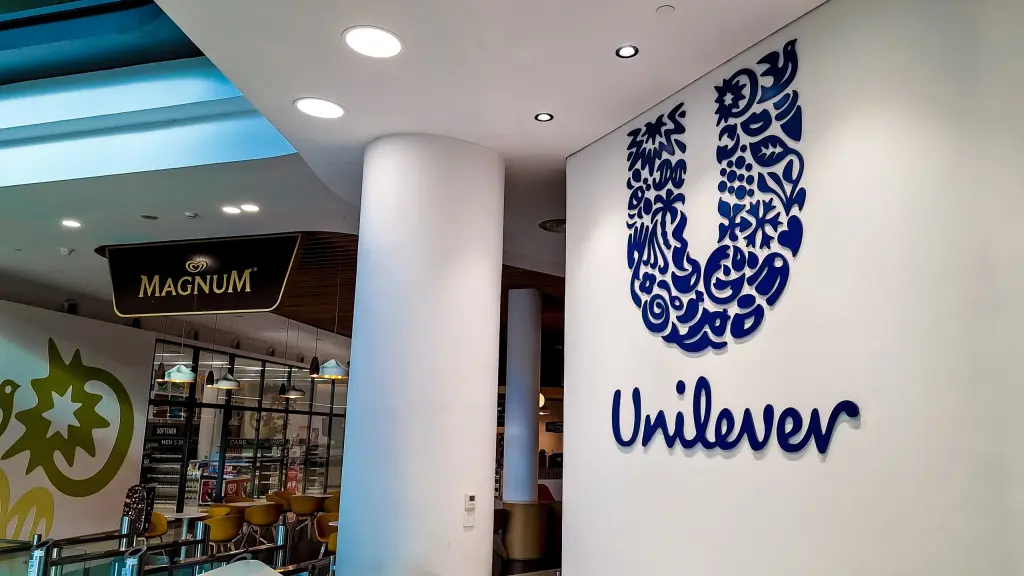
Unilever Indonesia headquarters logo near Magnum Café, Jakarta/ Photo credit: Shutterstock
Benjie Yap, Unilever Indonesia’s president director, recently stated that the company aims to refocus on core business areas to streamline operations, increase efficiency, and drive innovation. As part of that approach, Unilever Indonesia sold its ice cream business for 7 trillion rupiah (around US$440 million) to Magnum Indonesia in November 2024.
“This strategic approach enables better resource allocation, strengthens our market position, and ultimately enhances our financial performance,” Yap says.
But the road ahead will not be a walk in the park. The food and refreshment category, which included the ice cream business, has been a big breadwinner for Unilever, making up 35% of its total revenue.
The sale of its ice cream business could push the segment’s contribution down to 28%, says Oktavianus Audi, vice president at investment firm Kiwoom Sekuritas. This assumes that the ice cream business previously accounted for at least 20% of Unilever’s total income.
“We believe it will be quite challenging to regain balance and maintain market share after the spin-off of this business. Moreover, there is no commitment from Unilever’s parent company to expand revenue opportunities in Indonesia,” Audi tells The Business Times.
Historical dominance at stake
Unilever has long been a heavyweight in the country’s fast-moving consumer goods (FMCG) sector, commanding a substantial share across various product categories.
With over 90 years of market presence, it has firmly established itself as a household name. Brands such as personal care products Lifebuoy, Pepsodent, and Sunsilk as well as seasoning powder Royco are woven into the fabric of daily Indonesian life.
Indonesia contributed US$2.4 billion in revenue in 2023, accounting for nearly 4% of Unilever’s total sales – a significant share in the company’s global performance.
But even the mightiest giants eventually have to fight battles.
Rivals seize opportunities
Stay ahead in Asia’s tech landscape
This is premium content. Subscribe to read the full story.
As its share prices plummet 84% from its peak in 2018, the FMCG giant is refocusing its core business in a key market.
We know this is not ideal. ⌛ Sign up in 20 seconds. Cancel anytime.
Our subscriber community includes professionals from these companies:





Stay updated on the go with our mobile app.
Get latest insights with smoother, more personalized experience through TIA mobile app.