Terence Lee · · 2 min read
A company was sold at $100m in 20 months. Welcome to the crazy world of startups.
Dear readers,
Recently, our writer Jack Ellis told the incredible story on the fast rise and exit of Spin, a scooter sharing service built by three Singaporeans that was sold to Ford for US$100 million within 20 months (subscribe to read).
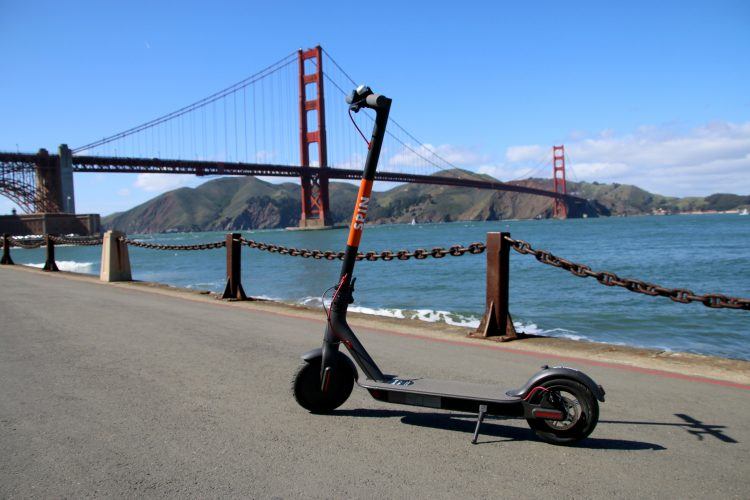
A Spin e-scooter near San Francisco’s Golden Gate Bridge. / Photo credit: Spin
We don’t know how much of the deal was done in cash, but with only one US$8m funding round announced so far, the valuation seems decent.
However, it’s the smallest of the three major scooter sharing startups in the US, so an exit at this point is wise. It may be their only move – given how capital-intensive on-demand transportation has become.
The story is yet another sign that we’re neck-deep in a crazy phase of the startup world right now. Massive and unprofitable private companies – many of them fueled by Softbank money – are flush with cash, spending on customer acquisition, and gobbling up smaller entities like never before.
Which leads to the question: How long will this last?
As you mull on that, check out our other recent subscriber-only pieces:
- The world’s best airline has a careful approach to innovation
- A Tinder clone from China is taking off in the rest of Asia
- Rising SE Asian startups this week: Topica, Deskera, and more
- Why Paytm’s role in India’s demonetization summed up Silicon Valley’s broken culture
Thanks for reading, and I’ll see you soon!
Stay updated on the go with our mobile app.
Get latest insights with smoother, more personalized experience through TIA mobile app.
Recommended reads
 Life’s a game, and AI agents are Animoca’s new play
 Indonesian AI startup goes global
 Forrest Li on scaling Sea, building smarter bots, and founder grit
 An AI assistant that joins sales calls and scores team skills
 Beyond the check: Why VCs need more than capital
 SGX’s CEO says it doesn’t need a unicorn to win
 SMEs want AI too, but not the kind Big Tech is selling
 Oatside’s alt-milk rise hits a profitable gear
 Alibaba’s financial health in 12 charts
 Asia’s telcos bundle AI into mobile plans. Will it pay off?