 Jonathan Chew · · 5 min read
How this company kept its clients at the forefront while transforming its business

Last year, Twitter famously led the charge for long-term work-from-home practices when its CEO, Jack Dorsey, said employees could carry out their tasks remotely “forever” if their role allowed it. With new Covid-19 variants popping up and lockdowns becoming a fixture in society, “forever” could very well be the case for remote work.
As a result, establishing the right setup to operate outside the office has become a major concern for businesses everywhere today, and managing their own information and communications technology (ICT) efficiently is crucial to this process.
“The importance of technology that is robust, agile, and secure cannot be understated in the current pandemic climate,” says Joe Benger, managing director of Jupiter Group, a technology solutions provider that specializes in commercial ICT solutions.
That said, how can businesses remain agile in the new norm? Jupiter Group’s experience in 2019 could tell the tale.
Success for everyone
Launched in 2010, the Australian company provides a host of ICT solutions for businesses, ranging from digital communications infrastructure to cloud and security solutions. It also provides professional services such as ICT management and consulting for businesses looking to integrate ICT, as well as procuring software and hardware assets for clients.
Using its solutions, businesses can transition seamlessly into the online realm, says Benger. “Jupiter Group aims to empower organizations with technology that supports growth and prosperity,” he adds.

Joe Benger, managing director of Jupiter Group / Photo Credit: Jupiter Group
But more than just helping its clients be robust, agile, and secure, the company knew that it needed to apply these same tenets to itself if it wanted to stay ahead in the game.
In 2019, the company conducted an internal review of its risk framework and identified one crucial pothole on its proverbial road to success: its cloud hosting infrastructure.
“While we’ve never had an outage, the risk of core infrastructure being unavailable for even a minute would be catastrophic to our clients’ businesses and for our own brand,” says Benger. “From an opportunity perspective, it would also inhibit our ability to deliver additional emerging technology solutions and potentially result in loss of business.”
While it was clear Jupiter Group had to reinforce its infrastructure, attempting to do so meant it would need more specialists and additional resources to maintain it.
These were resources that the company could not readily spare – at least, not without adversely affecting its ability to serve clients.
It needed to find a way to free up its existing capabilities and focus on its main services – technology application and procurement – rather than being bogged down by infrastructure management, says Benger.
Getting aboard with Zettagrid
In its search for a solution, the company found Zettagrid, a technology aggregator based in Australia and Singapore that supports businesses in Asia Pacific. Jupiter Group first got in touch with the cloud hosting and data recovery solutions provider in 2012, when it worked together with ZettaNet (Zettagrid’s networking arm) to obtain reliable, high-speed internet capabilities.
During this partnership, it found out that Zettagrid was beginning to shift its focus toward edge cloud solutions, and Jupiter Group quickly signed up as a reseller for the provider’s cloud computing resources.
With this arrangement, Zettagrid was also tasked to manage the Australian firm’s cloud infrastructure, allowing Jupiter Group to concentrate on its clients knowing that its back-end systems were in safe hands.
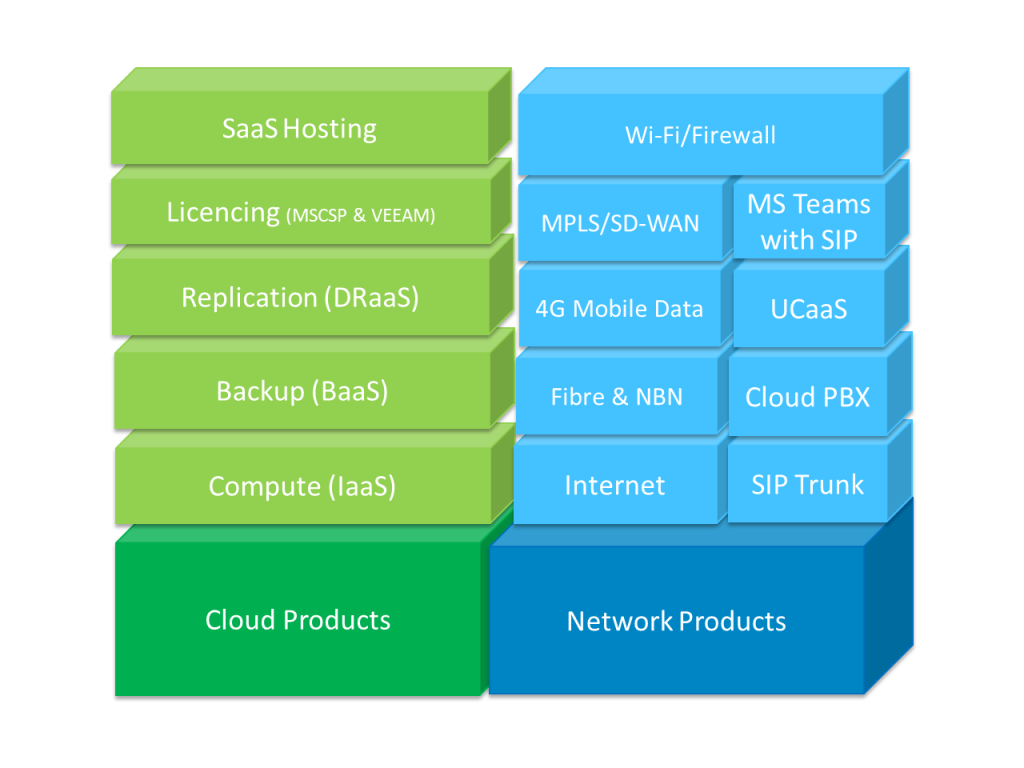
Zettagrid’s stack of cloud and network solutions / Photo credit: Zettagrid
As part of its migration into the Zettagrid ecosystem, Jupiter Group worked closely with the company’s senior engineers so the transition would be seamless, says Benger.
Onboarding was also made easier because Zettagrid had its own automated process that integrated its different technology stacks and solutions.
“If somebody says: ‘I want to deploy a server,’ we make room on the server, deploy the application, and then tie it to the licensing and billing. It’s all completely automated, and there’s no requirement for a person to intervene,” says Nicki Pereira, chief technology officer at Zettagrid.
“Once you get to scale, this consistency means that you have fewer support problems, fewer issues, and it’s consistent across all environments,” he adds.
Off-site capabilities for on-site focus
Jupiter Group would go on to procure several solutions from Zettagrid.
One of these allowed Jupiter Group to use VMWare – a cloud computing software – to build and manage groups of virtual servers for its clients. This allowed the company to focus on the needs of its clients instead of managing the technological aspects of its business.
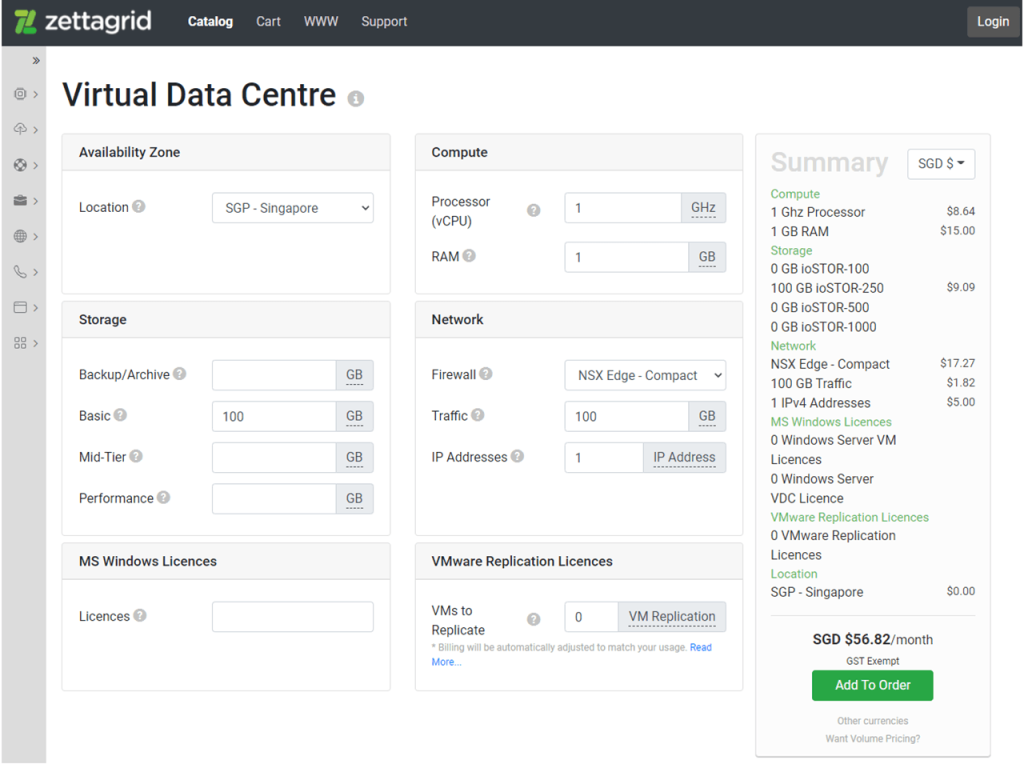
Zettagrid’s Virtual Data Centre gives its clients control over virtual servers / Photo credit: Zettagrid
Another solution was a backup and replication service that allowed Jupiter Group to easily copy its IT infrastructure onto Zettagrid’s cloud servers and recover it quickly if any mishaps occur.
This was reinforced even further through Zettagrid’s SecondSite product, which will help Jupiter Group with disaster recovery in the event of data and infrastructure failures.
With Zettagrid’s support, Jupiter Group could scale its cloud service offerings to more clients, applications, and industries. The Australian company has since branched out into other areas such as security and incident response and has also reduced the amount of labor and manpower its service requires by 25%.
“We’re now able to focus on the delivery of these solutions instead of maintaining the cogs behind them,” says Benger. “Personally, I sleep better knowing that Zettagrid’s engineers are continuously monitoring, improving, and securing our services.”
A strong back end for the future of your front end
With Covid-19 illustrating more clearly than ever the need for businesses to keep their technology robust and secure, companies need to understand all the risks involved in their technological capabilities and infrastructures, Benger says.
Other than cloud computing, technology like unified communications and mobility – which allow modern offices to be accessible from any device at any location – also remain crucial for success in today’s digital age, he adds. With ICT, businesses can be more efficient and communicate more effectively with their customers.
As companies work their way through bolstering their ICT competencies, focusing on their core business models has become a top priority.
“When considering infrastructure, partner with an organization that takes the guesswork out of reliability, resiliency, scalability, and security, such that you’re free to focus your talents on solving other business problems,” Benger says.
Zettagrid is a technology aggregator that delivers cloud hosting, backup, disaster recovery, software licensing, and telecommunications services in eight zones across the Asia-Pacific region.
If you would like to sign up for a 30-day free trial, visit its website to find out more.
This content was produced by Tech in Asia Studios, which connects brands with Asia’s tech community. Learn more about partnering with Tech in Asia Studios.
Stay updated on the go with our mobile app.
Get latest insights with smoother, more personalized experience through TIA mobile app.
Recommended reads
 Life’s a game, and AI agents are Animoca’s new play
 Indonesian AI startup goes global
 Forrest Li on scaling Sea, building smarter bots, and founder grit
 An AI assistant that joins sales calls and scores team skills
 Beyond the check: Why VCs need more than capital
 SGX’s CEO says it doesn’t need a unicorn to win
 SMEs want AI too, but not the kind Big Tech is selling
 Oatside’s alt-milk rise hits a profitable gear
 Alibaba’s financial health in 12 charts
 Asia’s telcos bundle AI into mobile plans. Will it pay off?





Editing by Winston Zhang and Jaclyn Tiu
(And yes, we’re serious about ethics and transparency. More information here.)






