Jonathan Chew · · 5 min read
How this company helps firms get the most value out of their tech infrastructure

Efficiency, efficiency, efficiency.
Already, there are scores of articles on how businesses can optimize internal processes to make sure that their operations are running as smoothly as possible.

Photo credit: stephen2324 / 123RF
Many of those articles have one thing in common: they focus on sharing advice or tips on managing talent or implementing the right processes.
While helpful, they overlook the fact that the data center infrastructure that companies use also have to be robust and optimized – this way, the hardware and software they rely on to execute day-to-day operations can run as quickly as possible to produce the desired results.
That’s where companies like Quanta Cloud Technology (QCT) and Intel come in. QCT is a global data center solutions provider that offers both hardware and software solutions as well as professional services. It also offers a workload optimization service – powered by Intel technologies – targeted at helping corporations achieve maximum efficiency on both ends.
“We want to ensure that our solutions can perform at their best within a configured environment,” says Dennis Juan, associate vice president and deputy head of QCT Singapore.
Bang for your buck
For many firms, streamlining business operations is a critical aspect of reducing costs and maximizing profits – in other words, getting the most bang for their buck.
One of the biggest challenges a business faces when trying to increase operational efficiency is budget. As Juan points out, it’s not prudent to spend unreservedly on new upgrades. To ensure that the budget is used to its full potential, the firm should optimize the solutions or equipment purchased.

Dennis Juan, associate vice president and deputy head of QCT Singapore / Photo credit: QCT
This is especially pertinent given that some components, such CPUs used in servers, can cost up to S$12,000 (US$8,900). That amount is just for one component – it doesn’t even include costs for others such as storage drives and memory modules.
These components form part of the tech infrastructure companies use to carry out their operations – without the right configuration, the firm may not get the performance it needs or expects from its new purchase.
However, finding the best configuration can be a challenge for firms with limited personnel or time, especially if the new solutions are needed to execute jobs immediately.
Further, there are many different elements within those infrastructures that can be adjusted or reconfigured. Those changes might affect performance results across both hardware and software, and in-house IT teams might not be equipped to deal with them all. Should they attempt to do so themselves, it could take them months to get optimal results, says Juan.
Having been in the IT sector since its founding 10 years ago, QCT’s experience led it to discover that beyond just offering products, helping clients become more efficient would meet their needs better. That’s why it decided to focus more heavily on its workload optimization service in 2022.
Peeking behind the curtain
When offering its workload optimization services to customers, QCT begins by meeting them to understand their needs – for instance, how quickly they need to meet those demands and what kind of applications that they’re using.
The last portion is especially important because knowing what applications are in play gives QCT further insight into the characteristics they need to focus on.
Certain applications such as those used in weather research and forecasting need infrastructure that can support high memory bandwidth, while others such as those operated in computer-aided design (CAD) or cryptography may require more computational resources. For instance, AutoCAD, a popular CAD application, requires CPUs that can get as high a frequency as possible. On the other hand, it’s considered to be “fairly light” in terms of how powerful its memory components need to be.
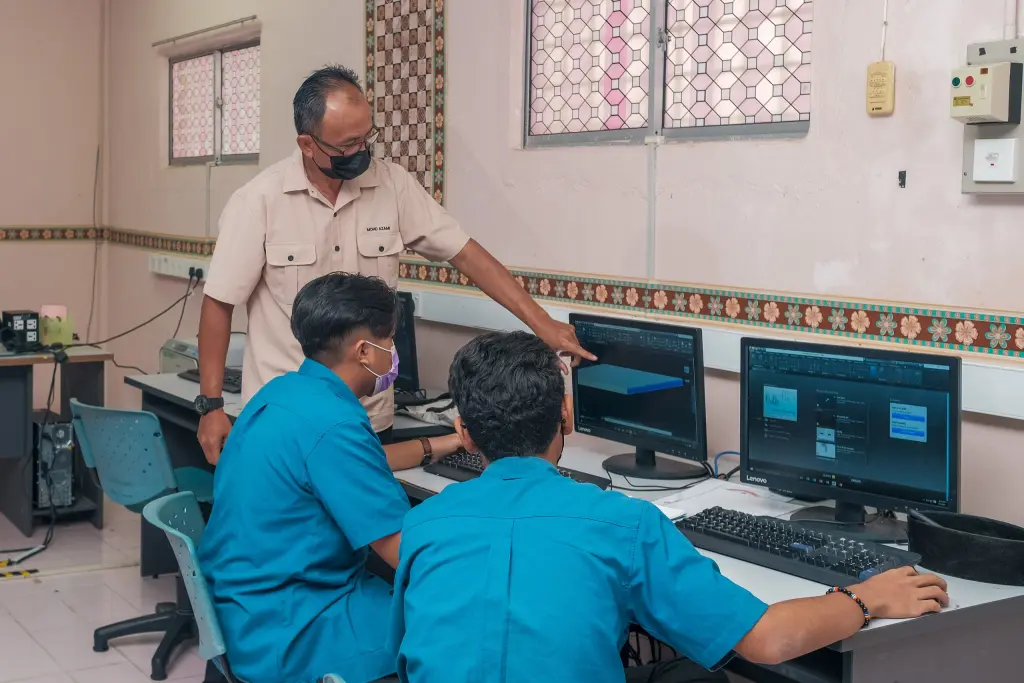
Students learning how to use CAD software / Photo credit: azamiadiputera / 123RF
Every application has its own characteristics that are affected by different components within a combined hardware and software infrastructure. Such elements, which include the system’s BIOS settings, its operating system, and CPU, can be tweaked or swapped out depending on what the application needs.
That said, Juan points out that each of these elements cannot just be optimized on a whim.
“It’s not just about adjusting one part to be higher or lower,” he says. “It’s also about making sure that the infrastructure has the best overall configuration possible.”
Once QCT has a clearer understanding of the applications in play and what it needs to prioritize, it sets the goals and evaluation criteria for the workload. Then, it conducts initial testing to determine baseline performance before analyzing the data to identify bottlenecks and make the necessary adjustments.
Applying its knowledge
According to Juan, QCT has identified several types of workloads that have benefited from it.
One example is the Weather Research and Forecasting (WRF) model, often used by researchers and forecasters to study meteorological phenomena.
When QCT’s team conducted an extensive study of the application, they found that it often exchanges data in large volumes. This means that the application needs a high memory bandwidth and low network latency.
It’s also about making sure that the infrastructure has the best overall configuration possible.
To make the program run more smoothly, QCT’s team applied several applications. This included InfiniBand, a networking communications technology, and Intel’s Fortran Compiler, a type of software program that can speed up the WRF model’s execution time by roughly 30% more compared with other solutions.
Other workloads QCT can assist with include molecular dynamics simulations and computational fluid dynamics workflows using OpenFoam, among others.
Additionally, workloads vary across verticals. QCT leverages different tools to fully grasp the wide range of operations and support its efforts in understanding workload processes and behaviors.
In this regard, the company turns to a solution from Intel known as Granulate’s gProfiler. The program analyzes usage patterns and data flow to give QCT a better understanding of how clients’ applications are performing and where the bottlenecks are.
“Overall, it helps us have a more specific direction for improvement,” Juan says.
Staying relevant
As more companies add to their tech stacks and enhance their infrastructure and capabilities, QCT’s goal is to ensure that its service can remain relevant in the coming years.
To do that, it plans to partner with major corporations such as Intel on new technologies and advanced hardware platforms. QCT is always on the lookout for opportunities to expand its domain expertise across different workloads to provide more specific, tailored plans for its clients in various industries.
Juan says: “This will help our customers ensure their entire IT infrastructure is always configured optimally in the shortest possible time to accelerate research and development processes.”
QCT is a global data center solutions provider. It combines advanced hardware infrastructure with software technologies to support companies in building the right tech environment while shortening the time needed to begin their projects.
To find out more about its solutions, visit its website.
This content was produced by Tech in Asia Studios, which connects brands with Asia’s tech community. Learn more about partnering with Tech in Asia Studios.
Stay updated on the go with our mobile app.
Get latest insights with smoother, more personalized experience through TIA mobile app.
Recommended reads
 The truth about AI language models: No one wants to pay for them
 Tracking AI hiring in Singapore: OpenAI, Anthropic, and more
 Korea’s physical AI ambitions meet the factory’s bottom line
 SEA financials tracker: Moladin’s revenue rises 6% in 2025
 On‑demand services lift Line Man Wongnai’s 2025 revenue to $544m
 Flipkart’s costly late push into quick commerce and food delivery
 Inside Singapore’s government team that kills its own products
 Once an IPO hopeful, SCI Ecommerce nears collapse
 Who’s betting big on ChatGPT ads? Not Asian brands
 VC tracker: Granite Asia launches US$50 million fund





Editing by Winston Zhang and Dhania Putri Sarahtika
(And yes, we’re serious about ethics and transparency. More information here.)