- Premium Content It takes our newsroom weeks - if not months - to investigate and produce stories for our premium content. You can’t find them anywhere else.
 Megan Cheah · · 4 min read
China’s healthcare firms tap SEA to overcome tension, slow growth
With geopolitical tensions running high, healthcare companies are moving away from China and hunting for new markets to expand into. More are now headed south, particularly into Southeast Asia’s emerging markets.
To pick up a slice of this rising trend, Beijing-based GL Capital Group, a private equity firm focused on the healthcare space, is aiming to start a fund for Chinese companies setting up operations in Southeast Asia.
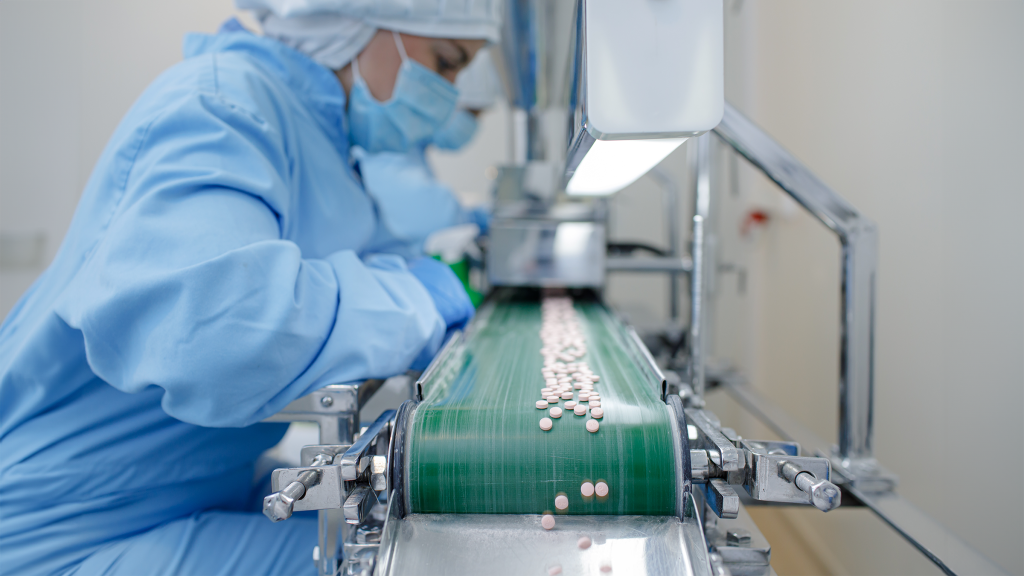
Photo credit: sergey kolesnikov / Shutterstock
“We think we could use capital (from the fund) to help these businesses expand globally… as well as (share) the knowledge, the connections we have with the local regulators and businesses,” says Wang Yifei, a partner at the firm.
He notes that these healthcare companies are generally SMEs involved in medical devices, diagnostics, pharmaceuticals, and tools for life sciences.
“They don’t necessarily have the scale or capability to do the expansion. We want to lower the barrier for them to expand into the region,” he told The Business Times on the sidelines of the 2024 CGS Southeast Asia Bilateral Investment Forum in Haikou, China, in October.
GL Capital invests in healthcare in China and has more than US$3.4 billion in assets under management.
According to Wang, the firm specializes in buyout deals or acquiring majority stakes in healthcare companies. In July, for example, it took then Hong Kong-listed SciClone Pharmaceuticals private for HK$8.8 billion (US$1.1 billion).
“Natural first step”
In China, healthcare manufacturing is trending up, notes Wang. These local suppliers have increasingly gained more market share in their segments compared with multinational corporations (MNCs).
“If we do a very broad calculation, we think about 40% to 50% of the medical devices and diagnostic products sold in China are supplied by local manufacturers,” he says.
One area where Chinese manufacturers have an edge over international peers is in pricing, Wang adds. In his view, the discount of a Chinese medical product compared with one made by an MNC can be 20% to 40%, depending on the product.
“Yet, (Chinese companies) are still making money because they have the cost advantage in production, are more efficiently managed, and have innovations that can save costs while improving the quality,” he says.
Southeast Asia, where consumers are typically more price-sensitive, is therefore an obvious choice for expansion for these manufacturers.
See also: The players in SEA’s ailing healthtech landscape
A win-win
Stay ahead in Asia’s tech landscape
This is premium content. Subscribe to read the full story.
The region’s strong demand for affordable medical products makes it a prime market for Chinese companies.
We know this is not ideal. ⌛ Sign up in 20 seconds. Cancel anytime.
Our subscriber community includes professionals from these companies:





Stay updated on the go with our mobile app.
Get latest insights with smoother, more personalized experience through TIA mobile app.