J.T. Quigley · · 6 min read
In graying Japan, this private social network for families focuses on the elderly
The image of a “traditional” Japan where the elderly are living happily at home with their adult children and grandchildren is fading. Years of economic stagnation, coupled with a society that is both shrinking and aging, have largely erased the Confucian obligation of caring for one’s elders. That’s all without mentioning the effects of modernization and globalization, with many Japanese chasing careers across the country or overseas.
According to Japan’s health ministry, 53 percent of people over 65 lived with their children in 1980. Fast forward to 2010, and that percentage has dropped to a mere 18 percent – and it’s only getting worse as the country grays. By 2025, a third of Japanese citizens will be over 65.
“Nowadays, families live farther and farther away from each other, and so many elderly people are living alone,” says Ikuo Minakata, a 60-year-old first-time entrepreneur from Nara, Japan. “Even though they are physically OK, their mental state isn’t always sound. They’re lonely, maybe even battling with depression, because they don’t get to see their families.”
Minakata doesn’t expect every child to take care of their aging parents – for many, they have jobs and families of their own to take care of. That’s why he’s creating a social network that connects families with elderly relatives.
“Mother and father eventually become priority number two – not because their kids don’t like them, but because they’re just too busy,” Minakata says. “I want to recreate a sense of presence for elderly folks, without being invasive like existing surveillance and monitoring systems.”
Digital keihai
Minakata’s startup, Cloud10, is developing a private social network for families called FamilyTies. It emphasizes what the Japanese call keihai – a word that is difficult to explain in English but can be loosely translated as a “hint” or implicit feeling. He uses the example of a parent laying in bed and hearing his or her children’s footsteps in the hallway. They didn’t announce that they had arrived home, but hearing that sound allows the parent to fall asleep happy by knowing that their child is safe.
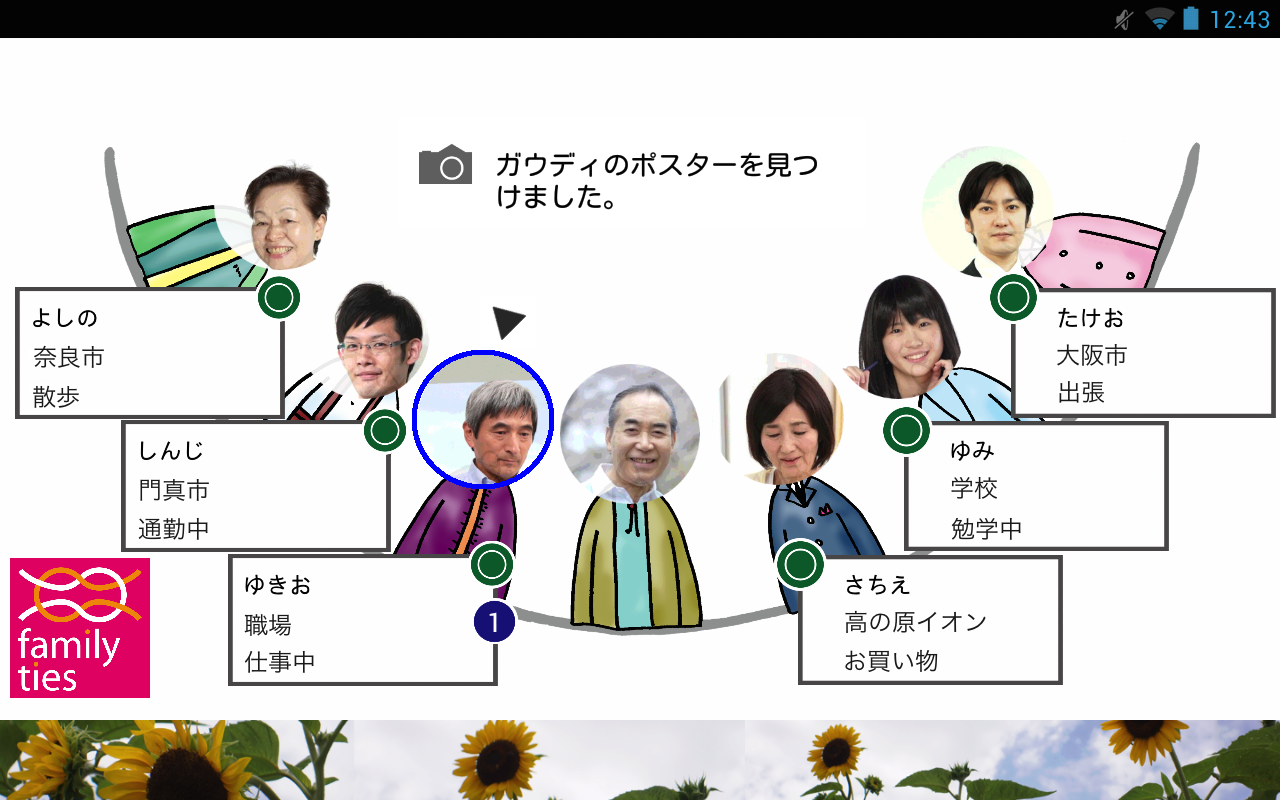
The FamilyTies app dashboard, optimized for use by senior citizens on a tablet.
But how does keihai translate to a digital application? According to Minakata, the key is sharing just enough information without devolving into Facebook-style oversharing.
The FamilyTies app, currently in beta testing for Android devices, allows users to add up to six family members to a closed social network. Each member’s photo shows up on the app’s main screen, and beneath each photo is a rough estimation of where they are and what they’re doing. The service uses GPS, but masks the exact location. For example, after a user tags their office it shows up as “work” and the local supermarket simply indicates “shopping” – instead of listing a street address or building name. Once a grandchild tags their home and work locations, the app can indicate to grandma or grandpa when they’re en route and when they arrive.
“That’s keihai,” Minakata says. “Hearing or seeing that they made it home safely without directly interacting through a phone call or a message.”
Conversely, a future version of the app will let family members see if grandma or grandpa unexpectedly venture outside of their usual surroundings – granted they’re carrying a tablet with them. The current version only indicates when they have viewed a message or last accessed the app.
Targeting elderly users, not only their families
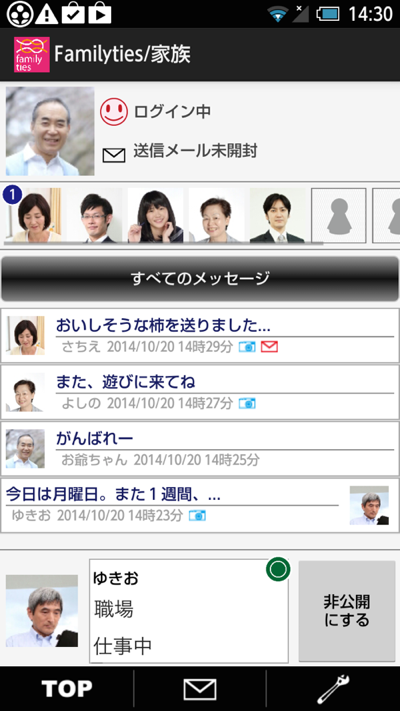
A screenshot of FamilyTies’ built-in messenger for smartphones.
Minakata stresses that FamilyTies was designed with the elderly users’ needs at the forefront. The service is divided into two apps – one for grandparents that’s optimized for tablets, and a smartphone version for the more tech-savvy children and grandchildren (with stronger eyesight).
Support services
Personal inspiration





Stay updated on the go with our mobile app.
Get latest insights with smoother, more personalized experience through TIA mobile app.