Gary Lim · · 6 min read
Meet the fintech firm that’s empowering Indonesia’s unbanked women

In Indonesia’s rural villages, US$34 is typically enough to stock up a mom and pop shop with inventory for one whole month. But getting this amount of capital can be challenging as not everyone has access to loans or financial assistance.
Around the country, an entire breed of fintech companies has risen to drive financial inclusion – mobile payments, digital banking, and investment technology are among the fastest-growing segments. Another rising segment is alternative finance and lending.
One platform operating in that sector is Amartha, which acquired its millionth customer last year. The Jakarta-based firm’s mission, according to founder and CEO Andi Taufan Garuda Putra, “is really about how we can drive prosperity, to provide access to financial services to the grassroots.”
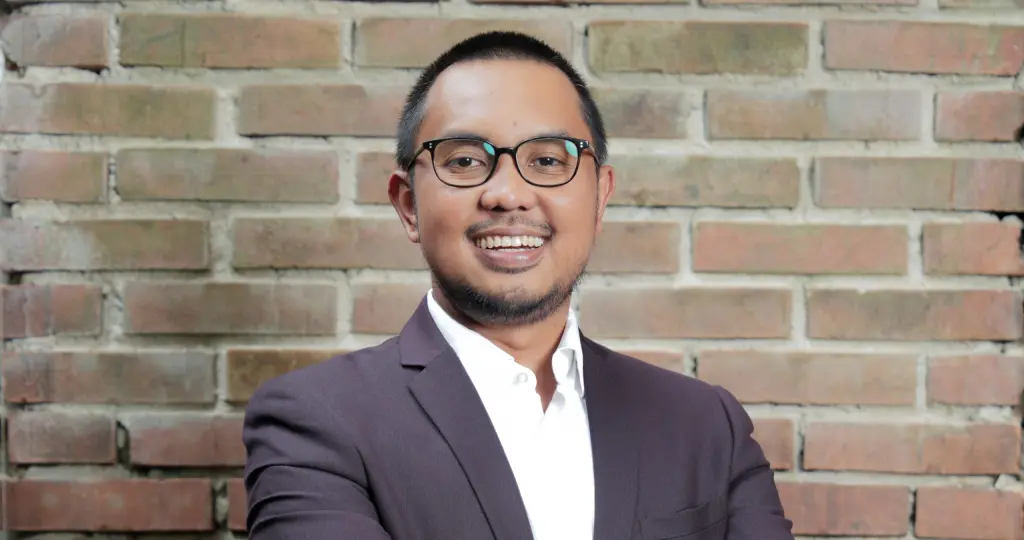
Andi Taufan Garuda Putra, founder and CEO of Amartha / Photo credit: Amartha
Amartha is especially focused on offering financing solutions to customers outside of non-Tier 1 cities, especially the rural parts of the archipelago.
It all started in 2010, when Taufan launched a collective to provide small loans to groups of microentrepreneurs – mainly women – in Indonesia’s rural communities. The company has since evolved to a full-blown crowdfunding and peer-to-peer lending platform that has disbursed some 12 trillion rupiah (around US$800 million) to over 42,000 villages to date.
Providing a better alternative
Indonesia has one of the world’s largest populations of the unbanked (people without a bank account) and underbanked (people who own an account, but have little or no access to credit or investment products): 92 million adults have no access to basic financial services.
“When you look at the socioeconomic situation in Indonesia, at the bottom of the pyramid, there are gaps in terms of opportunities and infrastructure that cause problems like poverty,” says Taufan.
“Amartha believes that technology should be inclusive and available to the grassroots as a vehicle to address these issues. More than capital, these communities need firms that can deliver impact and improve their livelihoods.”

Photo credit: Amartha
Amartha’s customers, who are typically unbanked, aren’t eligible for traditional loans as they don’t meet typical credit scoring criteria.
Living predominantly in rural areas, these individuals have to travel long distances to find a bank. The lack of consistent or reliable access to the internet also makes it challenging for them to access information about microfinance.
That’s where Amartha comes in to make a difference.
Innovation and collaboration
Amartha exclusively offers loans to groups, with 99% of its customer base being women.
“The women run small businesses and every time they want to borrow money from us, they must create a group of 7 to 15 members. It [this mechanism] lets us offer them business loans and a higher-quality portfolio,” Taufan says.
Through this approach, there’s a sense of “joint accountability” among borrowers, creating a risk-sharing model that reduces the likelihood of loan defaults, and allowing the startup to issue loans to people who might not be eligible otherwise.
Plus, the nature of Amartha’s target market means most of the borrowers live and work in Tier 3 or Tier 4 cities, where internet and mobile phone penetration isn’t as high and people are less tech-savvy.
To oversee the progress and performance of borrowers’ businesses, Amartha employs field officers equipped with GPS tracking, automated monitoring tools, optical character recognition, and anti-blur systems to easily facilitate customer onboarding, documentation, and other transactions.
Nikkho Shandittha, senior vice president of products at the firm, says these tools not only increase the productivity of its agents but help to prevent nonperforming loans and fraudulent activities.

Nikkho Shandittha, senior vice president of products at Amartha, at the Tech in Asia’s 2023 Product Development Conference / Photo credit: Amartha
Perhaps the most important piece of technology is its AI-powered credit decisioning system, which helps maintain a very low rate of nonperforming loans.
“We collect data like [the borrower’s] name, address, where they are working, what kind of business they run, their income level, and many other kinds of necessary information that’s fed into the credit decisioning system,” Nikkho explains.
The system can adjust approval criteria automatically based on the economic and market situation, including black swan events like the Covid-19 pandemic.
To better serve its customers, Amartha has partnered with more than 20 financial institutions around the country, including top banks such as Bank Rakyat Indonesia and Bank Mandiri as well as smaller government-owned banks to distribute more loans to rural communities.
Amartha plays a dual role: It helps these institutions offer their services to more people and mobilize capital to grassroots segments in Tier 3 and Tier 4 cities, and at the same time, the firm enables underserved individuals to obtain loans and investments from its partners.
Aside from individual loans, the company also offers services such as bill payments and digital phone credits.
Future plans for Amartha
Looking ahead, Taufan says the long-term vision for Amartha hasn’t changed since its founding.
“We will continue to evolve with the times to better serve our customer base, our employees, our investors, and our stakeholders in the region.”
According to Nikkho, this means expanding its range of financial products even further. For now, more types of loan products look likely for the startup, along with other digital products.
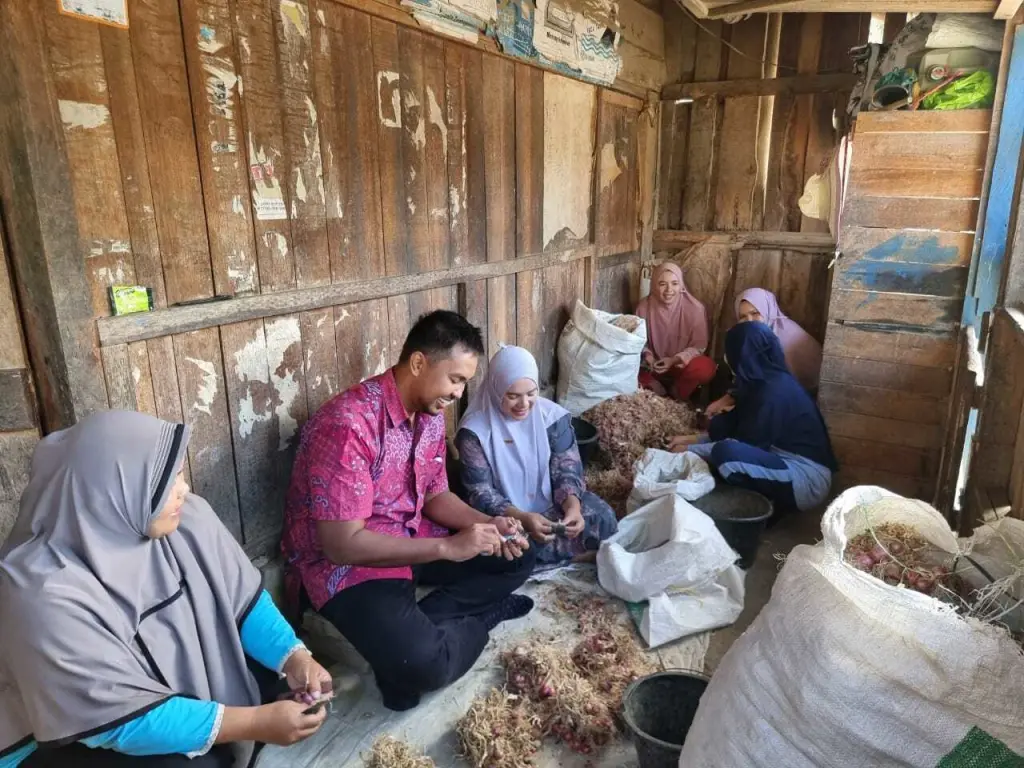
Taufan with Amartha’s customers / Photo credit: Amartha
“Lending, investments, payments – the challenge is not easy,” he says.
“To be more competitive in the region, we’ll see how we can optimize our service by building digital financial infrastructure for these microsegments,” he adds, referring to the borrowers in rural areas.
The company’s also working to add more functionality to its platform, making it similar to a super app.
While Amartha took 12 years to acquire a million customers, it wants to grow exponentially next year.
“Now, we are in a very different phase,” Taufan says. “We want to acquire the next one million to two million customers in one year. This market is still very huge – the total addressable market in Indonesia is over 100 million.”
Beyond financial services, the firm has set up Amartha Foundation, which focuses on the education and empowerment of rural communities. Currently, it provides several scholarship programs for underprivileged children and works with satellite providers to enable internet access for rural villages.
“We see our role as not just serving our customers, but also improving the welfare of their families, helping their kids go on to higher education, and boosting the livelihoods of communities in the villages,” Taufan affirms.
Amartha is a prosperity platform company on a mission to bring inclusive digital financial services to the grassroots communities and the world through technology, inclusivity, and sustainability. It spoke at the Tech in Asia’s recent Product Development Conference 2023, delving deeper into the unique financial needs of lower-tier cities and the obstacles to inclusion in these grassroots segments.
To learn more about Amartha’s efforts and see how you can contribute, visit its website.
This content was produced by Tech in Asia Studios, which connects brands with Asia’s tech community. Learn more about partnering with Tech in Asia Studios.
Stay updated on the go with our mobile app.
Get latest insights with smoother, more personalized experience through TIA mobile app.
Recommended reads
 Indonesian AI startup goes global
 Forrest Li on scaling Sea, building smarter bots, and founder grit
 An AI assistant that joins sales calls and scores team skills
 SGX’s CEO says it doesn’t need a unicorn to win
 SMEs want AI too, but not the kind Big Tech is selling
 Oatside’s alt-milk rise hits a profitable gear
 Alibaba’s financial health in 12 charts
 Asia’s telcos bundle AI into mobile plans. Will it pay off?
 M-Daq chases bigger clients as revenue falls, losses grow
 VC tracker: Accel raises US$3.5b, including US$550m for India





Editing by Winston Zhang, Stefanie Yeo, and Dhania Putri Sarahtika
(And yes, we’re serious about ethics and transparency. More information here.)