 Lilian Tang · · 6 min read
Agentic AI is turning customer conversations into business outcomes

Summary:
- Conversational commerce is growing quickly, but customer journeys are becoming harder to manage as conversations happen across multiple channels.
- Omnichat’s Omni AI platform, including OmniClaw and Omni AI Message Flow, helps brands connect customer data, campaign planning, and execution in one workflow.
- As AI takes on more campaign execution, Omnichat pairs automation with human-in-the-loop controls, helping brands scale customer engagement while keeping people involved in judgment, brand safety, and final approval.
- Discover how Omnichat’s Omni AI analyzes campaign performance, chat metrics, customer behavior, and team efficiency.
They say talk is cheap, but it can also drive results. That’s what’s happening – quite literally – in conversational commerce.
Modern consumers have moved beyond using chat functions for basic inquiries with brands. Today, they utilize messaging apps to discover products, track promotions, and request personalized recommendations.
This presents an opportunity for businesses to leverage the conversational commerce space. Mordor Intelligence projects the global conversational commerce sector will surge from US$12.6 billion this year to US$22.6 billion by 2031. Meta also says there are more than 1 billion active threads with businesses across WhatsApp, Messenger, and Instagram every day.
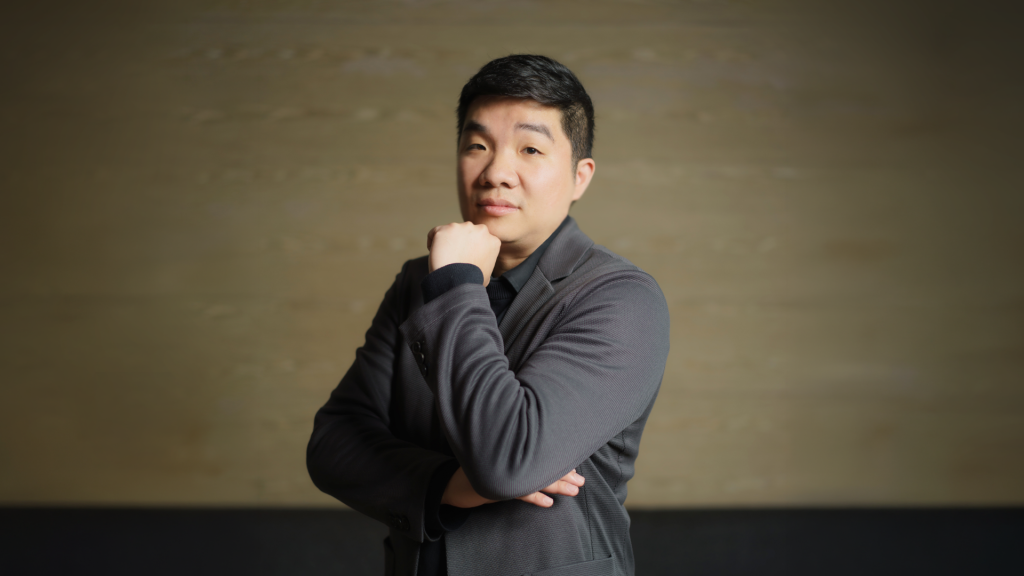
Alan Chan, CEO and founder of Omnichat / Photo credit: Omnichat
“Conversational commerce has evolved from simple customer inquiry handling into a more intelligent, AI-driven experience model,” says Alan Chan, CEO and founder of Omnichat, an omnichannel customer relationship management (CRM) platform. “The trend is moving toward AI-native, agentic platforms that can connect marketing, customer support, and sales in one ecosystem.”
The problem with being everywhere
With the rise of social media, customers can reach brands across a plethora of platforms. While this gives brands more entry points, it also means they have to deal with an identity gap.
The more places conversations happen, the harder it becomes to keep track of who the customer is and what they need. A customer might inquire about a product on one app, engage with a promotion on another, and later return via a third channel.
“Because these social channels often exist in silos, a single customer using different touchpoints is frequently treated as a new lead every time they switch platforms,” Chan explains.
Without a unified view of customer behavior, marketing and sales teams are forced to rely on guesswork. They know conversations are happening, but they cannot tell which interactions are likely to convert, who needs retargeting, or what message should be sent next.
“The challenge is no longer just replying quickly,” Chan says. “It is about recognizing the individual behind the screen and connecting every conversation within a unified marketing, sales, and service workflow.”
Why manual setup slows teams down
When a customer messages a brand, it signals intent. These signals only matter if brands can recognize and act on them.
This is where fragmented conversations create a challenge for marketers. How do they turn messy conversational signals into timely, personalized customer journeys?
Even when brands have the data, this process remains tedious and time-consuming.
“Campaign execution was often a very manual process,” Chan says. “A marketing team might start with a simple idea – such as a seasonal promotion, a new product launch, or a win-back campaign – but turning that idea into a live customer journey required multiple steps.”

Traditionally, that means analyzing audience segments, writing platform-specific copy, designing creative assets, configuring triggers, and dragging and dropping nodes in a flow builder. Although the ideation may take just one meeting, the setup process can take days.
In retail, that delay is costly because customer intent does not stay warm forever. By the time a team manually builds a follow-up journey, the promotion window may have narrowed or the customer may have already lost interest.
Turning intent into journeys
Omnichat solves this bottleneck by helping marketers connect fragmented customer chats with campaign planning and execution.
As an omnichannel CRM platform, Omnichat helps brands manage customer chats across social and messaging channels. Its upgraded Omni AI platform adds a more intelligent layer on top of that foundation, marking a shift from rule-based chatbots toward an AI-native workflow.
A rule-based chatbot responds based on prompts, which works for simple inquiries. Its abilities are limited when customers move across channels or need more personalized follow-ups.
On the other hand, an AI-native workflow does more than reply. Built into the Omnichat platform, OmniClaw is an AI-native brain and strategist that can analyze campaign data, chat performance, customer behavior, and team structures within the same environment. Instead of asking marketers to manually pull reports or feed context into a generic AI tool, OmniClaw is designed to already understand the business context inside Omnichat.
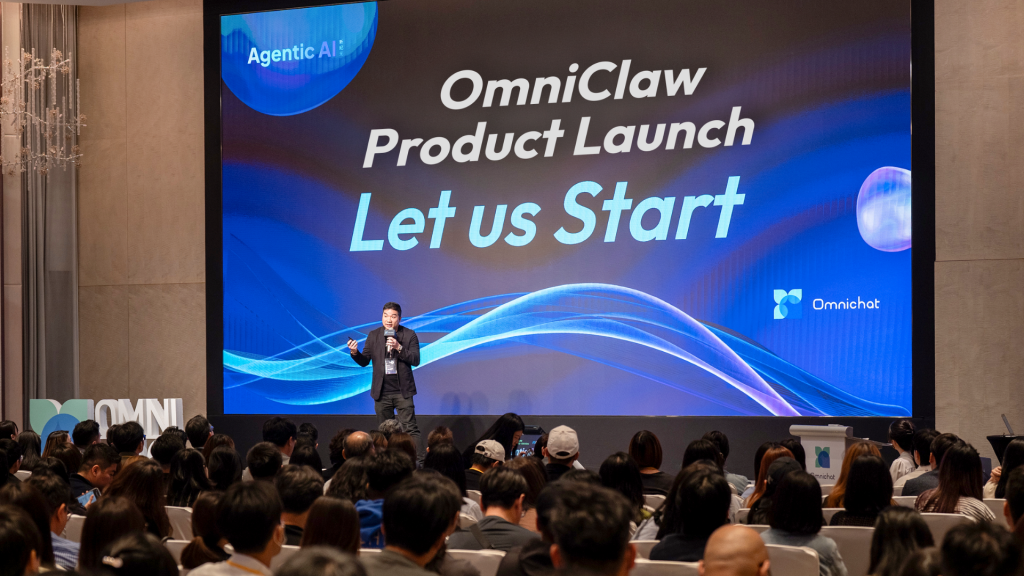
Omnichat officially unveils OmniClaw, its latest agentic AI solution, during a live product launch event / Photo credit: Omnichat
For example, teams can ask which campaign generated the highest revenue, which customers are most valuable to retarget, or how recent chat volume trends are affecting customer service. OmniClaw can then identify where the next campaign should focus.
From there, Omni AI Message Flow turns the campaign objective into execution. Marketers can describe a campaign objective in natural language, and the platform generates the message flow architecture, logic, copy, rich media, and creative assets.
“The key change is that marketers no longer need to spend most of their time building the plumbing,” Chan says.
The Omni AI platform also brings other pieces into this workflow. An instant brand onboarding feature allows the AI to ingest a brand’s website, tone of voice, and product knowledge to ensure generated customer journeys are aligned with corporate identity. A generative media gallery supports creative production within the same platform, while real-time optimization lets users test and adjust campaign variations based on performance.
The human-in-the-loop model
According to Omnichat, its platform has helped clients generate more than US$100 million in revenue, with cross-channel conversion rates five times higher than general ecommerce platforms. It has also processed more than 3 billion messages globally and serves over 5,000 enterprises.
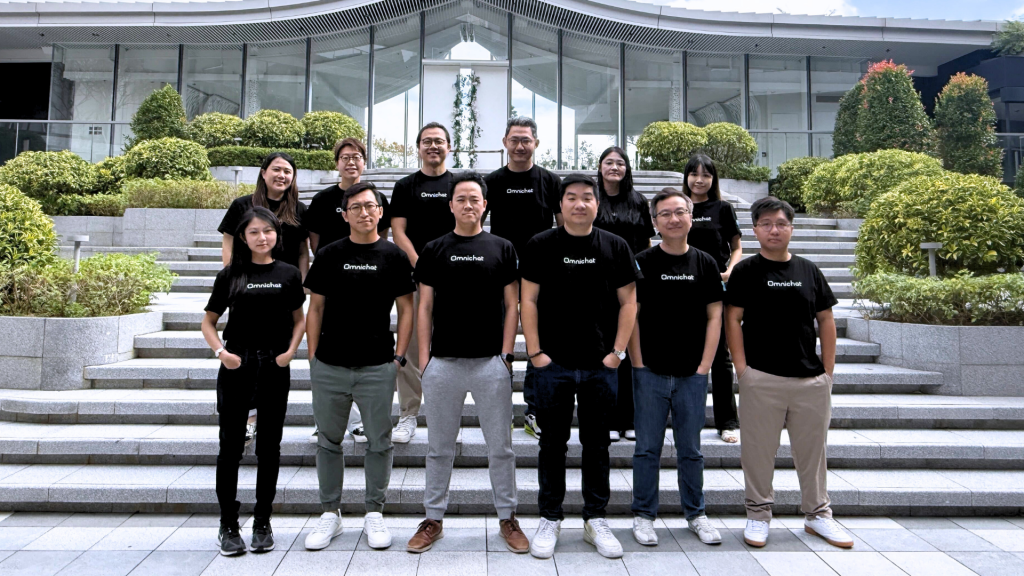
Members of the Omnichat team / Photo credit: Omnichat
In one F&B-related early-trial use case, Omnichat reported AI-identified customer segments contributing to a 5% increase in click-through rate and a 100% uplift in average transaction value. The improvement was driven by more relevant segmentation, better timing, and more personalized follow-ups, rather than sending the same message to a broad audience.
However, for all its commercial promise, giving AI a bigger role in campaign execution requires clear guardrails. Omnichat uses human-in-the-loop controls so staff can maintain permission controls and review critical actions before they go live. A sandbox testing environment lets teams test conversational paths and logic before exposing them to customers.
Chan emphasizes that transitioning to an AI-native workspace does not mean human teams disappear. In fact, they work hand-in-hand in this model.
As he puts it, “Human teams become more important as strategists, brand guardians, and creative directors. AI handles repetitive execution, while people focus on judgment, storytelling, customer empathy, and business direction.”
Omnichat is an AI-native customer experience platform that unifies marketing, sales, customer support, and loyalty through conversational engagement. As a Meta partner, WhatsApp Business Solution Provider, and Line Tech Partner, it empowers global brands to deliver seamless end-to-end customer journeys across instant messaging platforms, enabling businesses to achieve five times higher conversion rates. The company has received support from various prestigious organizations, including the Hong Kong Science and Technology Park.
Supercharge your conversational commerce today. Arrange a free trial and demo now.
This content was produced by Tech in Asia Studios, which connects brands with Asia’s tech community. Learn more about partnering with Tech in Asia Studios.
Stay updated on the go with our mobile app.
Get latest insights with smoother, more personalized experience through TIA mobile app.
Recommended reads
 Tracking AI hiring in Singapore: OpenAI, Anthropic, and more
 Last to board: why travel may be AI’s final frontier
 Why ‘cheaper’ no longer wins dev deals for Vietnam
 Alibaba’s capex isn’t the full story
 Forget startups. Buy the business running on Excel
 Life’s a game, and AI agents are Animoca’s new play
 Indonesian AI startup goes global
 Forrest Li on scaling Sea, building smarter bots, and founder grit
 An AI assistant that joins sales calls and scores team skills
 Beyond the check: Why VCs need more than capital





Editing by Stefanie Yeo and Lorenzo Kyle Subido
(And yes, we’re serious about ethics and transparency. More information here.)





📅 Upcoming Events
22 October 2026
Payoneer x CSPN Summit 2026