 Paul Bischoff · · 5 min read
Meet the world’s easiest-to-fly drone. Now it needs people to fly it.
We live in an age when advanced technologies once only available to governments and large corporations are now accessible to individuals. A single person can have more followers on a blog than a local newspaper. Filmmakers and musicians can build followings online without a major record label. And homeowners can cut their electricity bills with windmills and solar panels.
But some technologies have struggled to make the leap. Take 3D printing, for instance. While it costs a tiny fraction of what it used to to own and operate a 3D printer at home, a tough learning curve and lack of practical, everyday applications hasn’t spurred it beyond a hobbyist demographic.
Drones, most commonly in the form of multirotor helicopters, face similar barriers to entry. It takes more than a price cut to democratize a new technology, but Guangzhou-based Ehang aims to get its flying machines into the hands of an audience beyond the already-saturated market of RC flying hobbyists.
Ehang’s flagship quadcopter is called Ghost, and the company claims it’s the easiest drone to fly in the world. Ghost is operated via a smartphone app connected to a small antenna that allows it to travel up to one kilometer away. One button to unlock, one to take off, and a slider to adjust the elevation. Then just click anywhere on the map, and the drone will fly there. Easy peasy. Another button makes the drone return to the pilot’s location, which also happens automatically should it lose connectivity or run low on battery.
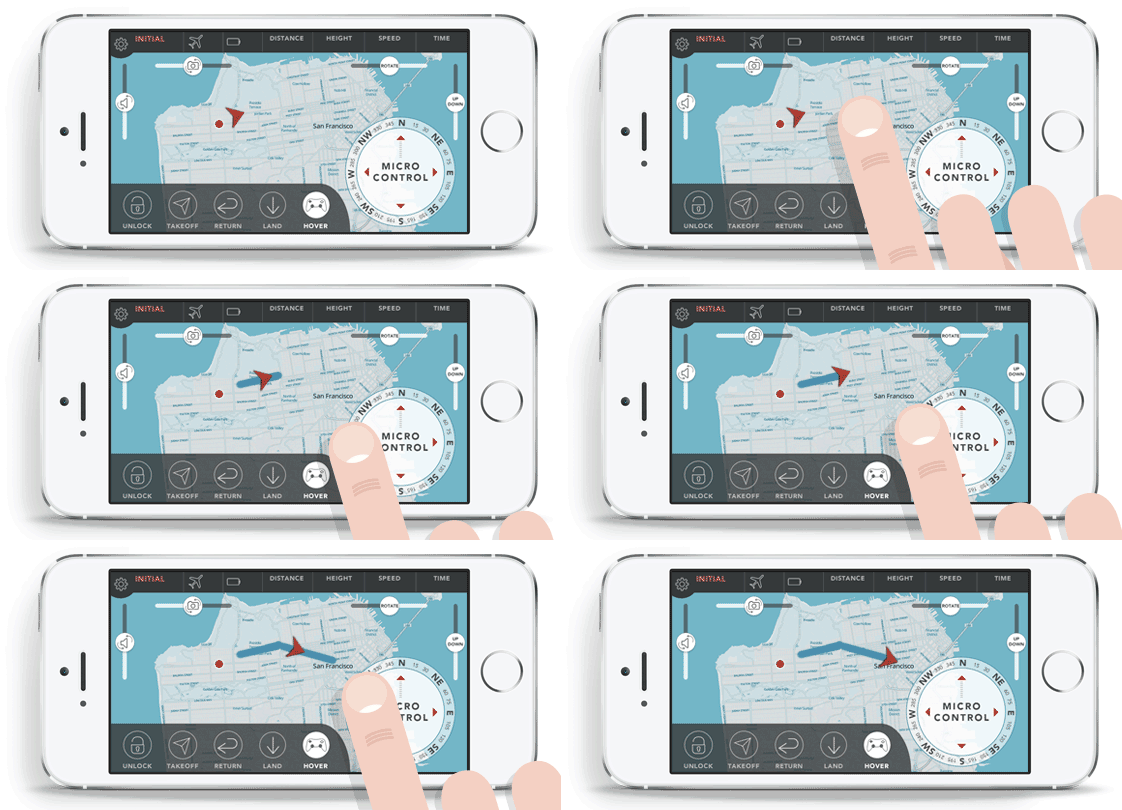
“The RC controller is a considerable deterrent. It’s quite difficult to use, has many switches and knobs, and leaves the user prone to crashes,” says Jess Perez, Ehang’s director of marketing. “With a smartphone, you don’t need much instruction. It’s quite intuitive, and nearly every person has one.”
Once the learning curve is out of the way, drones face another problem – they’re quite boring to fly. The novelty wears off quickly after liftoff and setting the drone on its intended course. But Ehang has a few tricks up its sleeve. Hit the button on your smartphone to switch Ghost to manual mode, and you can steer it using your phone’s tilt sensors. It faces whichever direction the top of the phone is pointed.
Ghost first raised RMB 317,000 (US$51,756) on Chinese crowdfunding site Demohour in May, after which it shipped about 200 early-stage models. The campaign for the next generation drone has launched on Indiegogo, where Ehang hopes to build hype and gauge customer interest in the West. It’s biggest target demographic are early adopters interested in aerial photography, as the drone is made to be outfitted with a GoPro.
The new version will ship with “autofollow,” a feature that the company says its competitors have promised but not followed up on (no pun intended). Autofollow enables Ghost to trail its owner at a safe distance with a camera as they mountain bike, snowboard, or just go for a jog.
“There is a lot of demand, and it is increasing the more people see the amazing images being captured using the aerial perspective. Demand really goes beyond athletes,” Perez says. “Filmmaking is a huge category and has myriad applications: travel, adventure, outdoors, and music. The ability to capture the beauty around the earth from up above is the big benefit.”
For owners that want to do more, every Ghost drone sold also comes with a software development kit (SDK) so users can tweak how the drone operates to their specific needs. For example, one engineer integrated voice controls for flying.
Ghost, with a base price of less than US$600 once it goes to market, is aimed at casual flyers. But for more professional filmmakers with bigger rigs, Ehang also makes an as-yet-unnamed six-propeller version that can carry up to 10 kilograms. It’s just as easy to fly as the original, which could drastically cut costs incurred by hiring out big drones currently used in professional filming environments and their expert pilots.
Future up in the air





Stay updated on the go with our mobile app.
Get latest insights with smoother, more personalized experience through TIA mobile app.











📅 Upcoming Events
22 October 2026
Payoneer x CSPN Summit 2026