A new irrigation technology, developed by Chinese scientists, that can cut farmers’ water use by a quarter in arid areas has won an international conservation award.
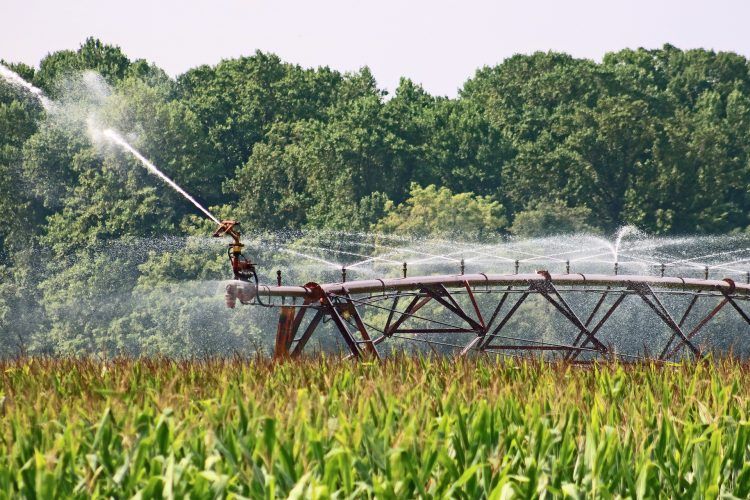
Photo credit: Pixabay
Tian Fuqiang, an associate professor who heads the research team at Tsinghua University, was recognized for his contribution to the development and mass application of a water and salt regulation technology for mulching and drip irrigation in China’s far western region of Xinjiang.
He was presented with the WatSave Technology Award in Bali, Indonesia on September 4. The award from the International Commission on Irrigation and Drainage (ICID) is presented to the best new water-saving technology every year.
Gao Lihui, administrative director of the ICID’s Chinese National Committee on Irrigation and Drainage in Beijing, said the award was significant recognition of the research team’s technological achievement in the area of water conservation.
“They faced fierce competition from the candidates from other countries [in the running for the prize],” Gao said on Tuesday. “But the bigger challenge now is to promote this technology around the world.”
It was the seventh time Chinese scientists have taken out the award in the past two decades. Australian researchers have won the prize for the last two years.
The Chinese technology has been used to irrigate more than 20,000 hectares (49,400 acres) of cotton farms – a highly water-intensive crop – in Xinjiang since 2011. According to the researchers, it has saved more than 500 million tonnes of water on those farms at that time.
It can reduce water use by 25% and increase agricultural output such as cotton by nearly 20% compared to irrigation systems currently used in hot, dry climate zones, according to the ICID.
The technology uses a mathematical model that, according to Tian’s team, can simulate and predict the movement of salt and water in different types of soil – something that has not been well understood by scientists before.
In a dry region like Xinjiang, too much or too little water can lead to salinization – a major threat to agriculture. Salinization can be caused by the rapid evaporation of too much water, or an insufficient leaching process and poor plant growth brought on by too little water.
Researchers have been trying to get the balance right for decades, but the new technology means farmers can plan their water use with unprecedented ease and accuracy. A cotton grower can calculate how many tonnes of water will be needed for a hectare of the crop, whether they need to water their fields in winter and how many days to wait between watering.
Xinjiang, with the Gobi Desert in the north and the Taklimakan Desert in the south, is heavily dependent on agriculture, especially cotton – the region provides more than 80% of China’s total cotton production. But its dry climate has constrained economic and social development because of water shortages, according to the Chinese government.
Many other regions face similarly harsh conditions, including places involved in Beijing’s controversial Belt and Road Initiative. Agriculture is one of the investment targets for the sprawling infrastructure plan that aims to link China with other parts of Asia, Africa, Europe, and beyond.





Stay updated on the go with our mobile app.
Get latest insights with smoother, more personalized experience through TIA mobile app.