Rita Liao · · 5 min read
Stores around the world are about to get a tech makeover, thanks to China
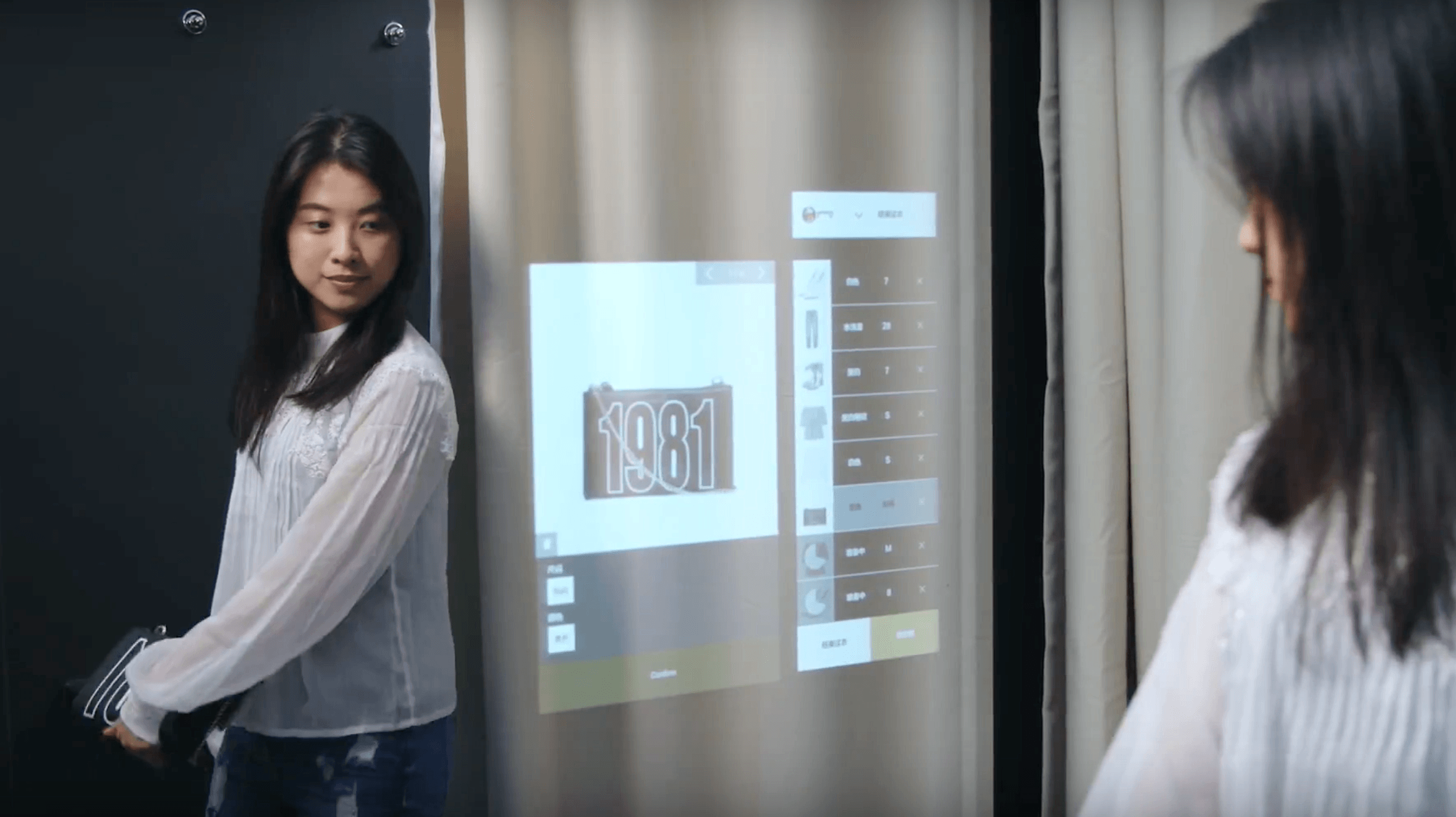
Alibaba’s smart mirror at a Guess concept store in Hong Kong / Photo credit: Alibaba
China’s US$1 trillion online shopping industry hasn’t pushed out physical shops. Instead, the nation’s tech giants are on course to transform their brick-and-mortar counterparts. And some of them – including Alibaba – have begun exporting their retail technologies overseas.
Instant mix-and-match
At a Guess store in Hong Kong, a bunch of gadgets and machine learning algorithms are helping out shoppers.
But first, the store needs to know who they are. People can go in by scanning a code with Alibaba’s Taobao app. After that, they can choose to have their faces recognized for a more personalized experience.
Now, off they shop.
When customers touch or pick up a garment, product information immediately pops up on a nearby “magic mirror.” They can swipe across the mirror as they would on a phone, add items to their shopping cart, and view personalized mix-and-match styling suggestions.
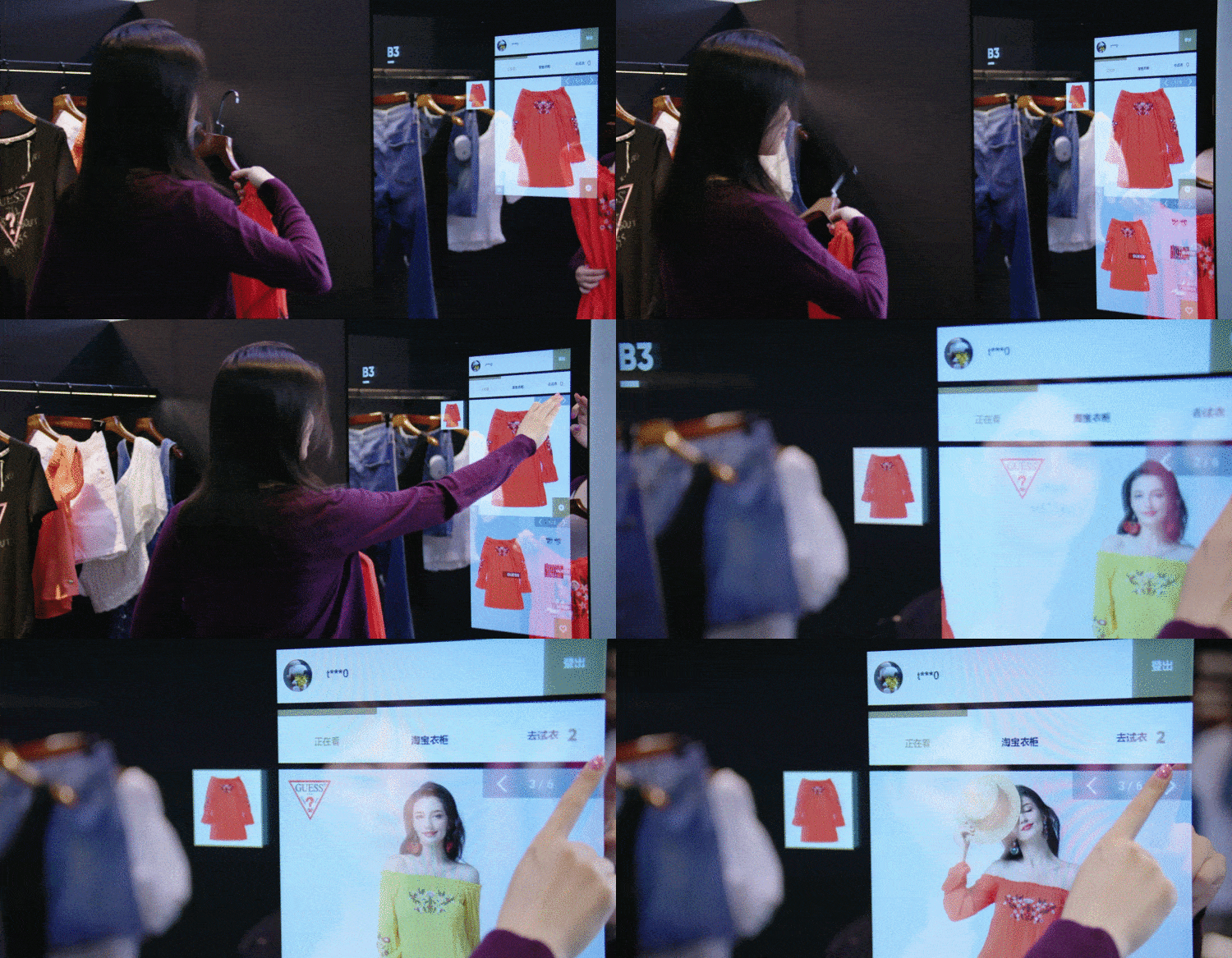
“Magic mirror” / Video credit: Alibaba
Powering the process are sensors hidden in the store that track tags, which are similar to the passcards that let you glide through toll gates.
The Guess store was a pilot project launched in July, and it’s among Alibaba’s first attempts to digitize stores overseas. An AI-enabled fashion store, however, isn’t a new concept. Zara, for instance, opened something similar in London in January 2018.
See: How Alibaba, JD are expanding their empires offline by offering data to retailers
Back in its homeland, Alibaba has opened dozens of its Hema supermarkets that inject tech into the shopping experience. Users can order via an app and have their groceries delivered or picked up at a Hema store, where conveyor belts filled with products run across the ceiling, replacing staff scrambling to replenish stock.
“There is a lot that [the rest of Asia] can learn from how the likes of Alibaba, Tencent, and JD have built a ‘new retail’ strategy in China over the past few years,” Albert Shyy, principal at Burda Principal Investments, tells Tech in Asia. “These companies are deeply integrated across the entire retail value chain – for example, warehouses, logistics, and payments – so they can bring years of experience and data to this region.”
Virtual try-on
Meitu, maker of a popular selfie app, also has digital retail tools that it’s taking abroad.
Checkout-free





Stay updated on the go with our mobile app.
Get latest insights with smoother, more personalized experience through TIA mobile app.