- Premium Content It takes our newsroom weeks - if not months - to investigate and produce stories for our premium content. You can’t find them anywhere else.
 Putra Muskita · · 7 min read
How Kopi Kenangan plans to become Indonesia’s largest affordable coffee chain
Edward Tirtanata was running an artisanal tea lounge called Lewis and Carroll in Jakarta when he discovered a gap in the market involving another beverage – coffee.
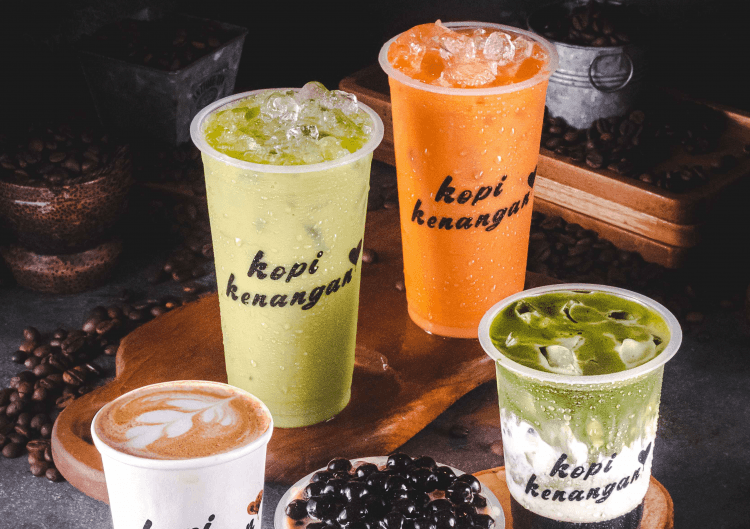
Photo credit: Kopi Kenangan
“Indonesia is the world’s fourth-largest coffee exporter, yet it has the lowest coffee consumption per capita in the region,” he says. That’s because unlike Dunkin Donuts in the US or Ya Kun Kaya Toast in Singapore, the Southeast Asian archipelago doesn’t have a “large, affordable coffee chain” that caters to local tastes, he explains.
So when he and co-founder James Prananto put up Kopi Kenangan in 2017, they set their sights on a single mission: to become the biggest operator of coffee shops for the masses in Indonesia. Since then, the company has gone on to operate 80 stores in eight cities across the country, serving 1 million cups a month.
Investors have also taken notice of Kopi Kenangan after it added “new retail” – an approach popularized by Chinese businesses like Luckin Coffee and Hema, tech titan Alibaba’s supermarket unit – to its overall strategy. A few months after competitor Fore Coffee – another new retail coffee company – raised its series A funding, Kopi Kenangan banked US$20 million from Sequoia Capital India to accelerate its growth.
Why “kitschy” branding works in Indonesia
Tirtanata established Lewis & Carroll in 2015 after he returned home from his studies in the US. He cites British authors C.S. Lewis and Lewis Carroll – who wrote The Chronicles of Narnia series and Alice in Wonderland, respectively – as inspiration for the name of his first business, which also had an online shop.
But around two to three months after launching, Tirtanata found it hard to attract customers. The branding, he recalls, was “too upscale,” and it took lots of marketing to turn it into the sustainable business it is now.
For his second venture, he decided “to create a brand that’s relatable to many people.” The key is to serve affordable beverages with flavors that appeal to the majority. “Indonesians in general like to drink something that’s creamy, sweet, and milky. That’s also something that we’ve seen with bubble tea, which is growing rapidly,” Tirtanata points out.
Kopi Kenangan’s top-selling product is a homegrown concoction of iced milk coffee sweetened with palm sugar. Dubbed Kopi Kenangan Mantan, it costs IDR 18,000, or roughly US$1.30. In comparison, a tall-sized latte at Starbucks costs more than twice as much at IDR 42,000 or US$3.
To be sure, the Indonesian chain also brews lattes, but they’re priced cheaper at IDR 24,000 (US$1.70). Other selections include non-coffee beverages like milk teas and Kopi Baileys, an Irish coffee derivative.
The local angle also extends to Kopi Kenangan’s millennial-friendly branding. “Kopi Kenangan” itself means “memories coffee,” while the “mantan” in the name of its signature drink means “ex,” as in a former boyfriend or girlfriend.
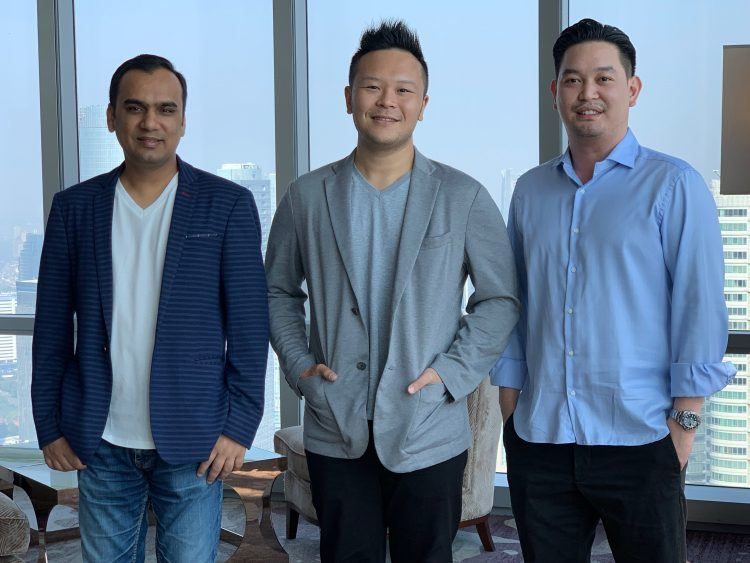
Rohit Agarwal (left) of Sequoia Capital India with Kopi Kenangan founders Edward Tirtanata and James Prananto / Photo credit: Kopi Kenangan
“I’m not sure why, but ‘kitschy’ branding works really well in Indonesia,” Tirtanata notes. “Even in our first day of sales, we were able to sell 700 cups with hardly any marketing. People see the name, they are amused, and then they try. Because of that ‘lowbrow’ branding, people aren’t afraid that it will end up to be an expensive drink.”
Investing in growth
Stay ahead in Asia’s tech landscape
This is premium content. Subscribe to read the full story.
Banking on its profitability and US$20 million from Sequoia Capital India, the company aims to open 1,000 stores by the end of 2021.
We know this is not ideal. ⌛ Sign up in 20 seconds. Cancel anytime.
Our subscriber community includes professionals from these companies:





Stay updated on the go with our mobile app.
Get latest insights with smoother, more personalized experience through TIA mobile app.