C. Custer · · 5 min read
China's internet cafes are dying. Here's 5 ways that could that affect the gaming scene
Since the beginning of video gaming in China, internet cafes have played an integral role in the development of the country’s gaming culture. For many of China’s gamers, they were the only way to access games, as most Chinese homes don’t have a console or an internet-equipped PC to game with.
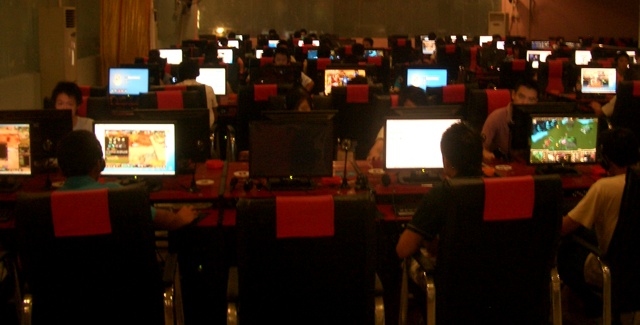
But all that is changing, and changing fast. While internet cafes may still be the only refuge for gamers in rural areas, gamers in developed cities increasingly have internet access in their homes, and PCs, laptops, or mobiles capable of playing games without the need to pay an hourly fee for the privilege of sitting in a dark, smoky room with shirtless strangers. A recent Tencent survey found that 10,000 internet cafes in China had closed between 2011 and 2012 — the first time that number has dropped in a decade — and most other key indicators are down too. Customers are down. Revenue is down. Things aren’t looking good.
Of course, the internet cafe isn’t about to disappear. Most people in China still don’t own PCs, and even if internet cafes are closing at a rate of 10,000 per year, there were still more than 136,000 of them as of the end of 2012, so they’ll still be around for a while.
But as their importance in Chinese gaming culture fades, gamers and developers alike will probably want to know what changes this shift could bring to China’s gaming industry. Here are a few ideas:
More interest in more games
As I point out every month, China’s top 10 most played PC games don’t tend to change much. Sure, there’s a new game here and there, but in general it’s pretty stale. Part of that is just Chinese gamers’s taste in games, of course, but part of it is also that at an internet cafe, you’re limited to what’s already set up on the machine. The most popular games are what’s there, so they are the games you’re going to play. But as more people start gaming on home PCs and mobile devices, they may be more likely to branch out into new games and new genres because they’ll be free to download whatever they want, whenever they want.
That doesn’t mean some indie game is going to unseat League of Legends as China’s favorite title, of course. But it does mean that all kinds of new games should get a little bit of extra breathing space and more and more Chinese gamers enjoy the freedom of gaming from their own machines, where they can install anything they want.
More interest in single-player games
China right now is very much a multiplayer country. There really aren’t any single-player focused games that rate highly for Chinese gamers, and part of the reason for that is that until recently, single player gaming wasn’t even possible from internet cafes because it required saving your game on the machine’s hard drive, but there was no guarantee you would get the same machine the next time you came to the cafe to play. These days, that problem is avoidable in games with cloud saving, but there are still plenty of single-player games that don’t bother with cloud saving options. And it’s hard to get too immersed in a single player story when you’re in a big room surrounded by strangers.
As more Chinese gamers start playing from their own machines, we could see a rise in the popularity of single-player, story-focused games. Again, I don’t think this shift will be significant enough to override China’s overall gaming tastes — MMORPGs and MOBAs are still going to get more play time than single-player story games like Bioshock — but I think the overall interest in single-player experiences is still likely to rise a bit.

Less violence





Stay updated on the go with our mobile app.
Get latest insights with smoother, more personalized experience through TIA mobile app.