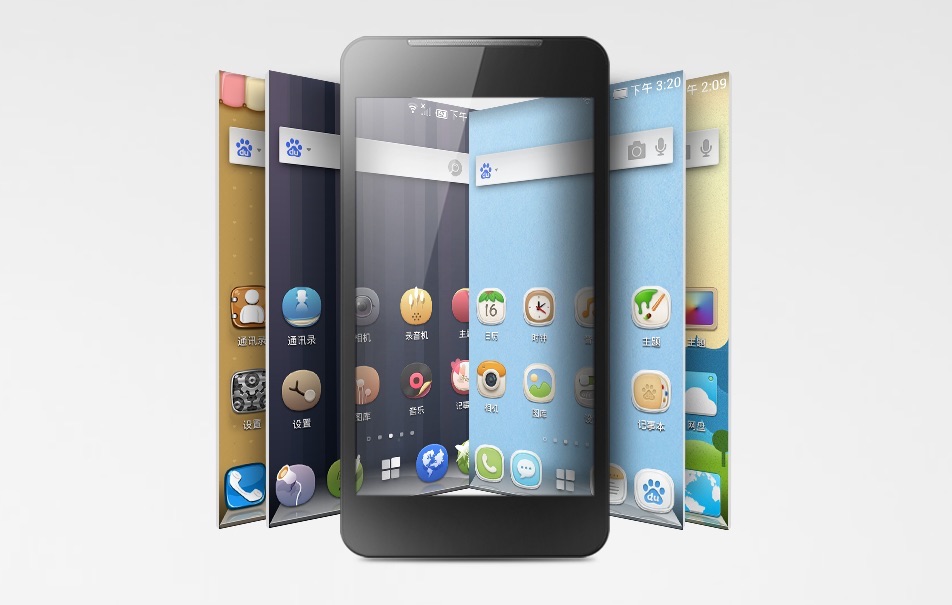
No news means bad news when it comes to tech companies. If they’ve nothing to boast about, the ensuing silence looks suspicious. That’s been the case with Baidu’s version of Android (pictured above), which launched in late 2011.
Despite a high-profile and promising start as Dell made use of Baidu’s Android-based Yun OS for a new China-only phone, the Chinese search giant’s OS thereafter didn’t show any signs of finding favor with the nation’s smartphone shoppers. Yesterday, Baidu confirmed in its Yun OS forums that the Android skin will not get any more updates. The project is now suspended.
A Baidu spokesperson directed us to a statement on Baidu Yun OS’ official Weibo account.
See: Baidu challenges Apple’s CarPlay with launch of CarLife
Baidu’s Yun OS started out called Baidu Yi. It swapped out Google’s apps for Baidu’s own suite of services, such as Baidu Maps, Baidu’s App Store, and Baidu’s own Android voice assistant app. Although it launched at the right time to capitalize on China’s smartphone boom, consumers instead chose Android-based phones from phone makers like Xiaomi, Huawei, Lenovo, and Samsung.
Baidu’s Android OS could also be “flashed” onto a variety of other Android phones to replace the original version of Android that they shipped with.
While Baidu’s Android fork has failed, the company can take heart from the fact that its mobile transition is going well and its standalone apps are popular across iOS and Android. In October last year, Baidu hit a major milestone as most of its traffic now comes from people on mobile devices. Its mobile search engine alone has 500 million monthly active users (MAUs) and there are just over 200 million MAUs on Baidu Maps.
Editing by Josh Horwitz
(And yes, we’re serious about ethics and transparency. More information here.)





Stay updated on the go with our mobile app.
Get latest insights with smoother, more personalized experience through TIA mobile app.












📅 Upcoming Events
22 October 2026
Payoneer x CSPN Summit 2026